

ABSTRACT
Introduction: Adolescence (10–19 years) is a critical neurodevelopmental window. This study aimed to describe long‑term temporal trends and disease burden of migraine and tension‑type headache (TTH) and explore sociodemographic inequality among adolescents in China, the US, and Germany from 1990 to 2021.
Methods: Incidence, prevalence, and years lived with disability (YLDs) were extracted from the Global Burden of Disease 2021 study stratified by country, age (10–14 and 15–19 years), and sex. Joinpoint regression calculated average annual percent changes (AAPCs) for age-standardised incidence, prevalence, and YLD rates (ASIR, ASPR, ASYR, respectively). Frontier analysis, slope index of inequality, and concentration index assessed socio-demographic index (SDI) associations and inequalities.
Results: China had the largest absolute case numbers but lowest age‑standardised rates (migraine AAPC = 0.27%, TTH = 0.31%). Girls carried a substantially higher burden than boys across all 3 countries. The US and Germany showed higher ASRs with generally stable or declining trends. Migraine was more common in 10–14‑year‑olds, while TTH was more frequent in 15–19‑year‑olds. Migraine burden became increasingly concentrated in higher-SDI countries with widening absolute and relative inequalities, whereas TTH-related inequalities slightly attenuated over the study period.
Conclusion: China’s rapidly rising SDI and population structure were associated with the increase in headache burden. High‑SDI countries maintained a relatively stable burden, likely due to mature health services. Worsening socioeconomic inequalities were observed for migraine, while TTH showed a mild mitigating trend. Potential targeted strategies include school‑based screening for headache in China, expanded youth telehealth in the US, and stress management programmes in Germany.
CLINICAL IMPACT
What is New
- This study provides a 30-year cross-national comparison of adolescent migraine and tension-type headache (TTH) trends across China, the US, and Germany, capturing distinct socio-demographic index trajectories.
- Migraine was more common among younger adolescents (10–14 years), while TTH predominated among older adolescents (15–19 years).
- Socioeconomic inequalities widened for migraine but slightly attenuated for TTH.
Clinical Implications
- China: Rising headache burden highlights the need for school-based headache screening and earlier access to preventive care.
- US: Stable or declining rates support strengthening headache-care pathways and expanding youth telehealth access.
- Germany: The higher TTH burden among older adolescents supports age-specific stress-management and early psychosocial interventions.
Adolescence is a pivotal period of neurodevelopment, hormonal fluctuation, and psychosocial transition, all of which converge to elevate vulnerability to migraine and tension-type headache (TTH).1,2 Recurrent headache in this age group disrupts school attendance, impairs peer relationships, and increases the risk of comorbid mental health disorders.3-5 Although the global headache burden has been studied, few analyses have focused specifically on the 10–19‑year subgroup with long‑term trend decomposition, age–sex stratification, cross‑national comparison at different socio-demographic index (SDI) stages, and formal inequality metrics.
China, Germany, and the US were selected because they represent distinct SDI trajectories and health system models. China’s rapidly rising SDI may exacerbate urban–rural disparities in paediatric headache care, while Germany and the US remain high-SDI nations.6 China faces unique challenges, including intense academic competition among adolescents aged 15–19 years and uneven access to paediatric headache care between urban and rural regions.7,8 Germany, a high-income country with universal healthcare, offers structured adolescent health services but grapples with rising mental health stressors among adolescents aged 10–14 years.9 The US, also a high-income country, exhibits stark disparities in access to paediatric headache care and high levels of adolescent screen time, both of which have been linked to TTH exacerbation.10,11 Comparisons across these 3 nations allow exploration of how context-specific factors, including SDI-driven resource disparities and population subgroup differences, may influence headache trends among adolescents aged 10–19 years over 3 decades.
The Global Burden of Disease (GBD) 2021 study provides standardised, comparable estimates of headache burden across countries. Secondary analysis of GBD public data is a legitimate and widely accepted approach in epidemiological research to generate context‑specific insights not reported in the original GBD publications.12 Using GBD 2021, the authors aimed to compare age-specific temporal trends of migraine and TTH across 3 countries representing different SDI levels, examine population-level changes in migraine and TTH during the COVID‑19 period as an ecological observation, quantify the inequalities in relation to context-specific factors, and provide tailored public health recommendations.
METHODS
Data source
The anonymised data used in this study were extracted from GBD 2021. GBD 2021 provides standardised estimates of disease burden and attributable risk factors across 371 diseases and injuries, alongside 87 risk factors, covering 204 countries and territories and 811 subnational locations from 1990 to 2021. The estimates were systematically synthesised from global data sources, including peer-reviewed literature, vital registration systems, population-based surveys, national censuses, administrative health records, disease registries, individual research studies, official reports, and satellite imagery.13
China, Germany, and the US were selected based on 3 key criteria: (1) they represent distinct SDI trajectories—China’s SDI has risen rapidly into the high-middle range, while Germany and the US have remained within the high-SDI range, allowing comparison across different stages of socioeconomic development; (2) they represent diverse healthcare paradigms, including China’s expanding mixed public–private system, Germany’s universal healthcare with structured adolescent services, and the US healthcare system, with its private insurance-based structure and disparities in insurance coverage; and (3) they have distinct adolescent risk profiles—intense academic pressure in China, rising mental health stress in Germany, and high screen time plus care gaps in the US—which facilitate the identification of context-specific burden drivers.
For the current analysis, which focuses on migraine and TTH in adolescents, 3 core measures of disease burden were extracted: incidence, prevalence, and YLDs. In the context of this study, YLDs, a key metric for quantifying non-fatal disease burden, reflect the healthy life years lost due to disability caused by migraine or TTH. As migraine and TTH are predominantly non-fatal disorders, their burden is primarily reflected in the disability and reduced quality of life they impose. Therefore, YLDs were selected as the key burden metric to capture their impact on health. All indicators were obtained as both absolute numbers and age-standardised rates (ASRs) and were stratified by: (1) geography at the global level and for the 3 focal countries (China, Germany, US); (2) time, with annual data from 1990 to 2021; (3) age, including adolescents aged 10–19 years, and 2 age subgroups (10–14 and 15–19 years); and (4) sex, including boys and girls.
Definition of diseases
For case definition, codes from the International Classification of Diseases, 10th Revision (ICD-10), corresponding to migraine and TTH were used. These include G43–G43.919 for migraine and G44.2–G44.229 and G44.4–G44.41 for TTH.14 In standard clinical classification, G44.4 denotes drug-induced headache and is not classified as a primary TTH subtype. The GBD study includes this range of codes in its TTH definition because medication-overuse headache cannot be reliably separated from primary TTH in aggregated population-level datasets. This coding convention has been widely adopted in peer-reviewed GBD-based headache epidemiological research.15,16
Sociodemographic index
In GBD 2021, SDI was calculated for each country and territory worldwide.12 As a composite metric, SDI quantifies key sociocultural and macroeconomic determinants that shape population health outcomes across different geographic settings. Specifically, the index integrates 3 core indicators: total fertility rate (capturing population reproductive patterns), mean years of schooling among adults aged ≥15 years (reflecting educational attainment), and lag-distributed income per capita adjusted for purchasing power parity (accounting for economic development). These 3 metrics are aggregated using a geometric mean to generate the final SDI score.12
Frontier analysis
Frontier analysis was performed to further assess the relationship between the burden of migraine and TTH and SDI development, among adolescents aged 10–19 years, using data for both sexes combined. A nonlinear frontier was constructed to represent the lowest observed burden of migraine and TTH attainable at different SDI levels, thereby reflecting the minimum burden associated with each stage of sociodemographic development. Non-parametric data envelopment analysis was used to construct this frontier.17
Analysis of cross-country inequalities
To quantify cross-country inequalities in migraine and TTH burden among adolescents aged 10–19 years, 2 standardised metrics, the slope index of inequality (SII; absolute inequality), and the concentration index (CIX; relative inequality), were used based on crude incidence, prevalence, and YLD rates.18 Analyses drew on GBD 2021 data for all countries (to calculate global inequality) but focused on contrasts between the global average and 3 focal countries (China, Germany, US) for result presentation. Specifically, SII was calculated by regressing national crude rates among adolescents aged 10–19 years against countries’ relative positions in the SDI-ranked distribution, defined as the midpoint of the cumulative population share. The SII quantifies the absolute difference in disease burden across the socioeconomic spectrum. The CIX was calculated as twice the area between the Lorenz concentration curve (cumulative proportion of the global 10–19-year-old population versus disease burden, sorted by SDI) and the equality line to quantify relative burden distribution. The authors used 95% confidence intervals (1000 bootstrap iterations) to assess significance, with the sign of the SII indicating the direction of the burden gradient by SDI (positive = higher burden in high-SDI countries) and the CIX (range −1 to 1) reflecting the degree of inequality (0 = even distribution, positive/negative = concentration in high-/low-SDI countries).
Statistical analysis
All statistical analyses were conducted using migraine and TTH burden data extracted from GBD 2021, covering 3 core metrics: incidence, prevalence, and YLDs. For each metric, both absolute numbers (to reflect the overall population-level disease burden) and ASRs were calculated, including age-standardised incidence rate (ASIR), age-standardised prevalence rate (ASPR), and age-standardised YLD rate (ASYR), to account for differences in population age structure. ASRs were computed in accordance with the GBD standard-population structure,19 with rates expressed per 100,000 population.
The Joinpoint Regression Program version 4.9.0.0 (Surveillance Research Program, National Cancer Institute, US) was used to quantify temporal trends in ASIR, ASPR, and ASYR, and corresponding absolute counts for migraine and TTH from 1990 to 2021. The core principle of this method is to partition the entire time series into multiple continuous segments using “joinpoints” (points where the trend slope changes significantly) and fit a linear regression model to each segment to estimate trend direction and magnitude. The Monte Carlo permutation test (significance level P<0.05) was used to identify the number and position of joinpoints, ensuring that only statistically meaningful trend changes were retained. For each segment, the annual percent change (APC) was calculated to describe the average annual rate of change in burden within that period. For the overall 1990–2021 period, the authors computed the average annual percent change (AAPC), a geometric weighted average of APCs across all segments, to summarise the long-term trend, with 95% confidence intervals (CIs) reported for both APC and AAPC to reflect statistical uncertainty. The 95% CIs for APC and AAPC were derived by the Joinpoint Regression Program from the standard errors of the fitted regression model, and are distinct from the 95% uncertainty intervals (UIs) reported for GBD burden estimates; the latter integrate uncertainty from sampling error, model specification, and data quality rather than a single regression model. This analysis was conducted separately for each combination of disease and geography to capture subgroup-specific trend differences.20
The core statistical assumptions of the joinpoint regression model include: (1) temporal trends of ASRs follow a piecewise linear pattern within each segment; (2) error terms are independently and identically distributed; and (3) the optimal number of joinpoints is determined by the Monte Carlo permutation test with correction for multiple comparisons.
To assess the robustness of the main findings, 2 pre-specified sensitivity analyses were conducted: (1) the authors excluded data from 2020 to 2021 (the COVID-19 pandemic period) and recalculated AAPCs for 1990–2019 to verify long-term trend stability; and (2) the maximum number of joinpoints was restricted to 3 (from the default maximum of 5) to evaluate the consistency of trend change points. Full AAPC results from both sensitivity analyses are provided in Table S1 for direct comparison with the primary analysis. All sensitivity analyses yielded results consistent with the primary analysis, supporting the robustness of the estimated temporal trends.
RESULTS
Global and country-specific burden (China, the US, Germany) of migraine and TTH among adolescents (10–19 years) in 2021
In 2021, among adolescents aged 10–19 years globally, the burden of migraine and TTH differed in scale. For migraine, the global incidence was 25,713,886 cases (ASIR: 1992.37), prevalence was 188,274,040 cases (ASPR: 14,587.92), and YLDs were 6,930,930 (ASYR: 537.03), with all rates expressed per 100,000 population (Table 1). For TTH, the global incidence reached 135,457,152 (ASIR: 10,495.54), prevalence 346,026,054 (ASPR: 26,810.93), and YLDs 531,662 (ASYR: 41.19), with all rates expressed per 100,000 population (Table 2).
Among the 3 focal countries, China had the largest migraine incidence (2,557,730 cases), prevalence (16,542,731 cases), and YLDs (613,794). This was followed by the US (incidence: 1,124,890; prevalence: 7,057,157; YLDs: 253,318) and Germany (incidence: 218,232; prevalence: 1,579,898; YLDs: 56,651). For ASRs, Germany had the highest migraine values for ASIR, ASPR, and ASYR (2774.98, 20,089.51, 720.36, respectively), followed by the US (2618.87, 16,429.83, 589.75, respectively), while China had the lowest (1589.98, 10,283.6, 381.56, respectively). From 1990 to 2021, temporal trends (AAPC) showed that China’s burden increased across incidence (AAPC = 0.27%), prevalence (AAPC = 0.08%), and YLDs (AAPC = 0.07%). In contrast, the US had a decreasing trend in YLDs (AAPC = −0.12%), while Germany’s migraine incidence remained nearly stable (AAPC = 0.003%) and its prevalence showed a slight increase (AAPC = 0.03%) (Table 1).
In terms of TTH case counts, China had the largest incidence (12,957,217), prevalence (33,211,545), and YLDs (51,627) among the 3 countries, followed by the US (incidence: 6,312,654; prevalence: 15,768,559; YLDs: 23,235) and Germany (incidence: 1,029,171; prevalence: 2,640,669; YLDs: 3965). For ASRs, the US had the highest ASIR (14,696.55), ASPR (36,710.93), and ASYR (54.09), followed by Germany (ASIR: 13,086.63; ASPR: 33,577.95; ASYR: 50.42), while China had the lowest (ASIR: 8054.71; ASPR: 20,645.59; ASYR: 32.09). From 1990 to 2021, temporal trends showed that China’s incidence (AAPC = 0.31%) and prevalence (AAPC = 0.21%) had increased. The US, however, had decreasing trends across incidence (AAPC = −0.04%), prevalence (AAPC = −0.05%), and YLDs (AAPC = −0.03%). Germany’s TTH incidence showed a slight increase (AAPC = 0.02%), but its prevalence was nearly stable (AAPC = −0.002%) and YLDs decreased slightly (AAPC = −0.01%) (Table 2).
As shown in Fig. 1, China had the highest numbers of incident cases, prevalent cases and YLDs for migraine and TTH in both age groups (10–14 and 15–19 years) in 2021, followed by the US and Germany. For migraine, incident cases and ASIR were higher in the 10–14 years group, whereas prevalent cases, YLDs and the corresponding ASRs were higher in the 15–19 years group. ASRs for migraine were highest in Germany, followed by the US and China (Fig. 1A, C, E). For TTH, only incidence and ASIR in China’s 10–14 years group exceeded those in the US and Germany. ASRs for TTH were highest in the US, followed by Germany and China (Fig. 1B, D, F).
Fig. 1. Burden of migraine and tension-type headache among adolescents aged 10–14 and 15–19 years in China, Germany, and the US in 2021. (A, B) Incidence cases (left axis, bars) and age-standardised incidence rate (ASIR, right axis, lines) for migraine and TTH, respectively. (C, D) Prevalence cases (left axis, bars) and age-standardised prevalence rate (ASPR, right axis, lines) for migraine and TTH, respectively. (E, F) YLDs (left axis, bars) and age-standardised YLD rate (ASYR, right axis, lines) for migraine and TTH, respectively.
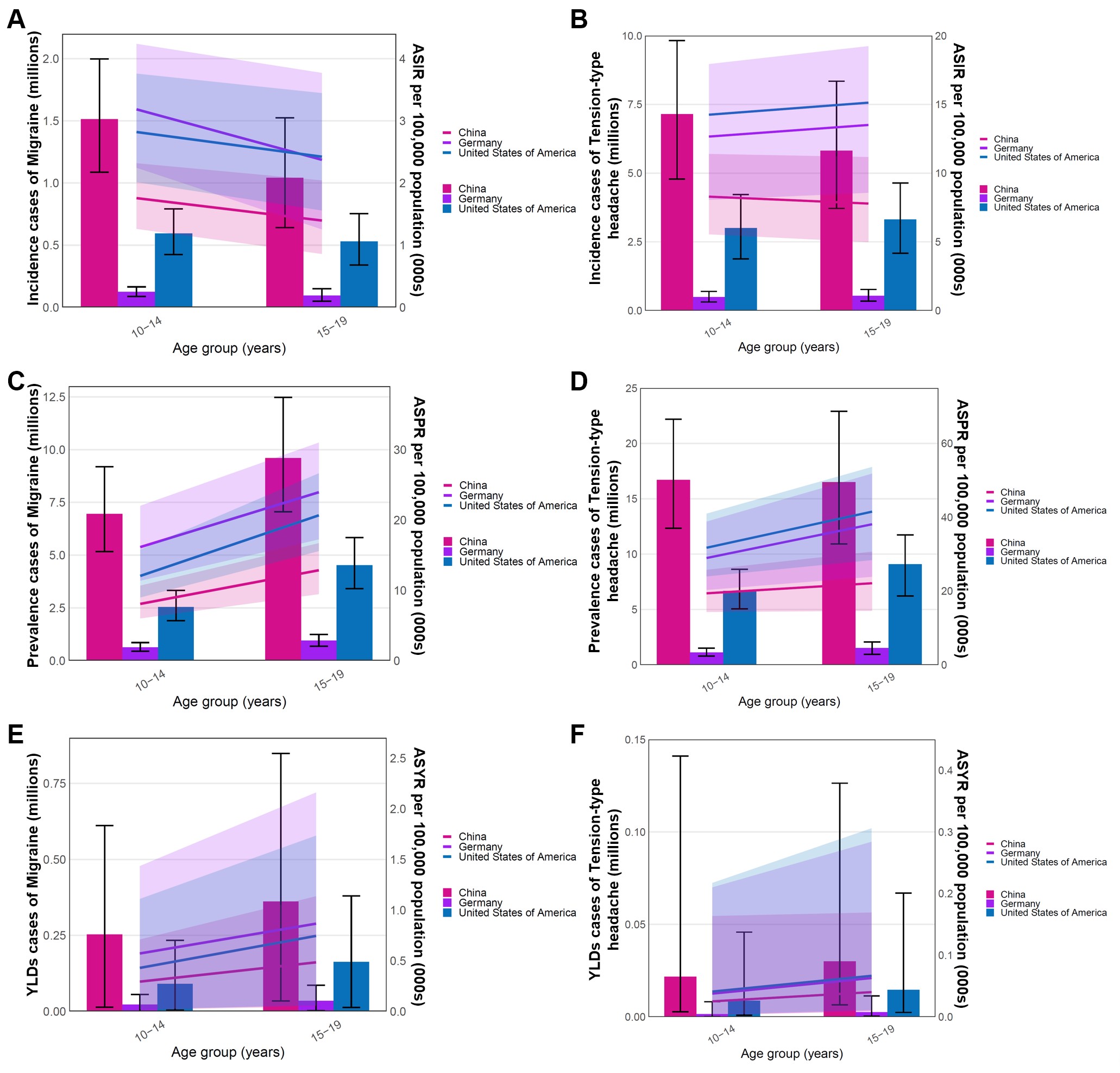

ASIR: age-standardised incidence rate; ASPR: age-standardised prevalence rate; ASYR: age-standardised YLD rate; YLDs: years lived with disability
Temporal trends in migraine among adolescents (aged 10–19 years) globally and in China, the US, and Germany from 1990 to 2021
For migraine cases, China exhibited multi-stage fluctuations. Incidence declined in 1990–1994 (APC = −2.4%), rose in 1994–2002 (1.64%), declined non-significantly in 2002–2005 (−0.86%), dropped sharply in 2005–2012 (−4.73%), declined again in 2012–2015 (−2.18%), and rose in 2015–2021 (2.36%). Prevalence showed a decline in 1990–1995 (−2.9%), a sharp rise in 1995–2004 (2%), a decline from 2004 to 2016 (2004–2007: −2.48%, 2007–2013: −5.1%, 2013–2016: −1.61%) and a rise from 2016 to 2021 (1.82%); YLDs mirrored the trends of prevalence. In the US, the number of migraine cases mostly rose in the middle-to-late periods (2000–2015). Incidence increased from 1992 to 2018 (1992–2004: 0.83%, 2004–2011: 0.41%, 2011–2014: 1.57%, 2014–2018: 0.56%), and then declined slightly from 2018 to 2021 (−0.31%). Prevalence rose from 1992 to 2015 (0.69%, 0.23%, 0.84%, 1.57%) and grew mildly from 2015 to 2021 (0.13%), while the trend of YLDs mirrored that of prevalence. In Germany, migraine burden increased during the early period, with incidence rising from 1990 to 1998 (APC = 1.74%), prevalence from 1992 to 1999 (1.53%), and YLDs from 1992 to 1999 (1.55%), followed by declines in the middle and later periods (Fig. 2, Table S2). In all 3 countries, the number of migraine cases was substantially higher among girls than boys, and the temporal trends were broadly similar between the sexes (Fig. S1).
For migraine ASRs, China showed fluctuating growth in ASIR and ASPR. ASIR increased in 1990–1996 (APC = 0.29%), decreased in 1996–2000 (−0.57%), and increased again in 2000–2019 (0.23%, 1.4%). ASPR decreased in 1990–2000 (−0.75%), increased sharply in 2000–2009 (1.93%, 0.8%), decreased in 2009–2015 (−0.6%), and increased again in 2015–2021 (0.14%). ASYR trends mirrored those of ASPR. In the US, ASIR, ASPR, and ASYR transitioned from early declines to sustained increases; ASIR declined in 1990–2005 (−0.6%, −1.11%, −0.1%) but increased in 2005–2021 (0.25%, 1.62%, 0.07%). Similarly, ASPR declined in 1990–2004 (−1.17%, −1.59%, −0.06%) but increased in 2004–2021 (0.71%, 1.86%, 0.09%), while ASYR declined in 1990–2003 (−1.12%, −2.09%) and then increased in 2003–2021 (0.69%, 1.84%, 0.01%). Germany’s ASRs increased initially, declined during the middle period, and showed minor increases in the later period (Fig. 2). Across the 3 countries, migraine ASRs were substantially higher among girls than boys, with overall trends broadly consistent with those described above (Fig. S2).
Migraine ASRs were further stratified by sex and age subgroups. Globally, ASIR among girls aged 10–14 years showed no clear trend (AAPC = −0.01) but declined continuously from 2010 to 2021 (APC = −0.11). In contrast, ASIR among 15–19-year-old girls decreased overall (AAPC = −0.03) but rose from 2003 to 2018 (APC = 0.06, 0.29) before flattening. For boys worldwide, both age groups showed increasing ASIR, with a larger increase in the 15–19-year group (AAPC = 0.13%). Increases in ASPR and ASYR were also greater in boys than girls, and in older than in younger adolescents. Notably, ASRs in the 15–19 years group flattened or declined during the COVID-19 pandemic. Among the 3 countries, China recorded the largest increases in all ASRs across both age and sex subgroups, Germany showed modest increases, and the US showed mainly declines, primarily in the 10–14 years group. In China, all ASR increases were greater in boys than girls in both age groups, with the largest difference observed in ASIR among 10–14-year-olds. ASYR was consistently higher in the 15–19 years group for both sexes, with other metrics showing similar patterns associated with sex within each age group. China’s ASIR also showed a downward trend during the pandemic (Tables S3–S5).
Fig. 2. Temporal trends and joinpoint regression analysis of migraine among adolescents aged 10–19 years in China, the US, and Germany from 1990 to 2021.
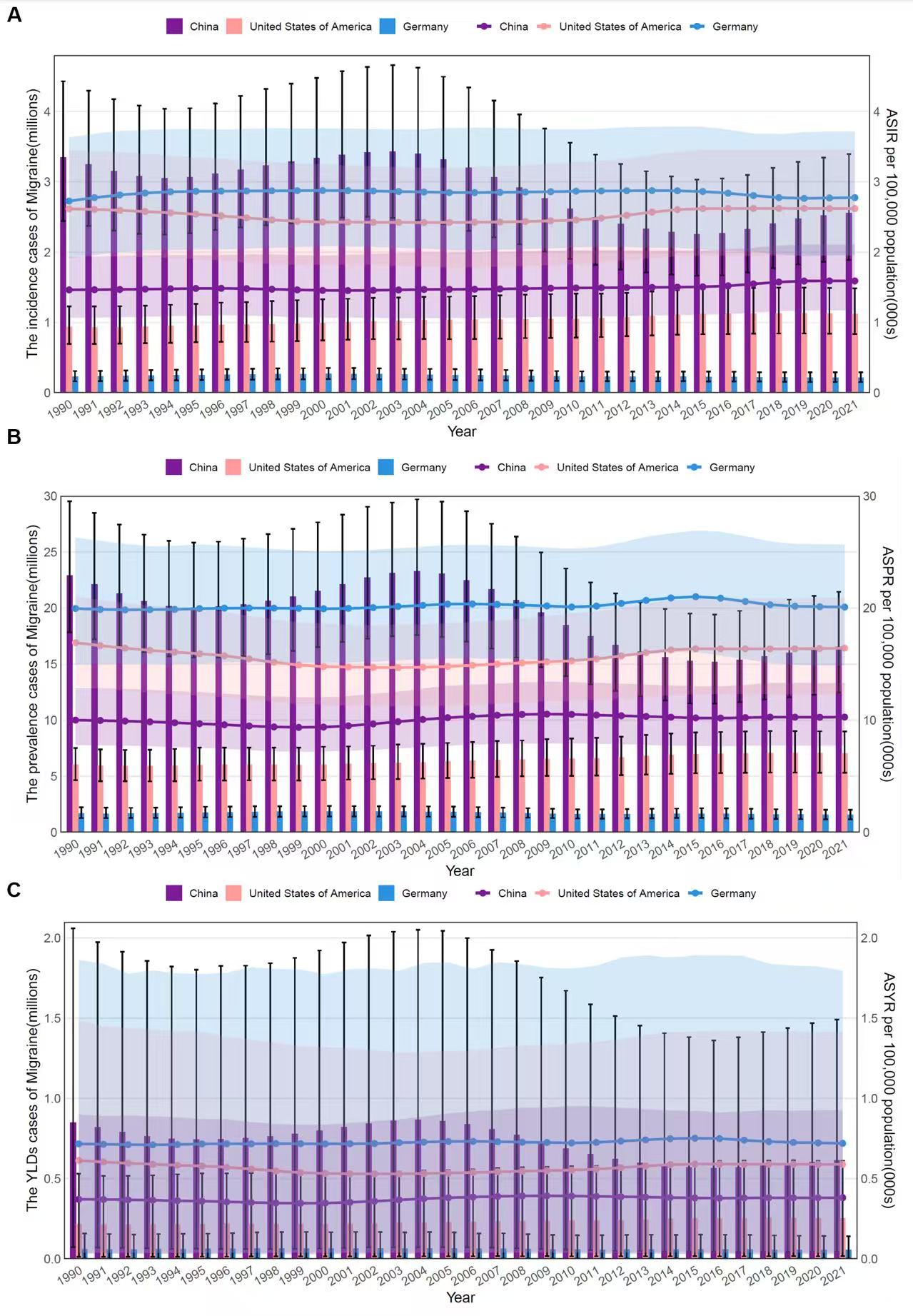
ASRs: age-standardised rates; ASIR: age-standardised incidence rate; ASPR: age-standardised prevalence rate; ASYR: age-standardised YLD rate; YLDs: years lived with disability
Absolute cases (left axis, bars), age-standardised rates (ASRs, right axis, lines).
Temporal trends in TTH among adolescents (10–19 years) globally and in China, the US, and Germany from 1990 to 2021
For TTH cases, China exhibited multi-stage fluctuations followed by late-period increases. Incidence decreased in 1990–1994 (APC = −2.77%) but increased in 1994–2004 (1.99%), decreased in subsequent intervals (−3.58%, −5.26%), and increased again in 2016–2021 (2.16%). Prevalence and YLDs showed similar temporal patterns, with early declines, mid-period increases, subsequent declines, and late-period increases. In the US, case numbers generally increased in the middle-to-late periods. Incidence generally increased in 1992–2018 (1.72%, 0.52%, −0.21%, 0.45%) before decreasing slightly in 2018–2021 (−0.24%). Prevalence and YLDs also increased in multiple intervals, with late-period decreases. Finally, case numbers in Germany increased early but declined in the middle-to-late periods (Fig. 3, Table S6). Across the 3 countries, the number of TTH cases was slightly higher among girls than boys, with overall trends broadly consistent with those described above (Fig. S3).
For TTH ASRs, China showed an overall increasing trend in ASIR, with increases in most segments of the study period (APCs = 0.13%, −0.39%, 1.86%, 0.05%, 0.73%). ASPR decreased slightly in 1990–2000 (−0.1%, −0.36%), increased sharply in 2000–2005 (1.84%), decreased modestly in 2005–2019 (−0.14%), and increased again in 2019–2021 (0.84%). ASYR trends mirrored those of ASPR. The US ASRs transitioned from early declines to mild or stable trends. ASIR decreased in 1990–1992 (−0.08%) and 2000–2004 (−0.31%) before showing a minor decline through 2021 (−0.01%). ASPR and ASYR showed similar patterns, with early declines followed by non-significant changes. Germany’s ASRs increased in the middle intervals but decreased in the early and late periods (Fig. 3). Across the 3 countries, TTH ASRs were slightly higher among girls than boys, with overall trends broadly consistent with those described above (Fig. S4).
Globally, TTH ASRs in the 10–14 years group showed no clear trend from 1990 to 2021. In contrast, the 15–19 years group exhibited a marked upward trend, with greater increases among boys than girls, particularly for ASIR and ASPR. Similar to migraine, ASRs in the 15–19 years group flattened or declined during the COVID-19 pandemic. Among the 3 countries, China again showed the largest increases in all TTH ASRs across age and sex subgroups, whereas Germany and the US showed modest increases or slight declines, primarily in the 15–19 years group. In China, all ASR increases were greater in boys than girls and in older than in younger adolescents. China’s TTH ASIR showed an upward trend during the pandemic (Tables S7–S9).
Fig. 3. Temporal trends and joinpoint regression analysis of tension-type headache among adolescents aged 10–19 years in China, the US, and Germany from 1990 to 2021.
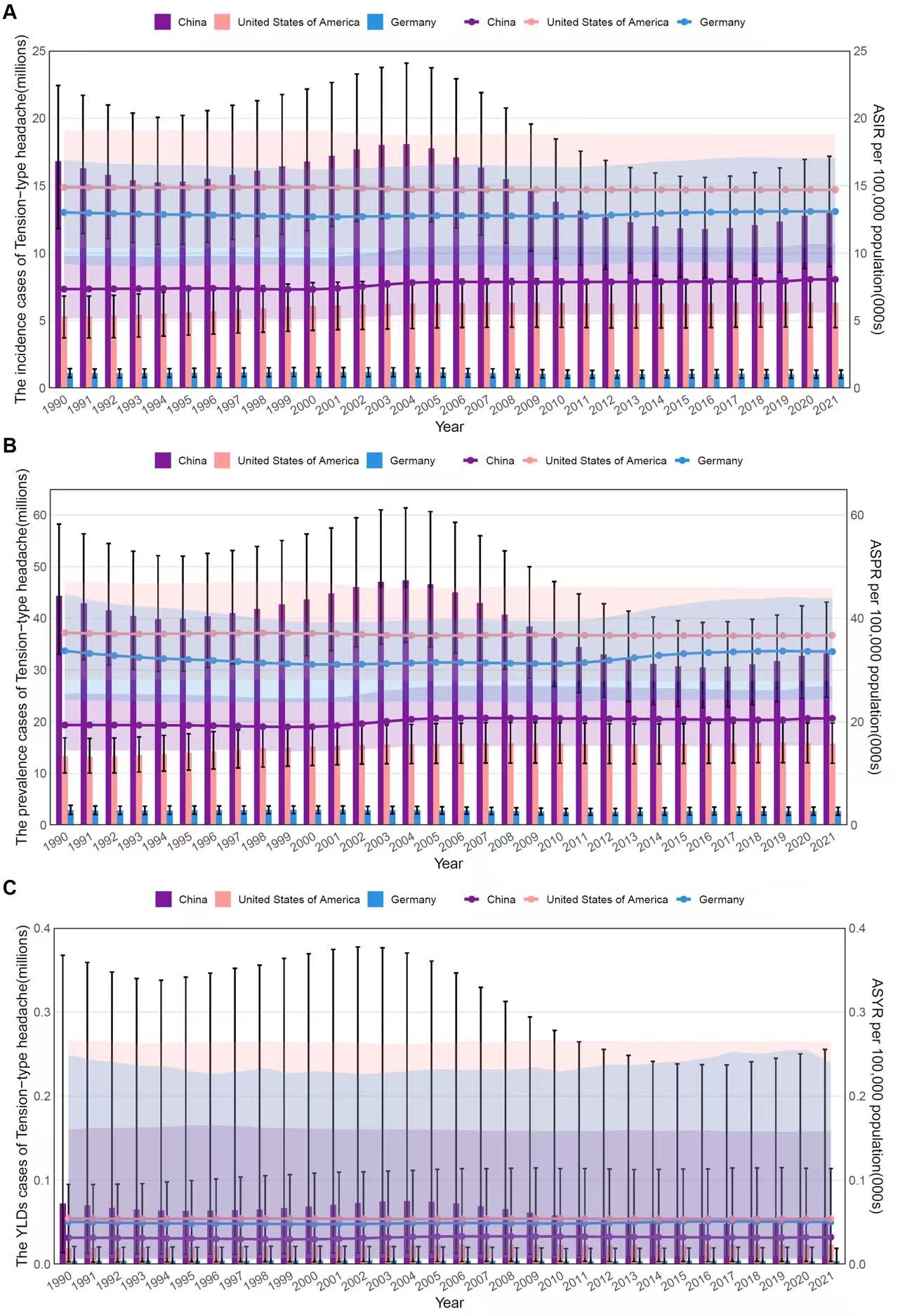
ASIR: age-standardised incidence rate; ASPR: age-standardised prevalence rate; ASRs: age-standardised rates; ASYR: age-standardised YLD rate; YLDs: years lived with disability
Absolute cases (left axis, bars), age-standardised rates (ASRs, right axis, lines).
SDI trends and inequalities of migraine and TTH among adolescents (10–19 years) globally and in China, the US, and Germany from 1990 to 2021
All ASRs for both migraine and TTH in China were initially closest to the optimal frontier curve but gradually increased and deviated from the curve as SDI rose from 1990 to 2021, with the global level showing a similar pattern (Fig. 4). SDI increased only modestly in Germany and the US compared with China, and their ASR trajectories were consistent with those described earlier.
Fig. 4. Frontier analysis of migraine and TTH burden by SDI among adolescents aged 10–19 years in China, Germany, the US, and globally from 1990 to 2021. (A, C, and E) ASIR, ASPR, and ASYR for migraine by SDI, respectively. (B, D, and F) Corresponding rates for TTH by SDI.
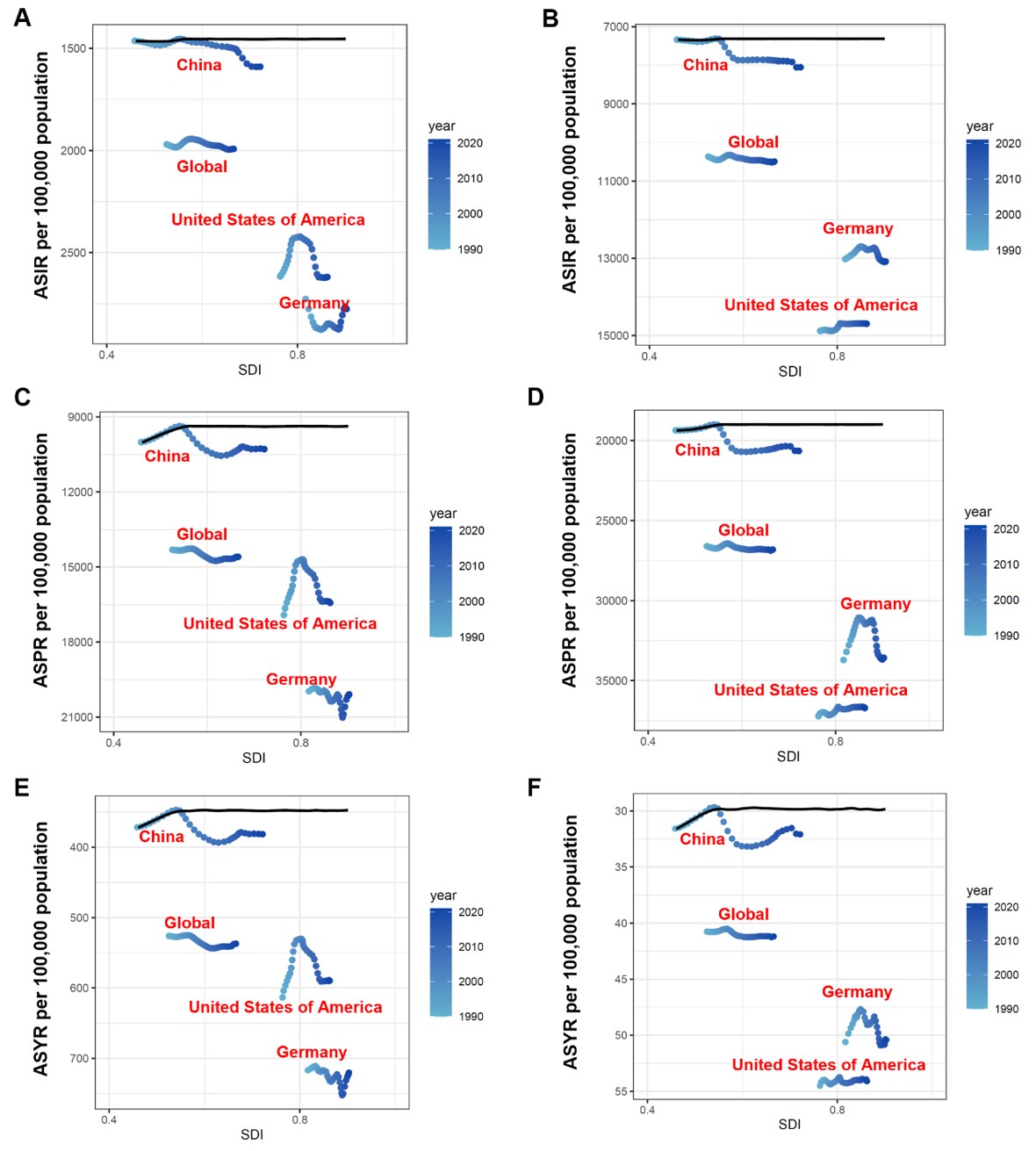

ASIR: age-standardised incidence rate; ASPR: age-standardised prevalence rate; ASYR: age-standardised YLD rate; SDI: socio-demographic index; TTH: tension-type headache; YLDs: years lived with disability
According to the inequality analysis, the crude rates of incidence, prevalence, and YLDs in China remained relatively low compared with the global average. Although China’s relative rank of SDI increased significantly from 1990 to 2021, it remained below those of the US and Germany, whereas its crude rates were relatively low. The crude rates of incidence, prevalence, and YLDs in the US and Germany ranked relatively high globally. The relative SDI ranks of both countries increased slightly from 1990 to 2021. Of these, the crude rates of incidence, prevalence, and YLDs in the US showed a slightly decreasing trend, while those of Germany showed no obvious overall change. Overall, the SII for migraine indicated increasing inequality from 1990 to 2021, whereas that for TTH indicated slightly decreasing inequality. In addition, the SII for both indicated that the higher the SDI rank, the greater the burden of migraine and TTH (Fig. S5).
The CIX for migraine rose from 1990 to 2021, indicating that the incidence, prevalence, and YLDs of migraine became increasingly concentrated in populations with higher SDI globally, and the social inequality of migraine burden intensified significantly. In contrast, the CIX for TTH showed only a slight increase in the early period, with TTH-related inequality attenuating in the later periods, suggesting a mild mitigating trend in TTH-related inequality. Based on the curve distribution, in 2021, the cumulative incidence, prevalence, and YLDs curves of Germany and the US were closer to the upper part of the graph, reflecting that these countries, which had higher SDI levels, had higher cumulative proportions of incidence, prevalence, and YLDs in their populations. China’s curves were relatively flat but still showed a trend of increasing cumulative incidence, prevalence and YLDs with rising SDI (Fig. S6).
DISCUSSION
This study used data from the GBD 2021 to systematically examine trends in incidence, prevalence, and YLDs of migraine and TTH among adolescents aged 10–19 years in China, the US, and Germany, as well as their associations with SDI and patterns of inequality in disease burden. Importantly, as an ecological analysis of aggregated population-level data, this study can only identify associations and not establish causal relationships. All subsequent interpretations of potential drivers are based on existing epidemiological evidence and should be considered hypotheses requiring further validation in prospective individual-level studies. The findings illuminate distinct epidemiological profiles and public health imperatives of headache disorders in nations at varying SDI stages, which provide critical insights for developing age-specific and region-adapted prevention strategies for adolescents during this critical developmental stage.
Adolescents aged 10–19 years are in a critical period of academic advancement and psychological maturation, during which headache disorders can substantially disrupt learning, social functioning, and long-term well-being.21 This analysis revealed that, for this age group, the ASIR, ASPR, and ASYR in China for both migraine and TTH remained lower than the global average throughout the study period. Despite China’s substantial increase in relative SDI ranking from 1990 to 2021, the increases in ASIR, ASPR, and ASYR were notably outpaced by SDI growth. This pattern may reflect 2 opposing dynamics: on the one hand, lifestyle shifts amid rapid urbanisation, including escalating academic pressure, reduced sleep duration, and heightened screen time among adolescents, are hypothesised to have contributed to headache incidence and prevalence.22 On the other hand, the low diagnostic accuracy of migraine in China may lead to underestimation of the true incidence, while inadequate recognition of headache subtypes in primary care further dampens the apparent rise in incidence.23 In contrast, the US and Germany, as high-SDI nations, consistently held top global rankings in ASIR, ASPR, and ASYR for migraine and TTH in adolescents, yet their SDI growth was modest. The US exhibited slight declines in ASIR, ASPR, and ASYR, whereas Germany remained stable overall. These trends may partly reflect differences in medical resources, access to specific therapeutics such as calcitonin gene-related peptide receptor antagonists, and the maturity of headache management frameworks in high-SDI settings.24 A study on neurological disease burden in the US similarly reported a gradual decline in migraine incidence, which may have been driven by enhanced preventive interventions and improved self-management among adolescents, with migraine remaining a leading contributor to YLDs in this population.25
This study’s findings also revealed distinct age-specific patterns across the 2 headache disorders. Migraine burden was higher in the 10–14 years age group, while TTH was more concentrated in the 15–19 years group. This divergence may reflect differing drivers across stages of adolescent development, though these interpretations remain speculative and cannot be confirmed by the aggregated ecological data. Migraine is hypothesised to peak earlier in adolescence in association with pubertal neuroendocrine changes and the maturation of the trigeminovascular system—processes that predominantly occur during early to mid-adolescence.26 For TTH, in contrast, the rising burden in older adolescents could be linked to the gradual accumulation of psychosocial stressors, including intensifying academic pressure and expanding social responsibilities, which become more prominent during late adolescence.27 Future individual-level prospective studies are needed to verify these potential mechanisms.
Notably, the 2019–2021 segment of the study period overlaps with the global COVID-19 pandemic, a disruption that may have impacted headache burden trends in adolescents aged 10–19 years, although its impacts varied across the 3 nations as reflected in the results. In China, migraine incidence showed an accelerated increase in 2015–2021, while TTH incidence similarly increased in 2016–2021. The pandemic period (2019–2021) coincided with a continuation of these upward trajectories, with ASRs also showing marginal increases. This may be related to pandemic-specific stressors for Chinese adolescents, including prolonged home-based online learning, reduced physical activity, social isolation, and anxiety about health—factors previously linked to increased headache frequency in youth.28 In contrast, the US showed a slight decline in both migraine and TTH incidence during 2018–2021. This stability or mild reduction may be attributed to the nation’s established remote healthcare infrastructure, which may have facilitated continued access to headache diagnostics and preventive interventions amid in-person care disruptions.29 Germany, meanwhile, maintained overall stable migraine and TTH burden in 2019–2021—a pattern that may have been supported by its universal healthcare system’s ability to sustain mental health and headache management services for adolescents, including school-based psychological support.30 It is important to note, however, that GBD 2021 data for this period may partially rely on modelling to address potential gaps in real-world data collection, which could introduce modest uncertainty in capturing the full pandemic impact.
Analyses of the relationship between SDI and headache burden showed that both migraine and TTH followed a pattern in which higher SDI rankings were associated with greater disease burden among adolescents, consistent with global evidence that headache disorder burden increases with social development.12 However, notable differences were observed in inequality trends between migraine and TTH: the SII and CIX indicated worsening disease burden inequality for migraine from 1990 to 2021, whereas inequality in TTH burden slightly decreased. This divergence may stem from fundamental differences in pathophysiology: migraine is closely linked to neuropathological processes (e.g. trigeminovascular activation, cortical spreading depression) and relies more heavily on medical resources for diagnosis and management, potentially making it more readily identified in high-SDI adolescent populations.31 In contrast, TTH relates more to universal stressors that affect adolescents across SDI groups relatively evenly, thus attenuating inequality.32 Notably, despite China’s rapid SDI ascent, its headache burden inequality in adolescents remained lower than that in the US and Germany, possibly reflecting unique advantages of middle-SDI nations during disease burden transition.
Temporal trend analyses further revealed distinct phases across the 3 countries in the 10–19-year age group. In China, the incidence, prevalence, and YLDs of migraine and TTH showed multi-stage, fluctuating but overall upward trends, with accelerated growth after 2015, consistent with reports of the highest global estimated annual percentage change (EAPC) for adolescent headache burden in East Asia.33 The US experienced a burden peak from 1990 to 2010, followed by a gradual decline, a trend that may be associated with widespread triptan use and school-based stress management interventions.34,35 Germany remained relatively stable, a pattern that may be attributable to its long-standing standardised headache care system for youth.36
Limitations of this study should be acknowledged. First, GBD 2021 data for China’s rural adolescents are underrepresented, potentially underestimating burden in low-income regions. Prospective population-based surveys in rural China are therefore urgently needed to validate and extend current estimates. Such surveys would use standardised, face-to-face diagnostic assessments based on ICD-10 criteria and could reduce uncertainty inherent in GBD model-derived estimates. They could also provide more direct estimates of the prevalence and incidence of headache disorders in underserved rural populations and identify region-specific risk factors, including unique lifestyle patterns, limited access to paediatric neurology care, and rural-specific psychosocial stressors that may not be fully captured in aggregated national datasets. Furthermore, longitudinal prospective studies could elucidate the natural history of adolescent headache in rural settings and inform the development of tailored prevention and management strategies to reduce the growing urban–rural disparity in headache care.
Second, this study is subject to the ecological fallacy, in that national-level associations between SDI, healthcare systems, and headache burden cannot be directly extrapolated to individual adolescents. Third, GBD 2021 estimates have inherent modelling uncertainty due to heterogeneous data sources and varying data quality across countries, with greater reliance on modelling in China than in the US and Germany. Fourth, cross-national variability in diagnostic practices exists. Although standardised ICD-10 codes were used, the clinical application of these criteria may differ across countries, particularly in primary care settings in China, potentially introducing bias into cross-country comparisons. Fifth, generalisability is limited to the 3 focal countries, which represent distinct SDI levels and healthcare systems, and may not extend to low-income regions or other cultural contexts. Sixth, individual-level risk factor data were unavailable, precluding causal inference and adjustment for potential confounders such as sleep quality, physical activity levels, and comorbid mental health conditions. All observed associations between population-level factors and headache burden trends should be interpreted as hypotheses requiring validation in prospective cohort studies. Seventh, the inflection points identified by joinpoint regression may temporally coincide with a range of national policy adjustments, healthcare service reforms, updates to diagnostic criteria, and socioeconomic shifts across the 3 focal countries. Given the ecological study design, the authors cannot disentangle the independent effects of individual policies or contextual events on the observed changes in trends. These concurrent factors may have contributed to the identified joinpoints but could not be separately evaluated. Eighth, COVID-19 impacts were inferred from temporal trends, as GBD 2021 lacks pandemic-specific covariates. Future research should conduct prospective surveys in rural China to validate GBD estimates and incorporate individual-level risk factors to quantify their contributions to burden inequalities. Studies should also evaluate the effectiveness of interventions, such as school-based stress management in China and telemedicine in the US, in reducing adolescent headache burden, while extending analyses to a broader range of countries to improve global generalisability.
CONCLUSION
Adolescent migraine and TTH showed distinct cross‑national trends across different SDI levels. China experienced an increasing disease burden in absolute terms, whereas high‑SDI countries showed stable or declining rates. The 2019–2021 period coincided with changes in cross‑national inequality patterns, although pandemic-specific effects could not be confirmed from the available data. Future studies using primary data are needed to validate these findings, identify individual-level risk factors, and evaluate the effects of targeted interventions.
Table S1. Comparison of average annual percent change values between primary analysis and 2 sensitivity analyses for migraine and tension-type headache among adolescents aged 10–19 years in China, the US, and Germany from 1990 to 2021.
Table S2. Segment-specific annual percent change with 95% confidence intervals from joinpoint regression analysis for migraine among adolescents aged 10–19 years in China, the US, and Germany from 1990 to 2021.
Table S3. Annual percent change and average annual percent change of migraine incidence rates among adolescents aged 10–19 years, globally and in China, Germany, and the US, stratified by age and sex.
Table S4. Annual percent change and average annual percent change of migraine prevalence rates among adolescents aged 10–19 years, globally and in China, Germany, and the US, stratified by age and sex.
Table S5. Annual percent change and average annual percent change of migraine years lived with disability rates among adolescents aged 10–19 years, globally and in China, Germany, and the US, stratified by age and sex.
Table S6. Segment-specific annual percent change with 95% confidence intervals from joinpoint regression analysis for tension-type headache among adolescents aged 10–19 years in China, the US, and Germany from 1990 to 2021.
Table S7. Annual percent change and average annual percent change of tension-type headache incidence rates among adolescents aged 10–19 years, globally and in China, Germany, and the US, stratified by age and sex.
Table S8. Annual percent change and average annual percent change of tension-type headache prevalence rates among adolescents aged 10–19 years, globally and in China, Germany, and the US, stratified by age and sex.
Table S9. Annual percent change and average annual percent change of tension-type headache years lived with disability rates among adolescents aged 10–19 years, globally and in China, Germany, and the US, stratified by age and sex.
Fig. S1. Temporal trends in migraine cases among adolescents aged 10–19 years in China, the US, and Germany from 1990 to 2021, stratified by sex.
Fig. S2. Temporal trends in age-standardised rates of migraine among adolescents aged 10–19 years in China, the US, and Germany from 1990 to 2021, stratified by sex.
Fig. S3. Temporal trends in tension-type headache cases among adolescents aged 10–19 years in China, the US, and Germany from 1990 to 2021, stratified by sex.
Fig. S4. Temporal trends in age-standardised rates of tension-type headache among adolescents aged 10–19 years in China, the US, and Germany from 1990 to 2021, stratified by sex.
Fig. S5. Sociodemographic inequalities in migraine and tension-type headache burden among adolescents aged 10–19 years at the global level and in 3 countries from 1990 to 2021.
Fig. S6. Concentration curves of migraine and tension-type headache burden by sociodemographic index among adolescents aged 10–19 years globally and in 3 countries in 1990 and 2021.
Acknowledgements
The authors are deeply grateful to all collaborators of the GBD database for their outstanding contributions to the data.
Data availability
The data were extracted from the GBD 2021 platform (http://ghdx.healthdata.org/gbd-results-tool).
REFERENCES
- Sawyer SM, Afifi RA, Bearinger LH, et al. Adolescence: a foundation for future health. Lancet 2012;379:1630-40.
- Chen ZF, Kong XM, Yang CH, et al. Global, regional, and national burden and trends of migraine among youths and young adults aged 15-39 years from 1990 to 2021: findings from the global burden of disease study 2021. J Headache Pain 2024;25:131.
- Kaczynski KJ, Claar RL, Lebel AA. Relations between pain characteristics, child and parent variables, and school functioning in adolescents with chronic headache: a comparison of tension-type headache and migraine. J Pediatr Psychol 2013;38:351-64.
- Owiredua C, Flink I, Boersma K. Prevalence and risk factors for pain-specific school absenteeism in adolescents with recurrent pain: A prospective population-based design. Eur J Pain 2023;27:390-400.
- Berring-Uldum AA, Skovgaard LT, Miranda MJ, et al. Education and Social Life: The Impact of Headache on Participation in Children and Adolescents Attending a Headache Clinic-A Case-Control Study. Pediatr Neurol 2025;169:185-95.
- Liu C, Wang Y, Liu M, et al. Global, regional, and national burden and trends of tension-type headache among adolescents and young adults (15-39 years) from 1990 to 2021: findings from the Global Burden of Disease study 2021. Sci Rep 2025;15:18254.
- Ai M, Wang W, Chen JM, et al. Multidimensional stress and self-harm in Chinese preadolescents: A cross-sectional study. J Affect Disord 2025;372:370-6.
- Liu Y, Lu Z. Chinese high school students’ academic stress and depressive symptoms: gender and school climate as moderators. Stress Health 2012;28:340-6.
- Stahlmann K, Mena E, Kuhnert R, et al. Social Inequalities in the Association between Social Infrastructure and Mental Health: An Observational Cross-Sectional Analysis of Children and Adolescents in Germany. Int J Environ Res Public Health 2022;19:6760.
- Squires D, Anderson C. U.S. health care from a global perspective: spending, use of services, prices, and health in 13 countries. Issue brief (Commonwealth Fund) 2015;15:1-15.
- Wiktorowicz ME, Di Pierdomenico K, Buckley NJ, et al. Governance of mental healthcare: Fragmented accountability. Soc Sci Med 2020;256:113007.
- Global Burden of Disease Collaborative Network. Global Burden of Disease Study 2021 (GBD 2021) Results. Seattle, United States: Institute for Health Metrics and Evaluation (IHME), 2024.
- GBD 2021 Diseases and Injuries Collaborators. Global incidence, prevalence, years lived with disability (YLDs), disability-adjusted life-years (DALYs), and healthy life expectancy (HALE) for 371 diseases and injuries in 204 countries and territories and 811 subnational locations, 1990-2021: a systematic analysis for the Global Burden of Disease Study 2021. Lancet 2024;403:2133-61.
- Zhang YJ, Li XY, Guo ZL. Temporal trends of migraine and tension-type headache burden across the BRICS: implications from the Global Burden of Disease study 2019. Front Neurol 2023;14:1307413.
- Li XY, Yang CH, Lv JJ, et al. Global, regional, and national epidemiology of migraine and tension-type headache in youths and young adults aged 15-39 years from 1990 to 2019: findings from the global burden of disease study 2019. J Headache Pain 2023;24:126. Erratum in: J Headache Pain 2023;24:156.
- Ge R, Chang J. Disease burden of migraine and tension-type headache in non-high-income East and Southeast Asia from 1990 to 2019. J Headache Pain 2023;24:32.
- GBD 2015 Healthcare Access and Quality Collaborators. Healthcare Access and Quality Index based on mortality from causes amenable to personal health care in 195 countries and territories, 1990-2015: a novel analysis from the Global Burden of Disease Study 2015. Lancet 2017;390:231-66.
- Schlotheuber A, Hosseinpoor AR. Summary Measures of Health Inequality: A Review of Existing Measures and Their Application. Int J Environ Res Public Health 2022;19:3697. Erratum in: Int J Environ Res Public Health 2022;19:6969.
- GBD 2019 Demographics Collaborators. Global age-sex-specific fertility, mortality, healthy life expectancy (HALE), and population estimates in 204 countries and territories, 1950-2019: a comprehensive demographic analysis for the Global Burden of Disease Study 2019. Lancet 2020;396:1160-203.
- Luo LS, Luan HH, Zhang P, et al. The disease burden of bladder cancer and its attributable risk factors in five Eastern Asian countries, 1990-2019: a population-based comparative study. BMC Public Health 2024;24:2404.
- Onofri A, Pensato U, Rosignoli C, et al. Primary headache epidemiology in children and adolescents: a systematic review and meta-analysis. J Headache Pain 2023;24:8.
- Wang L, Zhou L, Zhu Y, et al. Prescription Trends for Primary Headache in Children and Adolescents in China During 2019-2023: A Retrospective Study. Paediatr Drugs 2025;27:491-502.
- Yu S, Liu R, Zhao G, et al. The prevalence and burden of primary headaches in China: a population-based door-to-door survey. Headache 2012;52:582-91.
- Edvinsson L, Haanes KA, Warfvinge K, et al. CGRP as the target of new migraine therapies – successful translation from bench to clinic. Nat Rev Neurol 2018;14:338-50.
- GBD 2016 Neurology Collaborators. Global, regional, and national burden of neurological disorders, 1990-2016: a systematic analysis for the Global Burden of Disease Study 2016. Lancet Neurol 2019;18:459-80.
- Pakalnis A. Migraine and Hormones. Semin Pediatr Neurol 2016;23:92-4.
- Cathcart S, Winefield AH, Lushington K, et al. Stress and tension-type headache mechanisms. Cephalalgia 2010;30:1250-67.
- GBD 2021 Demographics Collaborators. Global age-sex-specific mortality, life expectancy, and population estimates in 204 countries and territories and 811 subnational locations, 1950-2021, and the impact of the COVID-19 pandemic: a comprehensive demographic analysis for the Global Burden of Disease Study 2021. Lancet 2024;403:1989-2056.
- Chiang CC, Halker Singh R, Lalvani N, et al. Patient experience of telemedicine for headache care during the COVID-19 pandemic: An American Migraine Foundation survey study. Headache 2021;61:734-9.
- Lustig S, Koenig J, Bauer S, et al. Help-seeking attitudes and behaviours for mental health problems in adolescents before and during the first COVID-19 school closures in Germany. Early Interv Psychiatry 2023;17:331-4.
- Biscetti L, Cresta E, Cupini LM, et al. The putative role of neuroinflammation in the complex pathophysiology of migraine: From bench to bedside. Neurobiol Dis 2023;180:106072.
- GBD 2016 Headache Collaborators. Global, regional, and national burden of migraine and tension-type headache, 1990-2016: a systematic analysis for the Global Burden of Disease Study 2016. Lancet Neurol 2018;17:954-76.
- Han S, Chu M, Ren Y, et al. Global, regional, and national epidemiology of neurological disorders and subcategories: incidence and disability-adjusted life years, 1990-2021. Eur J Med Res 2025;30:711.
- Ferrari MD, Roon KI, Lipton RB, et al. Oral triptans (serotonin 5-HT(1B/1D) agonists) in acute migraine treatment: a meta-analysis of 53 trials. Lancet 2001;358:1668-75.
- Hershey AD, Shmuely S, Stark-Inbar A, et al. Patterns, Barriers, and Preferences of Treating Migraine Within the School Setting: A Survey Study of Students. Children (Basel) 2024;11:1286.
- Eigenbrodt AK, Ashina H, Khan S, et al. Diagnosis and management of migraine in ten steps. Nat Rev Neurol 2021;17:501-14.
This study was a secondary analysis of publicly available, de-identified, aggregated population-level data from the GBD 2021 database. No identifiable individual-level data or human participant procedures were involved. Therefore, ethics committee approval and informed consent were not required.
The authors declare that they have no affiliations with or involvement in any organisation or entity with any financial interest in the subject matter or materials discussed in this manuscript. No funding was received for this study.
Dr Qinggang Hu, Dr Xulei Lv, Dr Mengmeng Li, Department of Anesthesiology, The Fourth Medical Center of PLA General Hospital, 51 Fucheng Road, Haidian District, Beijing, China, 100048. Emails: [email protected], [email protected], [email protected]
