

ABSTRACT
Introduction: Chronic myeloid leukaemia (CML) patients on tyrosine kinase inhibitors (TKIs) show adequate antibody responses to SARS-CoV-2 vaccination, but T-cell responses remain unclear. This study investigates the overall immune responses in these patients after vaccination.
Methods: In this longitudinal study, CML patients on TKIs who received at least 3 doses of the SARS-CoV-2 vaccine were assessed for neutralisation activity against the wild-type (WT) and Omicron variants at multiple time points: baseline (D0), week 4 (D28), month 6 (M6), and after the booster dose at months 3 (B3), 6 (B6), and 12 (B12). T-cell responses were evaluated at B6 and B12, with comparisons made to healthy controls (HC).
Results: Twenty-seven CML patients and 113 HC were included. Neutralising activity against WT was similar across groups at all time points. Fewer CML patients exhibited positive neutralisation against Omicron at B6 (50.0% versus 88.9%, P=0.003), with higher antibody levels in CML patients at D28 and M6, but lower levels at B6 (P<0.05). T-cell responses were similar between groups at B6 and B12.
Conclusion: Neutralising activity against WT and Omicron was similar, with a decline at B6, while T-cell responses were comparable across groups. These findings highlight the importance of continued vaccination in CML patients.
CLINICAL IMPACT
What is New
- Neutralising activity (defined as inhibition >30%) after the 2-dose primary vaccination series against wild-type were similar between chronic myeloid leukemia (CML) patients and healthy subjects; however, the neutralising activity against Omicron BA.1 are lower among CML patients 6 months post booster dose.
- To the authors’ knowledge, this is the first study that specifically determined the antibody and T-cell responses after SARS-CoV-2 vaccines in TKI-treated CML patients, in particular to the Omicron variant.
Clinical Implications
- The different immunological responses to variants like Omicron, particularly after the booster dose, suggest that CML patients may need individualised vaccination plans and rigorous post-vaccine monitoring.
- These results point to the potential benefits of next-generation vaccines against immune-evasive variations of COVID-19 infections and encourage the ongoing prioritisation of booster doses. These results are crucial for directing improved vaccination policy and optimising benefit in this group of patients.
The COVID-19 pandemic, caused by SARS-CoV-2, led to widespread illness and profound social and economic disruption. The impact of COVID-19 infection is particularly significant in patients with underlying cancer. A meta-analysis that involved more than 46,000 patients showed a 66% higher risk of death and a 56% increased likelihood of requiring admission to the intensive care unit, compared with those without cancer.1 Patients with lung and haematological malignancies were at particularly greater risk. This increased risk may reflect the immunocompromised state associated with the underlying disease and associated treatments such as ongoing chemotherapy, which can affect vaccine responses.2,3
Chronic myeloid leukaemia (CML) is a myeloproliferative neoplasm, which is characterised by the presence of the Philadelphia chromosome. With the introduction of tyrosine kinase inhibitors (TKIs), overall survival in patients has greatly improved. The use of TKIs is associated with altered B-cell immunity, and responses to COVID-19 vaccination in TKI-treated CML patients may be affected because of off-target inhibitory effects on B-cell signalling kinases.4 Several studies have shown that CML patients on TKI exhibit a robust humoral immune response to COVID-19 vaccination and develop significant levels SARS-CoV-2 spike-specific IgG antibodies comparable to healthy individuals.5,6 Furthermore, the persistence of these antibodies over time was also similar to that of the general population.6 While humoral responses are promising, T-cell immunity is crucial for long-term protection. TKIs have been reported to affect T-cell immune functions, including reducing effector CD8+ T-cell responses and interfering with T-lymphocyte signalling.7,8 Diminished T-cell responses in general may, in general, affect the effectiveness and durability of vaccine protection.9 The long-term impact of these molecularly targeted drugs on immune function is still not clearly defined.10
In Malaysia, epidemiological data on CML are limited, and the prevalence was reported to be approximately 69 per million.11 As of 2024, the total population of Malaysia is estimated at 34.1 million; therefore, the number of CML patients is likely to exceed 2000.12 Research on vaccine responses in patients with haematological cancers in Malaysia is scarce, and the only published study that included haematological cancer patients only determined the seroconversion rate following various SARS-CoV-2 vaccines.13 There has been thus far no study that specifically evaluated antibody and T-cell responses after SARS-CoV-2 vaccination in TKI-treated CML patients in Malaysia, particularly against the Omicron variant.
During the COVID-19 pandemic in Malaysia, the virus evolved through multiple waves with different dominant variants. The first wave (early 2020) mainly involved imported Wuhan strains.14 From April 2021 to January 2022, the fourth wave was dominated by the Delta variant, with high case numbers, hospitalisations, and deaths—particularly among unvaccinated individuals, when only 6.3% of the population was fully vaccinated at its peak.15 The fifth wave emerged in late 2021, led by the Omicron variant, which rapidly displaced Delta and caused a higher monthly case peak within a shorter time frame. Despite this, there were fewer severe cases and deaths, likely owing to a high vaccination rate (78.9%) and Omicron’s lower virulence.14
This study was conceived during the pandemic where we aimed to ascertain immune responses following SARS-CoV-2 vaccination in CML patients on TKI, and to assess the durability of these immune responses achieved, including against the Omicron variant. Now endemic, COVID-19 continues to be a threat to public health, especially to immunocompromised individuals. The results of this study will offer crucial insights into the overall effectiveness of vaccines for CML patients on TKI therapy.
METHODS
Study design and study participants
This was a longitudinal study of TKI-treated CML patients receiving 2 doses of SARS-CoV-2 vaccine, followed by 1 booster dose, at a teaching hospital in Malaysia. The inclusion criteria were adult CML patients aged 18 years and above who had been treated with TKI for at least 6 months before the vaccination date, had no other underlying malignancies or autoimmune disease, and were not receiving other immunosuppressive therapy. Patients who had received a SARS-CoV-2 vaccine within 2 weeks before screening, had a self-reported history of COVID-19 infection, ongoing pregnancy or breastfeeding, a history of bleeding disorders or severe adverse reactions associated with prior vaccination, an acute febrile episode within 72 hours before recruitment, or were unwilling to commit to protocol-mandated blood sampling were excluded.
Sampling was performed between June 2021 and May 2023, coinciding with the Delta (August to October 2021) and Omicron waves (January to April 2022) in Malaysia. A total of 60 controls were recruited at study entry. Age-matched healthy individuals without CML or other immunosuppressive disease who were attending vaccine appointments at the same centre were approached as controls. A new group of 53 age-matched controls was recruited when the booster dose was administered because 55 of the 60 initial controls were lost to follow-up. The sex and ethnicity of the new cohort were matched to those of the first cohort. These controls were co-opted opportunistically from another ongoing study at our institution, involving patients from the Geriatric Clinic and Primary Care Clinic. All participants provided written informed consent, and the study protocol was approved by the Universiti Malaya Medical Center Medical Research Ethics Committee (UMMC MREC) with registration number of 2021524-10164.
Collection of demographic data and samples
Patients’ baseline demographic data were collected. All participants had blood drawn at 6 time points: prior to the first dose (baseline, D0), 1 month (D28) and 6 months (M6) after the second dose when the booster was administered, then 3 months (B3), 6 months (B6), and 12 months (B12) after the booster. All blood samples processed in this study were handled in the same laboratory using standard protocols. Blood samples from study participants were transferred to the laboratory, and plasma was isolated within 4 hours of collection. Samples were then stored at -80°C until further analysis, which was performed in batches.
Antibody binding, neutralisation assay, and QuantiFERON SARS-CoV-2 assay
Antibody titres against the receptor-binding domain (RBD) of the spike protein and nucleocapsid (N) were measured using the quantitative Elecsys Anti-SARS-CoV-2 S and N-protein assays (Roche Diagnostics, GmbH, Germany), respectively, on the Cobas e601 analyser (Roche Diagnostics) according to the manufacturer’s instructions. The Roche Elecsys system uses an automated system with appropriate calibration and internal control steps, which ensures reproducibility and accuracy across different runs and reagent lots; 1 unit(U)/mL of anti-S antibodies reported by this assay corresponds to 1 binding antibody U/mL according to the First World Health Organization (WHO) International Standard for anti-SARS-CoV-2 immunoglobulin (human) (NIBSC 20/136).18
The positivity threshold for the anti-S assay was defined as ≥0.8 U/mL, while the anti-N assay used a cut-off index (COI) of ≥1.0. Samples that exceeded the upper detection limit of >250 international units (IU)/mL for the anti-S assay were assigned a value of 250 IU/mL for analysis.
The anti-N assay was performed only in the healthy control group 1 at D0, D28, and M6, but it was expanded to both CML patients and healthy controls group 2 at B3, B6, and B12after additional funding was obtained. The new batch of controls was co-opted opportunistically from another ongoing study at the authors’ institution from B3 onwards because of a high attrition in the initial control cohort.
Neutralisation activity against SARS-CoV-2 wild-type and the Omicron BA.1 (B.1.1.529) variant was assessed using the SARS-CoV-2 surrogate viral neutralisation assay kit (cPass Neutralisation Kit, GenScript Biotech, US). Relative inhibition was determined based on the mean absorbance of the negative control, with a threshold of 30% indicating positive neutralisation activity. Equivalent IU/mL conversions were obtained using data extrapolated from cPass calibration against the First WHO International Standard for anti-SARS-CoV-2 immunoglobulin (human) through a publicly available online tool, via https://github.com/Lelouchzhu/cPass-to-IU_Conversion, as previously described.20 The assay against wild-type was done for only 2 time points (D28 and M6), whereas the assay against Omicron BA.1 was carried out at all time points except baseline: at D28, M6, B3, B6, and B12. Internal controls to monitor batch variation reported ranges of 10–20%, which is appropriate for result reproducibility.19
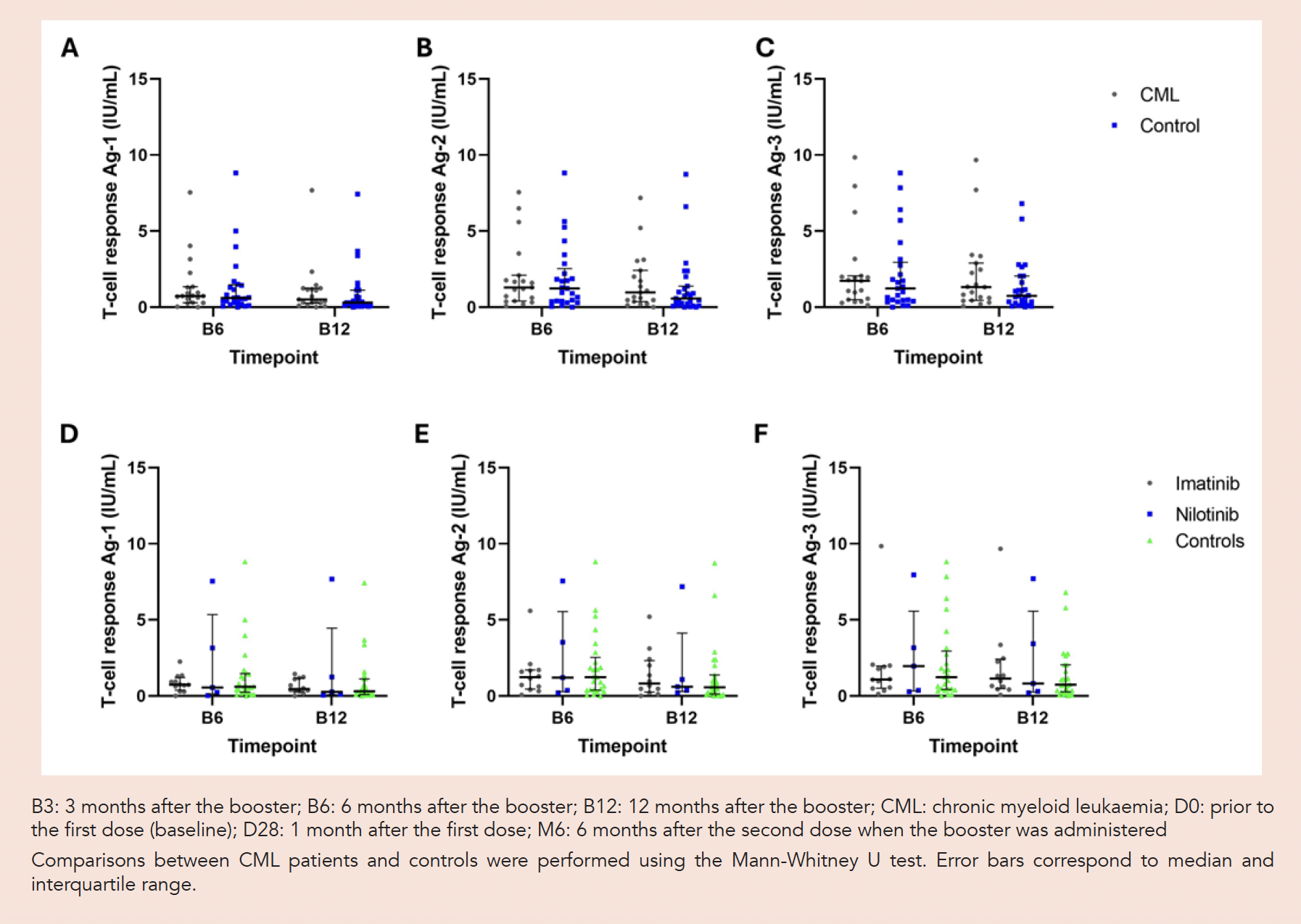
T-cell responses against SARS-CoV-2 spike sub-units antigens were measured using the QuantiFERON SARS-CoV-2 assay kit (Qiagen, Germany) according to manufacturer’s instructions. This assay includes 3 antigen tubes—SARS-CoV-2 Ag1, Ag2, and Ag3, which use combinations of SARS-CoV-2-specific antigens to stimulate lymphocytes in heparinised whole blood, targeting cell-mediated immunity. The Ag1 tube contains CD4+ epitopes derived from the S1 subunit (RBD) of the spike protein; Ag2 contains CD4+ and CD8+ epitopes from the S1 and S2 subunits of the spike protein; and Ag3 comprises CD4+ and CD8+ epitopes from S1 and S2, along with immunodominant CD8+ epitopes derived from the entire genome.21 The concentration of Interferon-gamma (IFN)-γ in plasma from the stimulated samples was measured using ELISA. An IFN-γ response was classified as reactive if it exceeded 0.15 IU/mL. This assay was conducted at the B6 and B12 sampling time points.
Statistical analysis
Statistical analysis was performed using the IBM SPSS version 23.0 (IBM Corp, Armonk, NY, US) and GraphPad Prism 8 (GraphPad Software, US). Comparisons of anti-S antibody levels and inhibition activity against SARS-CoV-2 wild-type and its variants between CML patients and controls were performed using the Mann-Whitney U test. The percentages of CML patients and controls with positive neutralising activity were compared using the Chi-square and Fisher’s exact tests. P value of <0.05 was considered statistically significant.
RESULTS
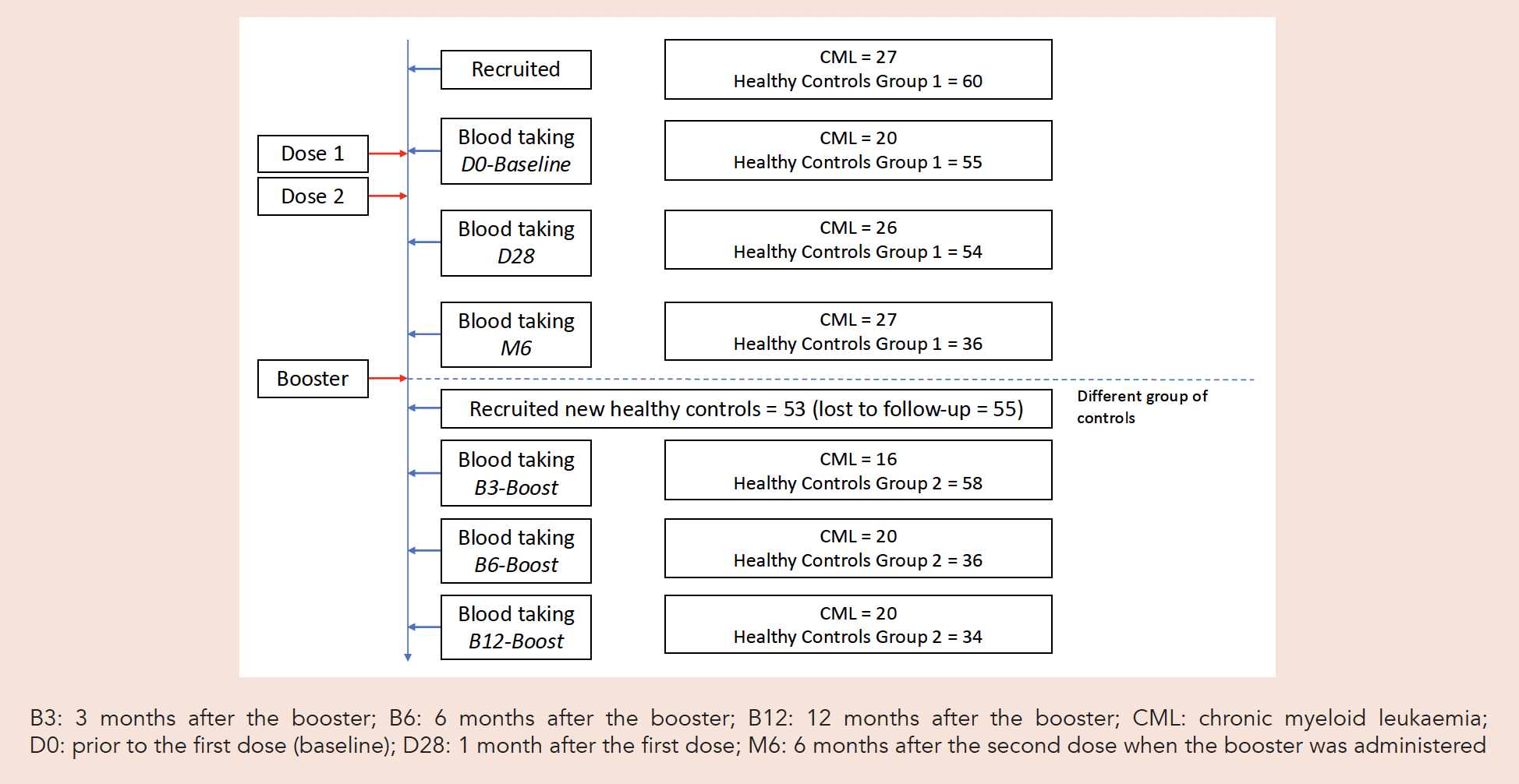
A total of 87 participants (27 CML patients and 60 controls) consented at the study entry. Over the study course, 19 controls were lost to follow-up at M6. New controls (n=53) were recruited at B3 as 55 controls who participated at study entry were lost to follow-up (Fig. 1).
Fig. 1. Enrolment of participants.
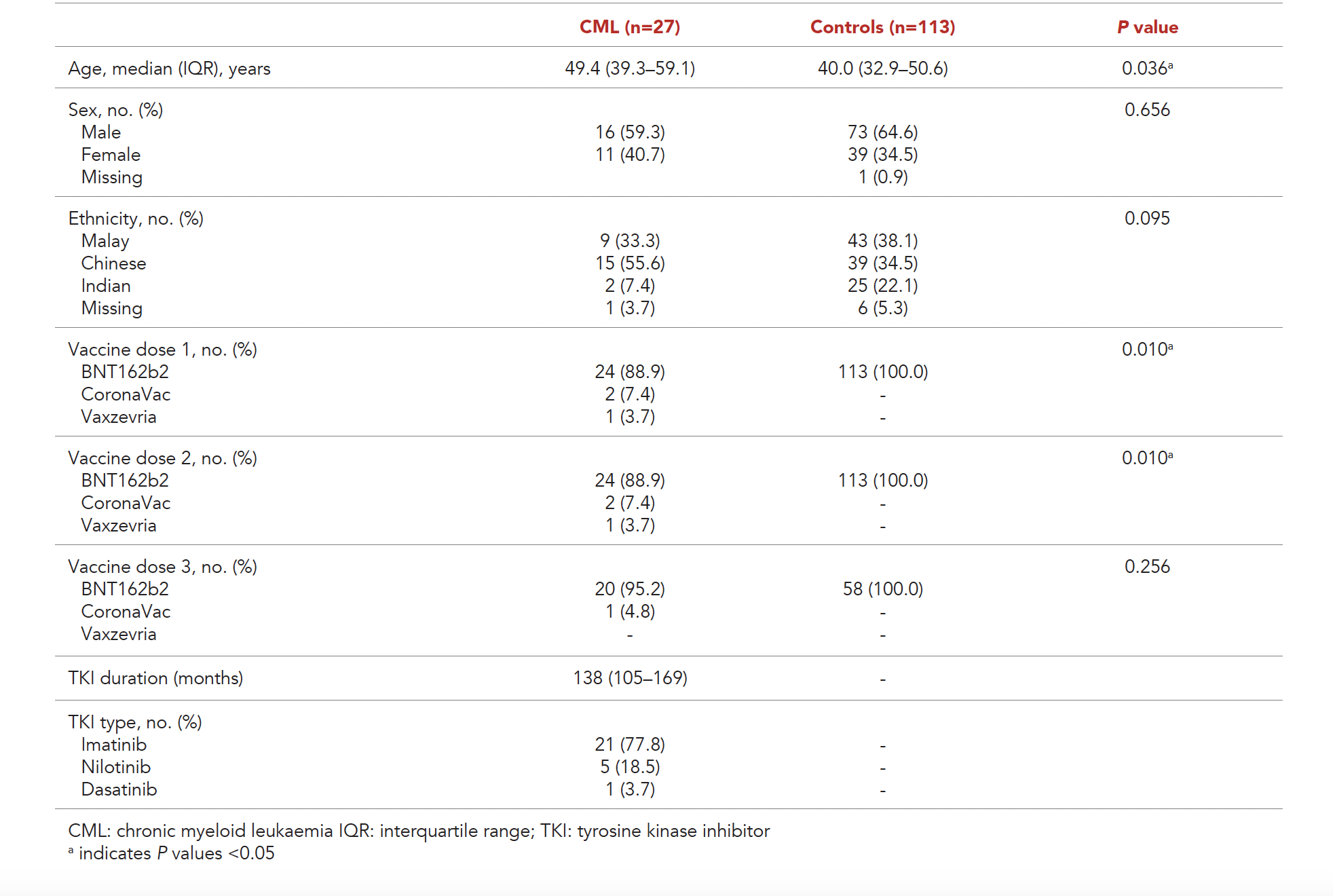
The median ages of CML patient and controls were 49 (interquartile range [IQR] 39–59) and 40 (IQR 33–51) years, respectively. The majority of CML patients were male (59.3%) and of Chinese ethnicity (55.6%). In comparison, controls comprised 64.6% males, with the majority being of Malay ethnicity (38.1%). The majority of CML patients (88.9%) and all controls received the BNT162b2 mRNA vaccine. The demographics of the participants are shown in Table 1.
Table 1. Demographics of CML cases and controls at study entry.
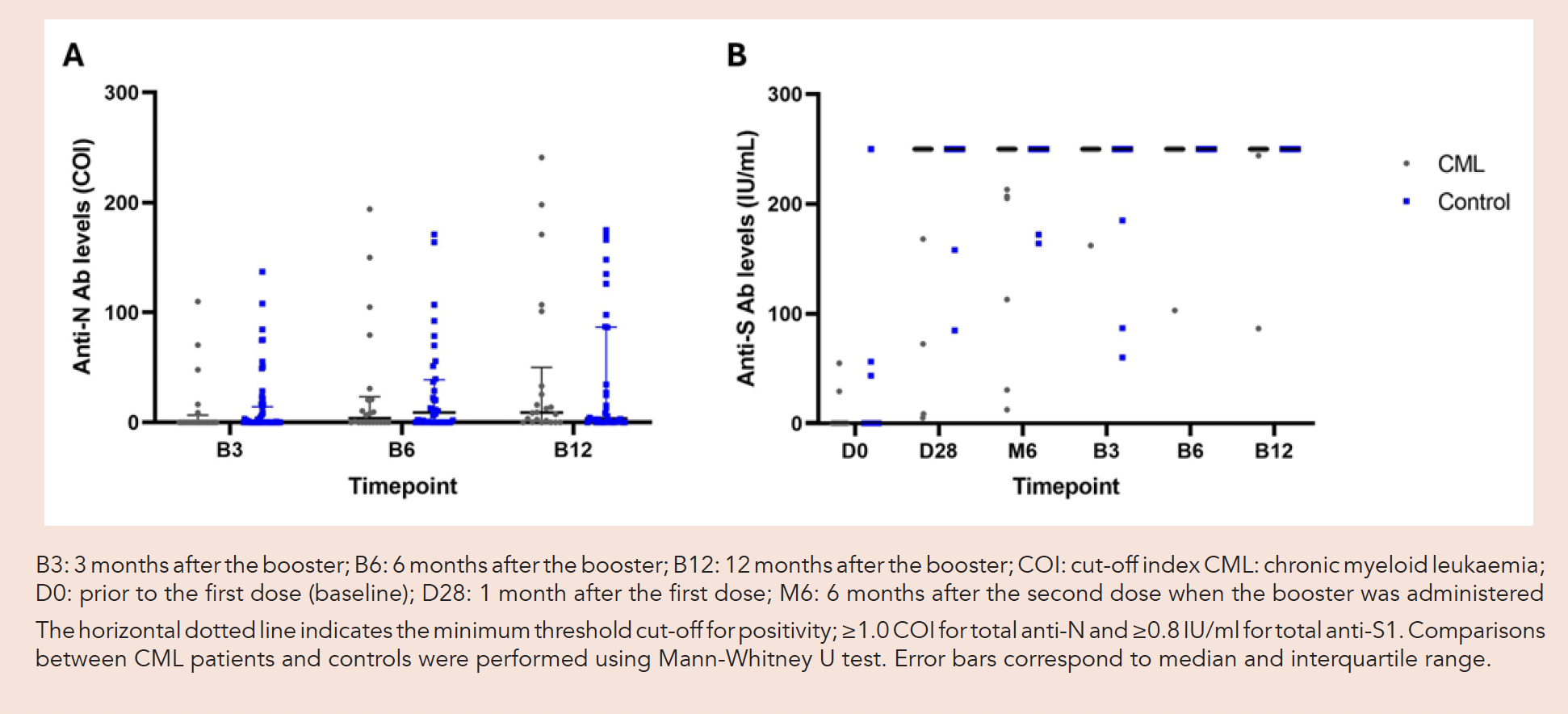
Humoral responses following vaccination were estimated using measurements of total anti-S titres. All participants seroconverted (defined as anti-S1 levels >0.8 IU/mL) and median total anti-S1 titres after the 2-dose primary vaccination series and a booster were comparable in CML patients and controls (Fig. 2). Anti-N was not performed in CML patients at D0, D28, and M6. After excluding patients who received CoronaVac, 15 (26.7%), 19 (47.4%), and 19 patients (56.5%) were reactive to anti-N at B3, B6, and B12, respectively. After the booster dose, 58 (39.7%), 36 (63.9%), and 34 (67.6%) controls were reactive to anti-N at M3, M6, and M12, respectively (Fig. 2).
Fig. 2. Total anti-SARS-CoV-2 nucleocapsid (A) and spike (B) antibody levels following vaccination in CML patients compared to controls.
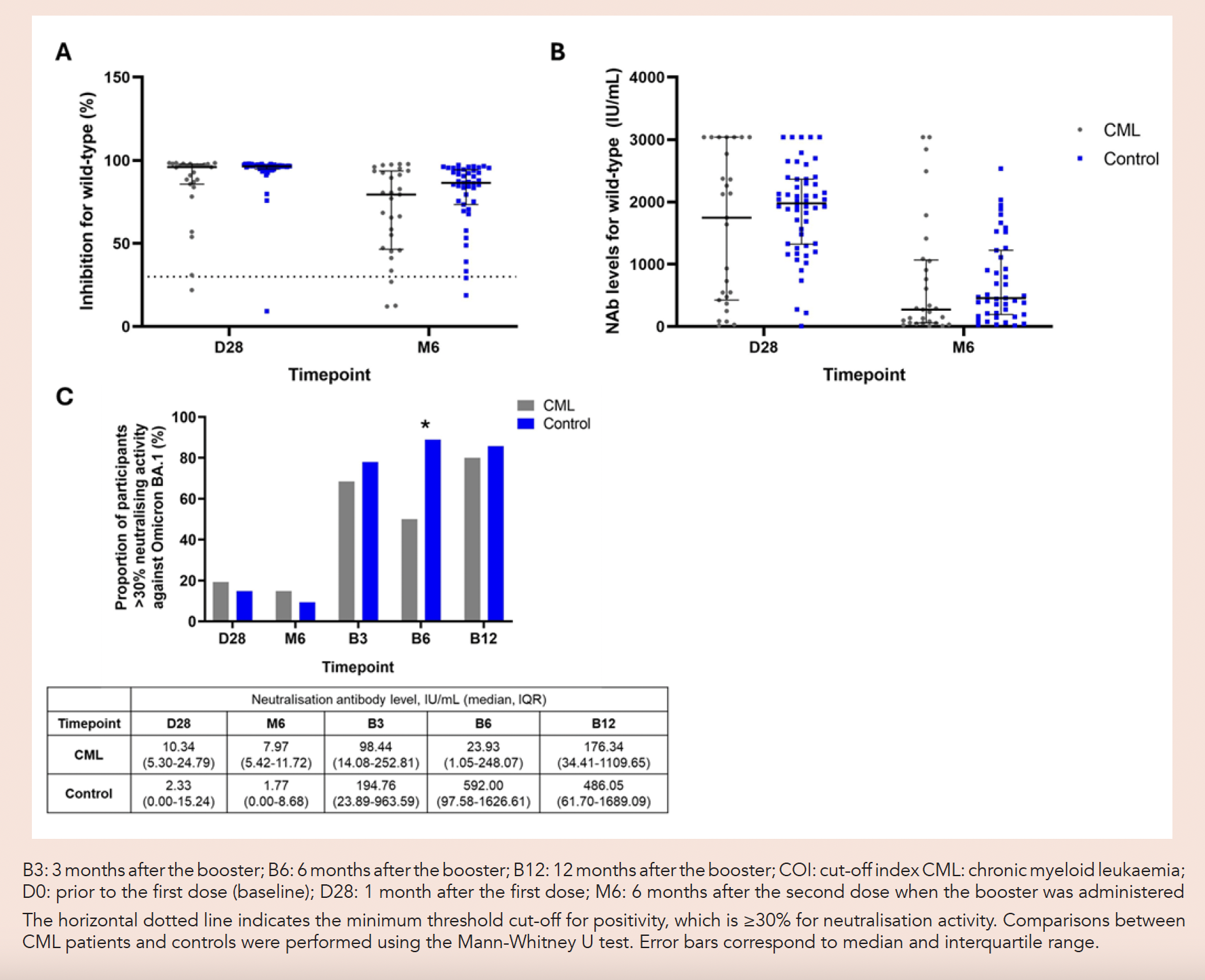
All participants had detectable neutralising activity (defined as inhibition >30%) and neutralising antibody levels after the two-dose primary vaccination series against the wild-type (Fig. 3a and 3b).
Neutralising activities against Omicron BA.1 were not significantly different between CML patients and healthy controls at all time points except for at B6 (P=0.003). Only 19.2% and 14.8% of CML patients had >30% neutralising activities, compared with 14.8% and 9.3% of healthy subjects at D28 and M6 (P=0.748 and P=0.702). The proportion of subjects with >30% neutralising activities rose to 68.4%, 50.0%, and 80.0% among CML patients, and 78.0%, 88.9%, and 85.7% among healthy subjects at B3, B6, and B12, respectively (P=0.539, P=0.003, and P=0.709) (Table 2). Neutralising antibody levels against Omicron BA.1 were significantly higher in CML patients at D28 (P=0.004) and M6 (P<0.001), but were significantly lower at B6 (P<0.001); however, this did not translate to clinical relevance because the WHO-defined threshold for positive neutralisation was >30% (Fig. 3c).
Fig. 3. Neutralising activity assessed by ACE2 binding blockade assay (expressed as percentage inhibition) (A) and neutralising antibody levels against variants of concern (wild-type) (B) and Omicron (C) measured following vaccination in CML patients compared to controls.
We further investigated whether the type of TKI used in CML patients was associated with immunogenicity following vaccination. In analyses stratified by the type and duration of TKI treatment in CML patients, no significant difference in the neutralising activity positivity rate was observed between imatinib- and nilotinib-treated CML patients or between patients who were being treated for less than 10 years and those treated for 10 years or more (Table 2).
There was no significant difference in T-cell responses, assessed by IFN-γ levels against spike antigens, between CML patients and controls at B6 and B12 (Fig. 4a, 4b and 4c). Similarly, T-cell responses were similar between CML patients on imatinib and nilotinib at B6 and B12 (Fig. 4d, 4e and 4f).
Fig. 4. T-cell responses in CML patients and controls (A, B, and C) and in CML patients on imatinib and nilotinib (D, E, and F).
DISCUSSION
In this study, SARS-CoV-2 vaccination was evaluated in patients with CML receiving TKIs. Despite the robust immunogenicity demonstrated by the SARS-CoV-2 vaccines in the general population, this this may not be the case in immunocompromised groups, particularly those with haematologic malignancies receiving long-term immunomodulating agents.
All participants, including CML patients on TKI, showed seroconversion after the 2-dose primary vaccination series against the wild-type, suggesting robust vaccine-induced humoral immunity. These results are in line with other studies showing that TKI-treated CML patients have relatively intact immune responses when compared with patients with other haematological malignancies.22,23 The observation that anti-S1 levels were comparable between CML patients and controls further supports the hypothesis that TKIs, despite their immune effects, do not significantly impair the initial antibody production.
In this study, anti-N was measured in CML patients only from B3 onwards, while these assays were performed in controls in both the first and second cohorts due to funding constraints. Although anti-N assays were only performed later in CML patients, this would not affect the interpretation of prior or breakthrough infections as SARS-CoV-2 antibodies .have been shown to persist for over 18 months.24,25
While all participants initially developed neutralising antibody responses against the wild-type virus, neutralising activity was markedly reduced in both groups against the Omicron BA.1 variant following the initial vaccine regimen. However, following the booster dose, the proportion of healthy control participants exhibiting positive neutralising activity was significantly higher at B6 than in the CML cohort, suggesting a possible shortfall in CML patients’ long-term or variant-specific immunogenicity. However, the proportion of healthy subjects with a positive neutralising activity was not significantly different from that in CML cohort at B12. This could indicate transient waning of the neutralising activity in the CML cohort and is important because the Omicron variant is known to have the capacity to evade the immune system owing to reduced neutralisation by antibodies induced by prior infection or immunisation.26
These results are consistent with studies showing SARS-CoV-2 variants of concern may significantly decrease vaccine-induced neutralisation.27,28 The observed decrease during follow-up may be due to immunological exhaustion, impaired memory B-cell function, or heterogeneous T follicular helper-cell responses as a result of long-term TKI treatment, even though the initial neutralisation benefit in CML patients is somewhat unexpected. Interestingly, neither the treatment duration nor the specific TKI used (imatinib vs nilotinib) significantly affected the neutralising capacity, suggesting that treatment-related immune suppression in this context is not dose- or agent-dependent. This finding is consistent with the observation of Katagiri et al., who reported limited differences in vaccine responses across different TKIs.29
The preserved nature of T-cell-mediated immunity in TKI-treated CML patients may enhance their ability to mount a robust cellular response. Measurements of IFN-γ at 6 and 12 months following the booster showed no significant differences between CML patients and controls, reflecting preserved T-cell reactivity. This finding is reassuring, as T-cell responses are vital for sustained protection and cross-protection against viral variants. Previous work has emphasised the strength of T-cell responses in immunocompromised individuals, including cancer patients, even when humoral responses are weakened.30 Cellular immunity, particularly through CD8+ T-cell responses, may offer protection by targeting recognised epitopes and acting as a secondary line of defence against variants such as Omicron.31
While this study aimed to assess the response of the SARS-CoV-2 vaccine in CML patients on TKI, detailed reporting of adverse events was not included in the current findings. Nevertheless, the literature confirms that mRNA vaccines are well tolerated in this population, with a side-effect profile comparable with that of healthy controls.32 Future studies with full safety data would be helpful in guiding vaccine policy in patients undergoing long-term TKI therapy.
Nevertheless, this study has some limitations. The numbers of patients and controls included here were small, and the study was conducted at a single centre, which may limit generalisability to the broader community. There were no clinical outcome measures, breakthrough infection or hospitalisation, and this also limits our ability to correlate the immune responses measured with clinical protection in the real world. As most of the participants received BNT162b2, the findings from this study may not be applicable for cohorts who received other types of SARS-CoV-2 vaccinations. Further continuance of this research is needed to address newer variants, newer bivalent vaccines, and other treatment regimens.
CONCLUSION
In conclusion, the present study shows that CML patients receiving TKI therapy can also produce humoral and cell-mediated immune responses to the SARS-CoV-2 vaccine that are, for the most part, similar to those of healthy controls. However, the differential immunological responses to variants such as Omicron, particularly after the booster dose, suggest that this group may need individualised vaccination plans and rigorous post-vaccine monitoring. These results point to the potential benefits of next-generation vaccines against immune-evasive variants and support the ongoing prioritisation of booster doses. These findings are important for informing improved vaccination policy and optimising benefit in this group of patients.
Acknowledgement
The authors would like to thank the nurses from the UMMC Haematology Daycare and patients involved in this study for their kind support and contribution.
REFERENCES
- Giannakoulis VG, Papoutsi E, Siempos, II. Effect of Cancer on Clinical Outcomes of Patients With COVID-19: A Meta-Analysis of Patient Data. JCO Glob Oncol 2020;6:799-808.
- Lee LYW, Tilby M, Starkey T, et al. Association of SARS-CoV-2 Spike Protein Antibody Vaccine Response With Infection Severity in Patients With Cancer: A National COVID Cancer Cross-sectional Evaluation. JAMA Oncol 2023;9:188-96.
- Hua T, Fan R, Fan Y, et al. Immune response of COVID-19 vaccines in solid cancer patients: A meta-analysis. Hum Vaccin Immunother 2024;20:2357424.
- de Lavallade H, Khoder A, Hart M, et al. Tyrosine kinase inhibitors impair B-cell immune responses in CML through off-target inhibition of kinases important for cell signaling. Blood 2013;122:227-38.
- Milojkovic D, Reynolds CJ, Sandoval DM, et al. COVID-19 vaccine boosted immunity against Omicron in chronic myeloid leukemia patients treated with tyrosine kinase inhibitors. Leukemia 2023;37:244-7.
- Rodriguez-Mora S, Corona M, Solera Sainero M, et al. Regular Humoral and Cellular Immune Responses in Individuals with Chronic Myeloid Leukemia Who Received a Full Vaccination Schedule against COVID-19. Cancers (Basel) 2023;15.
- Chen J, Schmitt A, Chen B, et al. Nilotinib hampers the proliferation and function of CD8+ T lymphocytes through inhibition of T cell receptor signalling. J Cell Mol Med 2008;12:2107-18.
- Giansanti P, Preisinger C, Huber KV, et al. Evaluating the promiscuous nature of tyrosine kinase inhibitors assessed in A431 epidermoid carcinoma cells by both chemical- and phosphoproteomics. ACS Chem Biol 2014;9:1490-8.
- Dhawan M, Rabaan AA, Fawarah MMA, et al. Updated Insights into the T Cell-Mediated Immune Response against SARS-CoV-2: A Step towards Efficient and Reliable Vaccines. Vaccines (Basel) 2023;11:101.
- Shyam Sunder S, Sharma UC, Pokharel S. Adverse effects of tyrosine kinase inhibitors in cancer therapy: pathophysiology, mechanisms and clinical management. Signal Transduct Target Ther 2023;8:262.
- Kuan JW, Melaine Michael S. The epidemiology of chronic myeloid leukaemia in southern Sarawak, Borneo Island. Med J Malaysia 2018;73:78-85.
- Current population estimate. https://www.dosm.gov.my/portal-main/release-content/current-population-estimates-2024. Accessed 6 August 2025.
- Song CV, Ahmad Bustamam RS, Gin Gin G, et al. Antibody Response Following COVID-19 Vaccination in Malaysian Cancer Patients and Healthy Individuals. Cureus 2024;16:e73528.
- Yu CY, Wong SY, Liew NWC, et al. Whole genome sequencing analysis of SARS-CoV-2 from Malaysia: From alpha to Omicron. Front Med (Lausanne) 2022;9:1001022.
- Suah JL, Tok PSK, Ong SM, et al. PICK-ing Malaysia’s Epidemic Apart: Effectiveness of a Diverse COVID-19 Vaccine Portfolio. Vaccines (Basel) 2021;9.
- Laner-Plamberger S, Siller A, Lauth W, et al. Stable SARS-CoV-2 antibody levels and functionality in serum and COVID-19 convalescent plasma after long-term storage. Vox Sang 2025;120:784-92.
- Meyers E, Coen A, Padalko E, et al. Short- and long-term stability of SARS-CoV-2 antibodies on dried blood spots under different storage conditions. Microbiol Spectr 2024;12:e0111324.
- Elecsys Anti-SARS-CoV-2 S product insert. https://assets.roche.com/f/173850/x/3a97af77d1/anti-sars-cov-2-s-09289267190-en-can.pdf. Accessed 7 January 2026.
- Lexmond W, der Mee J, Ruiter F, et al. Development and validation of a standardized ELISA for the detection of soluble Fc-epsilon-RI in human serum. J Immunol Methods 2011;373:192-9.
- Zhu F, Althaus T, Tan CW, et al. WHO international standard for SARS-CoV-2 antibodies to determine markers of protection. Lancet Microbe 2022;3:e81-2.
- QuantiFERON® SARS-CoV-2 ELISA Kit Instructions for Use. https://www.qiagen.com/fi/resources/download.aspx?id=3d27842e-c811-442c-bcad-a9d42945e59c&lang=en. Accessed 22 July 2025.
- Herishanu Y, Avivi I, Aharon A, et al. Efficacy of the BNT162b2 mRNA COVID-19 vaccine in patients with chronic lymphocytic leukemia. Blood 2021;137:3165-73.
- Greenberger LM, Saltzman LA, Senefeld JW, et al. Antibody response to SARS-CoV-2 vaccines in patients with hematologic malignancies. Cancer Cell 2021;39:1031-33.
- L’Huillier AG, Meyer B, Andrey DO, et al. Antibody persistence in the first 6 months following SARS-CoV-2 infection among hospital workers: a prospective longitudinal study. Clin Microbiol Infect 2021;27:784 e1-8.
- Besevic J, Lacey B, Callen H, et al. Persistence of SARS-CoV-2 antibodies over 18 months following infection: UK Biobank COVID-19 Serology Study. J Epidemiol Community Health 2023;78:105-8.
- Cao Y, Wang J, Jian F, et al. Omicron escapes the majority of existing SARS-CoV-2 neutralizing antibodies. Nature 2022;602:657-63.
- Barriere J, Carles M, Audigier-Valette C, et al. Third dose of anti-SARS-CoV-2 vaccine for patients with cancer: Should humoral responses be monitored? A position article. Eur J Cancer 2022;162:182-93.
- Liu L, Iketani S, Guo Y, et al. Striking antibody evasion manifested by the Omicron variant of SARS-CoV-2. Nature 2022;602:676-81.
- Katagiri S, Akahane D, Otsuki S, et al. Tyrosine Kinase Inhibitors Do Not Promote a Decrease in SARS-CoV-2 Anti-Spike IgG after BNT162b2 Vaccination in Chronic Myeloid Leukemia: A Prospective Observational Study. Vaccines (Basel) 2022;10.
- Goel RR, Painter MM, Apostolidis SA, et al. mRNA vaccines induce durable immune memory to SARS-CoV-2 and variants of concern. Science 2021;374:abm0829.
- Redd AD, Nardin A, Kared H, et al. Minimal cross-over between mutations associated with Omicron variant of SARS-CoV-2 and CD8+ T cell epitopes identified in COVID-19 convalescent individuals. bioRxiv 2021.
- Xu W, Ren W, Wu T, et al. Real-World Safety of COVID-19 mRNA Vaccines: A Systematic Review and Meta-Analysis. Vaccines (Basel) 2023;11:1118.
All participants provided written informed consent, and the study protocol was approved by the Universiti Malaya Medical Center Medical Research Ethics Committee review board (MREC number 202158-10126).
Sample analysis for this work was supported by the Malaysian Society of Haematology (PV006-2022) and an educational grant from Zuellig-Pharma (PV029-2022). All authors declare they have no affiliations or financial involvement with any commercial organisation with a direct financial interest in the subject or materials discussed in the manuscript.
Professor Dr Gan Shiaw Sze / Gan Gin Gin, Department of Medicine, Faculty of Medicine, Universiti Malaya, 50603 Kuala Lumpur, Malaysia. Email: [email protected]
