

ABSTRACT
Introduction: COVID-19 restrictions and lockdown measures have led to impact on the mental health and social service delivery, including the rapid adoption of digital solutions to mental healthcare delivery in Singapore. This study aims to rapidly document the quantitative and qualitative impact of the pandemic restrictions on mental health and social services.
Method: This descriptive mixed-methods study consisted of a survey arm and a qualitative arm. Providers and clients from eligible mental health organisations and social service agencies were recruited. The respondents completed a survey on changes to their service delivery and the extent of impact of the pandemic on their clients. In-depth interviews were also conducted with representatives of the organisations and clients.
Results: There were 31 organisation representatives to the survey, while 16 providers and 3 clients participated in the in-depth interviews. In the survey arm, all representatives reported pivoting to remote means of delivering care during the lockdown. An increase in new client referrals and more domestic violence were reported from primary and community health partners respondents who made up 55.5% of health partners respondents. Three distinct response themes were recorded in the in-depth interviews: impact on clients, impact on service provision and impact on mental health landscape.
Conclusion: Two key findings are distilled: (1) mental health and social services have been challenged to meet the evolving demands brought about by the pandemic; (2) more societal attention is needed on mental health and social services. The findings indicate a necessary need for extensive studies on COVID-19 that can inform policies to build a more pandemic-resilient nation.

Coronavirus disease 2019 (COVID-19) was declared a global health emergency by the World Health Organization in January 2020.1 Singapore reported its first case of COVID-19 on 23 January 2020 and the subsequent emergence of clusters led to a string of restrictions to contain the outbreak and protect the health of the public. The healthcare sector initially ramped down non-emergency services to allow for the redeployment of resources for COVID-19-related services. In response to the widespread COVID-19 clusters,2 a nationwide lockdown (known as “circuit breaker”) was implemented from 7 April to 1 June 2020, during which only essential services could continue operations and be kept open. Home-based learning was implemented, mask-wearing when leaving the home was made mandatory, and leaving the home was only allowed for essential activities.3
The mental health of confirmed COVID-19 patients,4-6 quarantined cases,7,8 frontline workers,9,10 the general public11-13 and persons with mental illness14 were inevitable casualties of these necessary public health measures as some studies have demonstrated. Chen et al.15 showed that the lockdown in the United Kingdom resulted in a decrease in mental health referrals to secondary care services, followed by a longer-term acceleration in the referral rate primarily for urgent or emergency referrals. Despite the restrictions on the provision of mental health and social services, staff working in these sectors innovated to continue service provision remotely, although this provision was only successful in some clinical situations.16 Singapore faced a similar situation during the circuit breaker” in that community mental health and social service agencies (SSAs) were deemed non-essential services and had to cease face-to-face operations. The impact of such an acute change in services on clients and service providers had not been systematically measured.
There exist abundant reports of the rapid implementation of digital means of mental health services as a way of continuing service provision to high-risk and vulnerable populations.17,18 These digital adaptations of services include dissemination of mental health surveys, education and communication programmes, counselling services, self-help interventions and artificial intelligence-driven crisis interventions.19 Users of such services have reported satisfaction and benefits,20 and acknowledged them as the inevitable way forward for mental health care,21,22 although evidence of clinical efficacy remains preliminary.23 There remain practical challenges on the ground, particularly in the Asian context.24 Anecdotal experience in Singapore has indicated the pressure experienced by the sector to rapidly convert to online and remote means of continuing mental health and social services despite valid doubts about their utility and acceptability, and fears about their efficacy in preventing and intervening in mental health crises and emergencies.25
There was an absence of local and international publications on the impact of COVID-19 on mental health services during the period from late 2020 to early 2021. A qualitative review conducted by Byrne et al.26 on the impact of COVID-19 pandemic from a mental health perspective indicated a negative impact on people’s mental health, mental health services workforce and caregivers given greater strain, as well as the impact on psychiatric education, training and research. Studies on the pandemic and its related measures on mental health and social service provision in Singapore were far fewer. Therefore, a rapid documentation of quantitative and qualitative data on the impact of pandemic restrictions on mental health and social services was needed. By utilising a mixed methods approach, knowledge gaps regarding the utilisation patterns, successes and challenges of mental health and social services can be quantified and contextualised in order to inform policy changes on the current and future infectious disease outbreaks.
The research questions to be addressed in this study were (1) to identify the magnitude of the impact of the pandemic on mental health and social services at the organisational level, and (2) to explore the qualitative impact of the pandemic on the provision of mental health and social services.
METHOD
This descriptive mixed-methods study consisted of a survey arm and a qualitative arm. Ethics approval was obtained from the National Healthcare Group Domain Specific Review Board (ref 2020/00899).
Recruitment
This study adopted a convenience sampling methodology. All organisations and agencies in Singapore that provided mental health services (e.g. psychiatry, psychology) and social services (e.g. family counselling, senior activity centres) were eligible to participate in this study. An email invitation was first sent to representatives of all eligible mental health organisations and SSAs to respond to the survey. Guidance on data collation was provided to these representatives. The recipients of the invitation could nominate themselves or another staff member to respond to the survey. The representatives were also concurrently invited to participate in the qualitative arm of the study and to refer their suitable clients to participate in the in-depth interviews to describe their experiences of accessing mental health and social services during the pandemic. Separate letters of invitation were provided to the clients to indicate their contact details. The providers and clients who indicated their interest in the qualitative arm of the study were then contacted by the study team members to obtain consent and to conduct the interview.
Data collection
A quantitative survey was administered to quantify the organisational and administrative changes due to the COVID-19 pandemic and the lockdown. The survey was completed either online on FormSG (secured online survey platform for public institutions) or in a Word document which respondents returned to the study team by email. Respondents for the survey first indicated the details of the services that their organisations provided (e.g. sector/department, acute/centre-based service, public/private organisation). Subsequently, they were asked whether there had been changes to their service delivery during the lockdown and the extent of impact of the pandemic on their clients (e.g. increase in crisis situations, need for further escalation).
In-depth interviews were conducted to explore the qualitative impact of the pandemic on the services and clients of the providers. Examples of the questions for the providers include “How has the pandemic impacted your work?”, “What COVID-19 measures have caused the most impact on your client?” and “What did you find helpful for you to reach out to your clients effectively?”. For clients, the questions were phrased to explore the impact and challenges that they personally face in accessing mental health and social services during the lockdown. The in-depth interviews were conducted using the Zoom platform. Informed consent was obtained individually by the interviewer and all participants consented to voice recording for transcription. One researcher (ZZSG) who had training and experience in qualitative methodologies conducted all the in-depth interviews. The data collection period was from 29 August 2020 to 1 February 2021 for the survey and between 20 October 2020 and 2 February 2021 for the qualitative interviews. The survey and interview questions are available as Online Supplementary Materials.
Analytical method
Respondent organisations in the survey were categorised and analysed using the following groups: (1) restructured hospitals (comprising the psychiatry and psychology departments from tertiary hospitals), (2) primary and community health partners (PCHPs) (comprising polyclinics and nursing homes), and (3) SSAs. The survey responses were analysed using descriptive statistics.
The in-depth interviews were transcribed with the identifiers anonymised. The transcripts were first given a read-through and then coded inductively by authors ZZSG and KG. Qualitative data were coded using content analysis, in which the codes were categorised and grouped into higher order themes by 3 members of the study team.27 All qualitative analyses were conducted using NVivo Release 1.0.28
The findings from both the quantitative and qualitative arms were first described separately and thereafter combined to generate a more complete understanding of the impact of COVID-19 pandemic and its restrictions on mental health and social service delivery in Singapore.
RESULTS
Survey arm
There were 31 respondent organisations to the survey (9 restructured hospitals, 9 PCHPs, 13 SSAs). Of the PCHPs, 6 were from polyclinics and 3 were nursing homes. A mixture of SSAs participated in the survey (5 in mental health services, 3 family services, 3 dementia care, 1 addiction services, 1 LGBTQ+ services), although most of their services could overlap.
All respondents reported pivoting to remote means of delivering care during the lockdown, compared with about 50% before the lockdown. Comparing with respondents from the restructured hospitals and PCHPs, those from the SSAs group reported a greater proportion of their clients who had requested for an urgent or earlier appointment (restructured hospitals: <25%, PCHPs: <25%, SSAs: 25–50%) or were deemed not suitable for postponement of face-to-face appointment (restructured hospitals: 25–50%, PCHPs: <25%, SSAs: 51–75%).
No respondents from PCHPs reported an increase in clients who completed or attempted suicides. However, respondents from restructured hospitals and SSAs reported an increase in such clients (increase by 15.4–23.1%, Fig. 1). More than half of the respondents from both restructured hospitals and SSAs reported an increase in hospitalisations for mental health reasons and exacerbations of pre-existing mental illnesses. Notably, the difference in the reporting of domestic violence from more than half of the respondents from PCHPs was more drastic than from the other groups (55.5% in PCHPs vs 22.2% in restructured hospitals and 7.7% in SSAs).
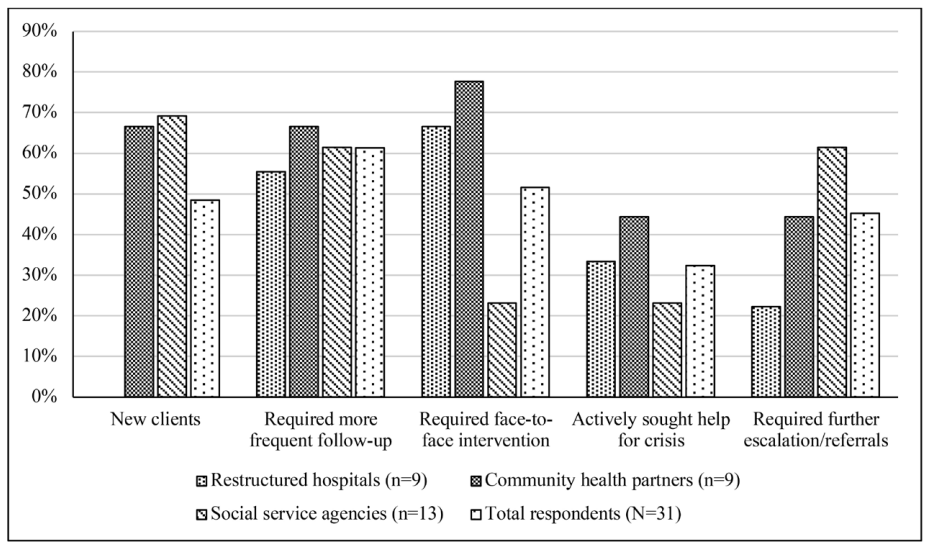
With respect to service use, there was no report of increase in the number of new clients from restructured hospital respondents, whereas more than a third of the respondents in both PCHPs and SSAs reported an increase in new clients (Fig. 2). In all 3 groups, there was a consistent trend in an increase of clients requiring more frequent follow-ups (55.5–66.6%) and reportedly an increase in the need for face-to-face interventions in restructured hospitals and PCHPs (66.6% and 77.7%, respectively). Respondents from SSAs also reported an increase in clients requiring further escalation or referrals to other mental health providers (61.5%).
Qualitative interview arm
A total of 16 providers and 3 clients from mental health and social services were recruited for the in-depth interviews. Of the providers, there were 6 psychologists (37.5%), 5 programme administrators (31.3%), 2 case managers (12.5%), 1 counsellor (6.3%), 1 social worker (6.3%) and 1 occupational therapist (6.3%). Majority of the providers were female (n=14, 87.5%). Seven of the providers served in the public sector, 5 were in the SSAs, while the remaining 4 were in the private or charity organisations.
Owing to the small sample size of clients (n=3; female, n=2, male, n=1), the main themes were identified from the provider interviews and, if relevant, corroborated and triangulated with the client accounts. Saturation was achieved after 2 provider interviews, as new themes did not emerge, and determined after a discussion within the study team. Altogether, the responses shared by all participants showed 3 distinct themes: impact on clients, impact on service provision and impact on mental health landscape.
Fig. 1. Percentage of respondents reporting increase in crisis situations.
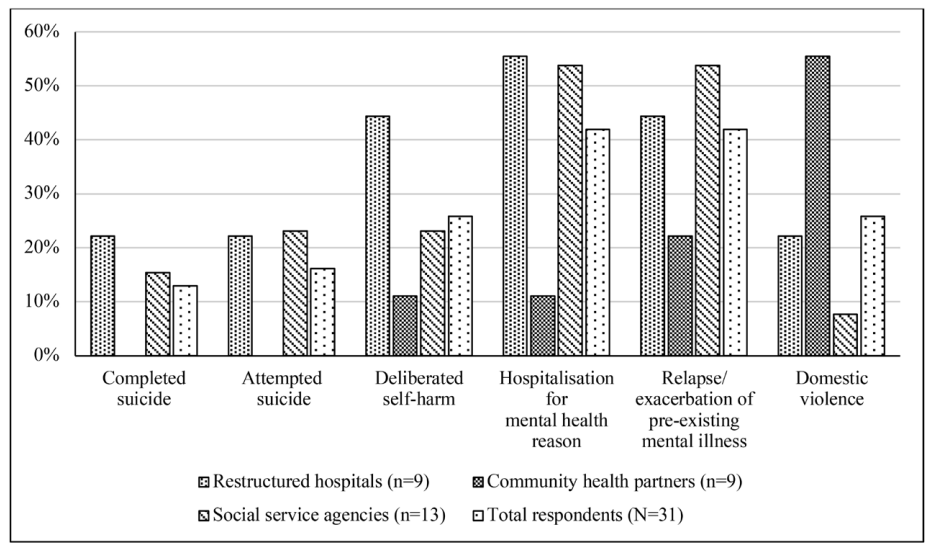
Fig. 2. Percentage of respondents reporting increased service use.
Impact on clients
With the challenges of COVID-19 and its associated precautionary measures, several impacts on the clients were raised. Five response subthemes were identified from the provider interviews: (1) COVID-19 restrictions bringing about more challenges to clients’ mental health (2) social-related impact; (3) domestic issues; (4) caregiver impact; and (5) demonstration of social support and resilience (illustrative quotes in Table 1).
Table 1. Subthemes and illustrative quotes of theme 1: Impact on clients.
The providers shared about how COVID-19 had brought more challenges to the profiling of their clients. They noted an increase in severity of anxiety and obsessive-compulsive disorder symptoms in their clients during the initial phases of the pandemic. Some of their clients shared about fear of COVID-19 exposure, excessive worrying and excessive prevention practices such as more frequent hand washing and double masking. Some providers also noted the difficulties in getting their clients who are cognitively compromised (e.g. people with dementia) to adhere to the COVID-19 measures, such as mask wearing and social distancing.
The providers also noted the social impact that their clients experienced from the COVID-19 measures. Particularly, the countrywide lockdown meant that the elderly and other residents that rely on physical venues for support (e.g. day care centres, leisure venues) lost access to these social resources, leading to increased feelings of isolation. Relating to the clients’ inability to leave their homes, the providers shared about the increase in domestic issues and in caregiver burden that their clients faced during the lockdown period. Furthermore, some clients who experienced family violence still stayed with the perpetuators. Clients who were also caregivers had to care for both the elderly and their children, all while still working from home. These challenges imposed substantial mental stress on the clients, leading to more mental health issues.
The providers highlighted the importance of social support and resilience in their clients that could help alleviate the impact of the pandemic. Strong family support was reported to be a protective factor against feeling isolated. The providers also shared about the demonstration of resilience in their clients who had gone through the “whole hard-knock life” (Provider J) for the elderly, and in parents of special needs children who already had “resilience in reserve” (Provider N). The clients also demonstrated resilience by picking up new technological skills to access telehealth services, make bill payments and connect with family and friends. One client aptly shared that “there’s good and there’s bad” (Caregiver 2).
Impact on service provision
Guidelines from authorities were released frequently and changes had to be implemented by the providers almost immediately. These frequent changes in guidelines impacted the mental health and social service provision. Three response subthemes for the impact on service provision were noted: frequency of changes to guidelines, manpower difficulties and innovation in the online shift of services (Table 2).
Table 2. Subthemes and illustrative quotes of theme 2: Impact on service provision.
The providers shared about how the organisations were not given enough time to adjust to the guidelines. As one provider shared, “within one week, certain instructions can change a few times, our work processes can change a few times” (Provider C). The numerous rules and guidelines also led to some confusion and anxiety. Manpower issues were also reported by some providers who described an increased workload due to split-team arrangements and manpower redeployment. Consequently, motivation and morale of the team were affected owing to the increased pressure and workload.
The providers also shared about the need for their services to be delivered online to reduce the risk of exposure of their clients to the pandemic virus and shared about their experiences of learning to use the video-conferencing platforms. Some organisations started using the social media and video streaming sites to conduct workshops and engage their clients in activities. While these had been reported to be a convenient way of delivering the services, some providers doubted their effectiveness. The providers shared that, compared with face-to-face sessions, it was difficult to build rapport and look at non-verbal cues when the clients could not be seen beyond the screen. There were also doubts about clients being in a safe space without distractions during the virtual sessions, as many of them were attending the sessions from their homes, which might not be the safest space for counselling.
Impact on mental health landscape
Some providers shared that the creation of the National Care Hotline, a phone-in service for emotional and psychological support during COVID-19 by the ministries, was important in helping vulnerable individuals cope with the pandemic. Along the same vein, the providers noted a general increased awareness and recognition of the importance of mental health and its profession in the general population, with more people willing to step out to seek help. They highlighted that an overall greater awareness of mental health in the general population can reduce the impact of the pandemic (Table 3).
Table 3. Illustrative quotes of theme 3: Impact on mental health landscape.
DISCUSSION
Integrating both quantitative and qualitative aspects of the study provided us with a more holistic understanding of the impact of the COVID-19 pandemic and its restrictions on mental health service delivery in Singapore. Two key findings are highlighted from the results of this study: (1) mental health and social services have been challenged to meet the evolving demands brought about by the pandemic; and (2) more societal attention is needed on mental health and social services.
Evolving demands due to the pandemic
First, all domains of mental health and social services have been challenged to meet the evolving demands brought about by the pandemic. Despite the study respondents coming from a wide range of professions, all have reported some degree of impact on their service provision. This impact was evident in the survey arm in that all the participants (i.e. restructured hospitals, community health partners, SSAs) indicated increased service use, and both providers and clients, in the qualitative interviews, shared on the challenges of service provision during the pandemic.
Local and international studies have shown that more people needed and were seeking more psychological help during the COVID-19 pandemic.29,30 Owing to the reprioritisation of treatment services for COVID-19 cases, there was a rechannelling of new tertiary care clients towards primary care. Day activity centres and social support venues were closed, while service provider teams were segregated with reduced clinic sessions. The healthcare sector, especially the mental health and social services, had to find innovative solutions to provide continuity of care.31-35 In that respect, innovations in technology and clinical processes enabled the use of online mental health service delivery, but some providers shared that these might be neither effective in nor capable of reaching out to everyone. These challenges towards digital adoption that the sector faced were also not unique to the Singapore context. A study in Hong Kong on community centres for older adults found that those centres which adopted online services faced constraints such as limited digital literacy of staff members and low digital accessibility, including lacking devices and poor internet connection, for service users.36
Moreover, the increase in new clients in PCHPs and SSAs in this study corroborated the issues related to the increased workload in relation to the reduction in manpower. Restrictions on home visitations during the pandemic also made matters worse. SSAs also reported an increase in clients requiring further escalation but were unable to offer face-to-face interventions. The pursuit of providing continued care for clients was an uphill task for the mental health and social services sectors during the pandemic. Indeed, the increased barriers to access mental health care will severely affect clients with pre-existing mental illness, which could result in mental relapse or further uncontrollable situations.29
Societal attention on mental health and social services
It is evident that more societal attention has to be given to mental health and social services. The COVID-19 pandemic and its related measures have caused an unprecedented impact on the general health of the population. People were not able to go out of their homes during periods of lockdown, resulting in increased tensions within unsupportive households and increased rates of domestic violence. Fears of contracting COVID-19 and of its disease progression have produced a general sense of anxiety in the population.
With the world facing the COVID-19 pandemic for the long term and the threat of the disease becoming less acute, attention has to be shifted to mitigate the psychosocial impact of the restrictions surrounding the pandemic. The disruptions to mental health and social service delivery have likely impacted the morale of service providers. Providers may experience compassion fatigue and burnout more often than before.37,38 The findings from this study are concerning as respondents reported increased service use but were faced with persistent and unpredictable barriers. Mental healthcare providers and allied health professionals alike have reported worse mental health outcomes during the pandemic in many studies globally,35,39 and some have reported resorting to using negative coping strategies such as alcohol and tobacco to cope with the stress of the pandemic.40 Although our study did not collect data on the utilisation rates of mental health support by the providers, one study found low rates (between 1% and 22%) of allied health professionals in the United States using any form of mental health support, despite them experiencing stress.39 Far greater emphasis and investment of resources for mental health and social services from the whole-of-society are needed to confront the “mental health tsunami”.41
With the protracted pandemic and constant threat of new variants, public health measures should shift towards supporting people holistically. Healthcare systems should seek to empower and destigmatise people who seek help. With the increase in awareness of mental health issues, healthcare policies should adopt a proactive approach in mental health care, stepping up in their engagement with schools and outreach to the public. Systems could be in place to monitor and address the distress levels in vulnerable and at-risk populations (e.g. healthcare workers, elderly living alone, marginalised individuals).
As a result of the pandemic, the rapid push of digital solutions in mental health practice (e.g. teleconsultations) has created new opportunities to provide sustainable preventive mental health care and support. With growing adoption of online service delivery in the mental health and social service sectors, medical schools can institutionalise a curriculum on digital mental health by leveraging the experience gained from using telehealth during the pandemic to improve and upskill mental health and social service providers on delivering telehealth care to their clients effectively.
Limitations
The findings of this study should be considered along with its limitations. The data collection was conducted primarily online (i.e. online survey and interviews) to reduce physical contact, which may have excluded some providers and clients who faced barriers in accessing the internet (e.g. low technology literacy). Further, significant effort was needed in collating the administrative data for the survey, and some organisations neither responded to nor provided data for the study. These limitations can thereby reduce the generalisability of the findings. Nonetheless, a wide range of mental health and social service providers participated in this study, and a set of broad (rather than narrow) observations and vast opinions of service providers were captured through the qualitative interviews.
It was noted that only 3 clients participated in the qualitative interviews. Efforts were made to recruit more clients through repeated email outreach to the providers. However, the providers were unable to refer their clients as the sessions were mostly virtual and the providers had expressed that most of their clients were not interested to participate in the interviews. Despite this limitation, the overall mixed method design of the study through integrating the survey with the interviews reinforced the robustness of the study’s overall findings. Overall, the study findings indicate a strong and necessary need for more extensive studies on COVID-19 and its impact on the mental health landscape.
CONCLUSION
At the conclusion of this study in April 2021, Singapore was going into its second circuit breaker owing to increasing COVID-19 cases driven by the Delta variant. Dining in was once again ceased, and social gatherings were prohibited. However, the health ministry had acknowledged the importance of making mental health and social service support accessible during times of crises. Mental health and social services were considered essential, and restrictions to providing such services were also lifted. The health ministry had also increased funding to population mental health programmes. This range of initiatives represented a shift in the whole-of-society’s mindset in recognising that mental health is an important aspect of coping with the pandemic. It is hoped that the findings from this study contribute to the ever-growing research of the COVID-19 pandemic on the overall public health of the country and the region, and further guide the development of health guidelines for the current COVID-19 pandemic and potentially future outbreaks.
Acknowledgements
The study team would like to acknowledge Agency for Integrated Care for their collaboration in study design and National Council of Social Services for their collaboration in the recruitment of study participants.
Correspondence
Dr Lai Gwen Chan, Tan Tock Seng Hospital, 11 Jalan Tan Tock Seng, Singapore 308433. Email: [email protected]
REFERENCES
- World Health Organization. WHO Director-General’s statement on IHR Emergency Committee on Novel Coronavirus (2019-nCoV). https://www.who.int/director-general/speeches/detail/who-director-general-s-statement-on-ihr-emergency-committee-on-novel-coronavirus-(2019-ncov). Accessed 20 May 2023.
- Tan JB, Cook MJ, Logan P, et al. Singapore’s pandemic preparedness: An overview of the first wave of COVID-19. Int J Environ Res Public Health. 2020;18:252.
- Yip W, Ge L, Ho AHY, et al. Building community resilience beyond COVID-19: The Singapore way. Lancet Reg Health West Pac 2021;7:100091.
- Guo Q, Zheng Y, Shi J, et al. Immediate psychological distress in quarantined patients with COVID-19 and its association with peripheral inflammation: A mixed-method study. Brain Behav Immun 2020;88:17-27.
- Bo HX, Li W, Yang Y, et al. Posttraumatic stress symptoms and attitude toward crisis mental health services among clinically stable patients with COVID-19 in China. Psychol Med 2021;51:1052-3.
- Liguori C, Pierantozzi M, Spanetta M, et al. Subjective neurological symptoms frequently occur in patients with SARS-CoV2 infection. Brain Behav Immun 2020;88:11-6.
- Luo X, Estill J, Wang Q, et al. The psychological impact of quarantine on coronavirus disease 2019 (COVID-19). Psychiatry Res 2020;291:113193.
- Daly Z, Slemon A, Richardson CG, et al. Associations between periods of COVID-19 quarantine and mental health in Canada. Psychiatry Res 2021;295:113631.
- Braquehais MD, Vargas-Cáceres S, Gómez-Durán E, et al. The impact of the COVID-19 pandemic on the mental health of healthcare professionals. QJM 2020;113:613–7.
- Nyashanu M, Pfende F, Ekpenyong MS. Triggers of mental health problems among frontline healthcare workers during the COVID-19 pandemic in private care homes and domiciliary care agencies: Lived experiences of care workers in the Midlands region, UK. Health Soc Care Community 2022;30:e370-6.
- Wang C, Pan R, Wan X, et al. A longitudinal study on the mental health of general population during the COVID-19 epidemic in China. Brain Behav Immun 2020;87:40-8.
- Twenge JM, Joiner TE. Mental distress among U.S. adults during the COVID-19 pandemic. J Clin Psychol 2020;76:2170-82.
- Xiong J, Lipsitz O, Nasri F, et al. Impact of COVID-19 pandemic on mental health in the general population: A systematic review. J Affect Disord 2020;277:55-64.
- Chen S, Jones PB, Underwood BR, et al. The early impact of COVID-19 on mental health and community physical health services and their patients’ mortality in Cambridgeshire and Peterborough, UK. J Psychiatr Res 2020;131:244-54.
- Chen S, She R, Qin P, et al. The medium-term impact of COVID-19 lockdown on referrals to secondary care mental health services: A controlled interrupted time series study. Front Psychiatry 2020;11:585915.
- Johnson S, Dalton-Locke C, Vera San Juan N, et al; COVID-19 Mental Health Policy Research Unit Group. Impact on mental health care and on mental health service users of the COVID-19 pandemic: A mixed methods survey of UK mental health care staff. Soc Psychiatry Psychiatr Epidemiol 2021;56:25-37.
- Shayevitz C, Breitinger S, Lerario MP, et al. Implementation of a centralized telepsychiatry consult service in a multi-hospital metropolitan health care system: Challenges and opportunities. J Acad Consult Liaison Psychiatry 2021;62:193-200.
- Diwan MN, Ali Awan H, Aamir A, et al. Telepsychiatry in low- and middle-income countries during COVID-19: Pandemic, barriers, and road model. J Nerv Ment Dis 2021;209:144-6.
- Liu S, Yang L, Zhang C, et al. Online mental health services in China during the COVID-19 outbreak. Lancet Psychiatry 2020;7:e17–8.
- Di Carlo F, Sociali A, Picutti E, et al. Telepsychiatry and other cutting-edge technologies in COVID-19 pandemic: Bridging the distance in mental health assistance. Int J Clin Pract 2021;75:10.1111/ijcp.13716.
- Kumar MS, Krishnamurthy S, Dhruve N, et al. Telepsychiatry netiquette: Connect, communicate and consult. Indian J Psychol Med 2020;42(5 Suppl):22S-26S.
- Mishkind MC, Shore JH, Schneck CD. Telemental health response to the COVID-19 pandemic: Virtualization of outpatient care now as a pathway to the future. Telemed J E Health 2021;27:709-11.
- Batastini AB, Paprzycki P, Jones ACT, et al. Are videoconferenced mental and behavioral health services just as good as in-person? A meta-analysis of a fast-growing practice. Clin Psychol Rev 2021;83:101944.
- Perera SR, Gambheera H, Williams SS. “Telepsychiatry” in the time of COVID-19: Overcoming the challenges. Indian J Psychiatry 2020;62(Suppl 3):S391-4.
- Reinhardt I, Gouzoulis-Mayfrank E, Zielasek J. Use of telepsychiatry in emergency and crisis intervention: Current evidence. Curr Psychiatry Rep 2019;21:63.
- Byrne A, Barber R, Lim CH. Impact of the COVID‐19 pandemic – a mental health service perspective. Prog Neurol Psychiatry 2021;25:27-33b.
- Elo S, Kyngäs H. The qualitative content analysis process. J Adv Nurs 2008;62:107-15.
- QSR International. NVivo (released in March 2020). https://www.qsrinternational.com/nvivo-qualitative-data-analysis-software/home. Accessed 20 July 2022.
- Ho CS, Chee CY, Ho RC. Mental health strategies to combat the psychological impact of coronavirus disease 2019 (COVID-19) beyond paranoia and panic. Ann Acad Med Singap 2020;49:155-60.
- Wang C, Tee M, Roy AE, et al. The impact of COVID-19 pandemic on physical and mental health of Asians: A study of seven middle-income countries in Asia. PLoS One 2021;16:e0246824.
- Reay RE, Looi JC, Keightley P. Telehealth mental health services during COVID-19: Summary of evidence and clinical practice. Australas Psychiatry 2020;28:514-6.
- Miu AS, Vo HT, Palka JM, et al. Teletherapy with serious mental illness populations during COVID-19: Telehealth conversion and engagement. Couns Psychol Q 2021;34:704-21.
- Zangani C, Ostinelli EG, Smith KA, et al. Impact of the COVID-19 pandemic on the global delivery of mental health services and telemental health: Systematic review. JMIR Ment Health 2022;9:e38600.
- Reilly S, Zane K, Mccuddy W, et al. A-15 mental health practitioners’ immediate practical response to the COVID-19 pandemic. Arch Clin Neuropsychol 2020;35:788-9.
- Bojdani E, Rajagopalan A, Chen A, et al. COVID-19 pandemic: Impact on psychiatric care in the United States. Psychiatry Res 2020;289:113069.
- Chan CK, Tang MY, Lee ML. Delivering social services during the COVID-19 pandemic: The case of older people centers in Hong Kong. J Soc Serv Res 2022;48:1-11.
- O’Connor K, Muller Neff D, Pitman S. Burnout in mental health professionals: A systematic review and meta-analysis of prevalence and determinants. Eur Psychiatry 2018;53:74-99.
- Fish JN, Mittal M. Mental health providers during COVID-19: Essential to the US public health workforce and in need of support. Public Health Rep 2021;136:14-7.
- Coto J, Restrepo A, Cejas I, et al. The impact of COVID-19 on allied health professions. PLoS One 2020;15:e0241328.
- Reilly SE, Soulliard ZA, McCuddy WT, et al. Frequency and perceived effectiveness of mental health providers’ coping strategies during COVID-19. Curr Psychol 2021;40:5753-62.
- Inkster B; Digital Mental Health Data Insights Group (DMHDIG). Early warning signs of a mental health tsunami: A coordinated response to gather initial data insights from multiple digital services providers. Front Digit Health 2021;2:578902.
