

ABSTRACT
Introduction: Knowledge of late effects after oncological treatment in Southeast Asia remains limited. This study is among the first comprehensive audits of late effects experienced by paediatric cancer survivors from the long-term follow-up (LTFU) clinic at KK Women’s and Children’s Hospital in Singapore between September 2017 and December 2023.
Methods: A total of 485 survivors were examined, all of whom had at least 2 years of treatment and 5 years of remission. Data on cancer diagnoses, treatments and late effects were analysed, with severity classified by the Common Terminology Criteria for Adverse Events (CTCAE) version 5.0.
Results: The analysis showed 394 survivors (81%) experienced at least 1 late effect. Body mass index >23 kg/m2 or >90th percentile, low bone mineral density (e.g. Z-score <-2.0 standard deviation score) and hearing difficulties were observed in 149 (30.7%), 87 (17.9%) and 73 (15.1%) survivors, respectively. Leukaemia survivors’ detection of their first late effect was 10–14 years post-diagnosis, while central nervous system (CNS) and solid tumour survivors detected their first late effect within <5 years. Majority of late effects were of mild CTCAE severity. The odd ratio of developing late effects in the first 5 years post-diagnosis was 4.88 (95% confidence interval 2.98–7.71, P<0.001) in survivors treated with both chemotherapy and radiotherapy (with and without surgery) compared to chemotherapy (with and without surgery).
Conclusion: Despite risk-adapted protocols, timely screening is recommended to improve early detection of metabolic health, bone health and hearing impairment. Radiotherapy-treated survivors and survivors of CNS tumours and solid tumours would benefit from earlier and frequent screening. Adopting an exposure-based approach to proactively screen for late effects, coupled with survivor education, can help mitigate the biopsychosocial impacts.
CLINICAL IMPACT
What is New
- This study is among the first clinical audits in Singapore characterising late effects on paediatric cancer survivors.
- Despite risk-adapted protocols, late effects such as obesity, low bone mineral density and hearing difficulties continue to affect survivors.
Clinical Implications
- Radiotherapy-treated survivors and survivors of central nervous system tumours and solid tumours would benefit from earlier screening.
- This audit supports assessing risk factors for late effects to optimise timely screening protocols and enable early detection.
- Audit findings can guide regional survivorship programmes in allocating resources for focused areas.
Advances in diagnostics and therapies have significantly improved paediatric cancer survival in high-income countries, with up to 90% of children living beyond 5 years post-diagnosis.1-3 In view of their exposure to anti-cancer agents, survivors are at risk of long-term complications known as late effects, which are defined as health problems related to cancer treatment that persist or develop 5 or more years after therapy.4 Severity is influenced by cancer type, age at diagnosis, and treatment-related factors, including therapy type and dosage.4
Population-based and multi-institutional studies show that childhood cancer survivors have greater risk of late effects than age- and sex-matched controls, with over 60% developing at least 1 chronic condition, and more than 20% experiencing severe or life-threatening complications in adulthood.4-6 These chronic issues also elevate early mortality risk,7 highlighting the need to identify late effects in specific groups and the importance of timely screening in survivorship care models. Late effects include metabolic and nutritional disorders, endocrinopathies, cardiovascular disorders, musculoskeletal and connective tissue disorders, hearing impairment, psychosocial challenges and increased mortality.3-6,8 Severity can be classified by the Common Terminology Criteria for Adverse Events (CTCAE).9
While survivorship programmes are well established in Western countries, supported by extensive studies like the Childhood Cancer Survivor Study,2,3 St Jude Lifetime Cohort Study,4 Dutch DCCSS Later Study10 and European PanCare FollowUp,11 Asia is only beginning to adopt similar practices. The region lacks robust survivorship data, and care remains fragmented and inconsistent.12 To address this gap, a comprehensive long-term follow-up (LTFU) programme was established at KK Women’s and Children’s Hospital (KKH), Singapore in September 2017. This retrospective audit examines the types, severity and onset of late effects in childhood cancer survivors at KKH with goals of refining screening and preventive care, and providing insight to assist regional survivorship programmes.
METHODS
Study design and LTFU care model
A retrospective audit of the LTFU programme at KKH was conducted for patients enrolled between September 2017 and December 2023, with data analysed up to March 2024. Survivors were counselled on late effects by their primary oncologist and when appropriate, transferred to the LTFU programme.
The LTFU programme served survivors who had at least 2 years of treatment and 5 years of remission. The programme comprised the After Cancer Therapy (ACT) and the long-term integrated follow-up and engagement (LIFE) clinic. The ACT clinic monitors survivors until age 18 years with additional emphasis on monitoring anthropomorphic parameters. The LIFE clinic emphasised adult surveillance, including fertility concerns. As 1 of 2 public paediatric oncology centres in Singapore, KKH manages approximately 40–50 new survivors annually, and 60% of national cases. Survivors received at least yearly follow-up and were educated on late effects and symptoms. The estimated clinic retention rate was >90%, with <10% lost to follow-up.
The multidisciplinary team comprised paediatric oncologists, general paediatricians, nurses, clinical coordinators, the Children’s Cancer Foundation and KKH medical social workers. Subspecialty referrals were made within KKH for survivors <18 years, and to adult hospitals for those ≥18 years, according to preference when abnormal screening results were detected. Surveillance was guided by the Passport for Care platform,13 the Children’s Oncology Group (COG) LTFU Guidelines Version 6.014 and local/international guidelines.15,16
Population
Childhood cancer was defined as 0–14 years and adolescent cancer as 15–19 years.17 Inclusion criteria were (1) survivors who had at least 2 years of treatment and 5 years of remission and (2) living patients. Exclusion criteria were (1) not meeting inclusion criteria and (2) survivors defaulting all LTFU follow-ups. Of the 495 registry entries, 485 survivors were included. Exclusions were due to duplicate entries (n=3), survivors that defaulted all LTFU follow-ups (n=5) and unverified late effect associated cause of death (n=2).
Study outcomes
Data were obtained from the KKH Late Effects Registry, electronic health records (EHRs) and the patient’s Passport for Care record.13 Collected variables included demographics, cancer type, treatment, late effect onset, type and severity. Cancer types were classified using the International Classification of Childhood Cancer, Third Edition.18 Clinical notes were reviewed by 4 reviewers to verify late effects, categorised and graded using CTCAE version 5.0.19 Onset of late effects was determined from screening results, documentation or self-report, and grouped into 6 periods (<5, 5–9, 10–14, 15–19, 20–24, ≥25 years post-diagnosis). Patients without late effects were recorded. Multiple late effects (>2) were documented as separate outcomes. Effects with unclear onset or severity were considered undetermined and excluded. Severity was graded per CTCAE version 5.019 as mild (grade 1), moderate (grade 2), severe (grade 3), life-threatening/disabling (grade 4) or fatal (grade 5).
Selected late effects were highlighted. As body mass index (BMI) is greatly influenced by body mass composition, age and sex for children/adolescence, overweight/obesity was defined as BMI >90th and >97th percentile, respectively, for survivors at ages <20 years; and BMI >23 and >27.5 kg/m² for those at ages ≥20 years.15 Bone mineral density (BMD) was assessed at ≥17 years or earlier where there is fracture history. Low BMD was defined as Z-score ≤-2.0 standard deviation score (SDS) or T-score <-2.5 SDS, with and without fragility fracture.16 Hearing was screened every 5 years; first hearing loss combined self-reported symptoms and/or audiometry, with ENT referral for threshold loss >15 dB (1000–8000 Hz).14 Psychiatric/psychological concerns and subfertility were assessed by self-report, with specialist referral for confirmation. Secondary malignant neoplasms (SMN) were confirmed by biopsy and histology.
This audit was approved by the SingHealth Centralised Institutional Review Board (2018-2022) and SingHealth Data Request (2024-08-00290). Informed consent was obtained from patients or parents depending on age and competence. No identifiers were used. All procedures complied with the Personal Data Protection Act and institutional practices. Data were performed solely on institutional devices with strict security measures. Clinical data are not publicly accessible to protect confidentiality; anonymised data may be available on reasonable request with approval. Generative artificial intelligence (AI) and AI-assisted technologies were not used. The study adhered to STROBE guidelines.20
Statistical analysis
Statistical analyses were performed using Stata version 18 (StataCorp, College Station, TX). Descriptive statistics summarised demographics, malignancy type, treatment and late effect onset. Continuous variables were reported as mean ± standard deviation, categorical as frequencies and percentages.
Late effects were described as proportions (%) of the cohort unless otherwise specified and classified by CTCAE version 5.0 severity. To minimise misrepresentation from small subgroups, the first appearance of late effects was reported as absolute counts.
Odds ratios (ORs) with 95% confidence intervals (CIs) were reported for treatment and late effect occurrence. Treatment modalities were chemotherapy (with and without surgery) versus chemotherapy with radiotherapy (with or wit surgery). Subgroup analyses compared the distribution of specific late effects across cancer types and treatment modalities. All tests were 2-sided, with P<0.05 considered as statistically significant.
RESULTS
Patient characteristics
The total cohort (n=485) included 278 (57%) leukaemia, 44 (9%) lymphoma, 61(13%) central nervous system (CNS) tumour and 102 (21%) solid tumour survivors, respectively. The mean age at diagnosis was 5+4, 6+5, 9+4 and 9+5 years for leukaemia, solid tumours, lymphoma and CNS tumours, respectively. The mean age at first LTFU attendance was 21+6 years (range 7–41). The mean time of onset of late effects post-diagnosis was 3+4, 12+6, 10+7 and 8+6 years in CNS tumours, leukaemia, lymphoma and solid tumours, respectively. Most survivors were diagnosed between ages <1–14 years (n=465, 96%).
The cohort comprised 281 (58%) males and 204 (42%) females, with ethnic distribution of 352 (72%) Chinese, 78 (16%) Malay, 38 (8%) Indian and 17 (4%) others. Overall, 394 (81%) experienced at least 1 late effect, and among these, 270 (56%) had multiple late effects. There were 91 (19%) survivors with no reported late effects. At least 1 late effect was reported in 58 (95%) of CNS tumour survivors, 221 (80%) of leukaemia survivors, 37 (84%) of lymphoma survivors, and 78 (76%) of solid tumour survivors. Within the total cohort, 363 (75%) received chemotherapy without radiotherapy (with and without surgery) and 108 (22%) received chemotherapy with radiotherapy (with and without surgery). In leukaemia and lymphoma survivors, 30 (11%) and 3 (7%) underwent haematopoietic cell transplantation (HCT), respectively. At first entry into the LTFU programme, 122 (25%) entered the ACT clinic and 363 (75%) the LIFE clinic (Table 1).
Table 1. Baseline characteristics of childhood cancer survivors at KKH LTFU clinic (September 2017–December 2023).
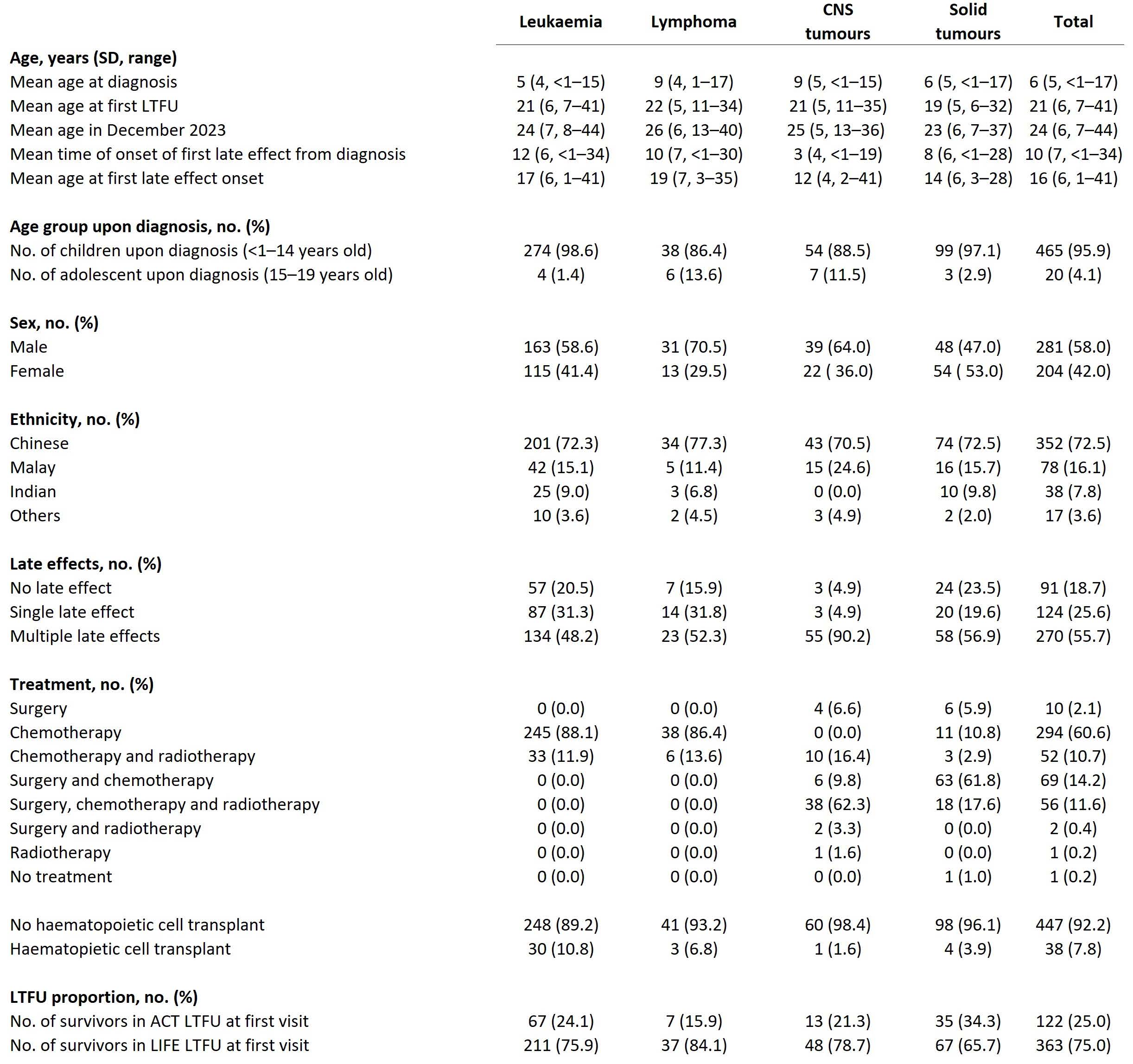
ACT: after cancer therapy; LIFE: long-term integrated follow-up and engagement; LTFU: long-term follow-up; SD: standard deviation
Observed late effects distribution, cancer type and severity
Among the 394 survivors, 1084 observed/self-reported late effects were documented. The CTCAE version 5.0 categories with high proportion were metabolism and nutritional disorders (n=212, 19.6%, including overweight/obesity, anorexia and pH/electrolyte/glucose abnormalities), followed by musculoskeletal and connective tissue disorders (n=147, 13.6%), nervous system disorders (n=110, 10.1%), endocrine disorders (n=87, 8.0%), and ear and labyrinth disorders (n=82, 7.6%).
In leukaemia survivors, the most documented late effects were metabolism and nutritional disorders (n=127, 23.4%), musculoskeletal and connective tissue disorders (n=91, 16.8%), and cardiac disorders (n=46, 8.5%). Lymphoma survivors showed similar trends with metabolism and nutritional disorders (n=19, 23.2%), musculoskeletal and connective tissue (n=13, 15.9%), and cardiac disorders (n=9, 11.0%). CNS tumour survivors predominantly experienced nervous system (n=51, 19.9%), endocrine (n=38, 14.8%), ear and labyrinth (n=35, 13.7%), and metabolic and nutritional disorders (n=33, 12.9%). Among solid tumour survivors, metabolic and nutritional disorders (n=33, 16.2%), ear and labyrinth (n=29, 14.2%), and musculoskeletal and connective tissue disorders (n=26, 12.7%) were most frequent (Table 2A). Overall severity was mostly mild–moderate (CTCAE grade 1: n=482, 44.5%; grade 2: n=449, 41.4%; grade 3: n=137, 12.6%; grade 4: n=13, 1.2%) (Table 2B).
Table 2. (A) Distribution of observed/documented late effects. (B) Severity of overall late effects.
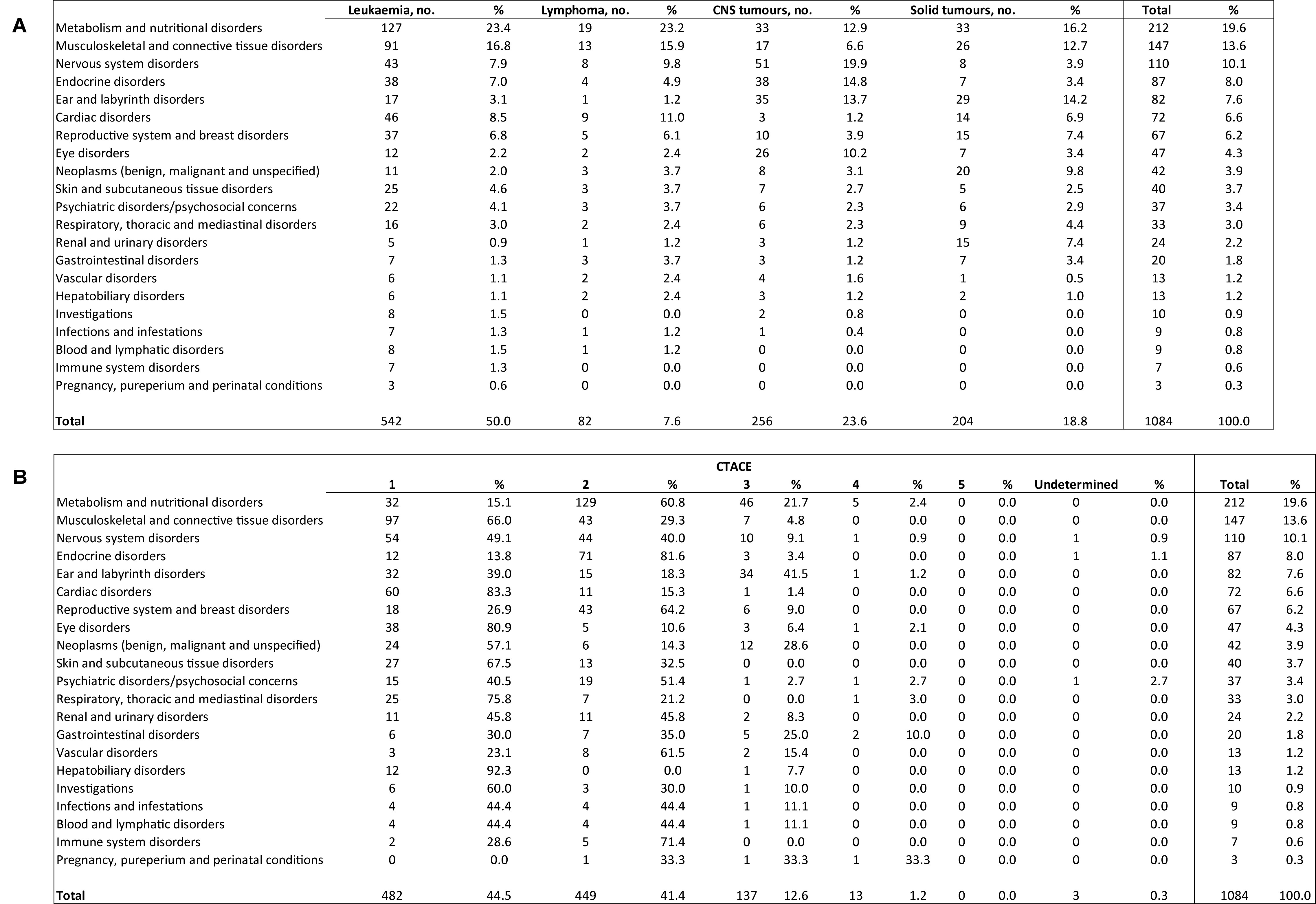
CNS: central nervous system; CTCAE: Common Terminology Criteria for Adverse Events Type of malignancy is indicated in the table.
CTCAE version 5.0 severity includes mild (grade 1), moderate (grade 2), severe (grade 3), life-threatening/disabling (grade 4) and fatal (grade 5). Undetermined is indicated when the severity and onset of the late effect cannot be determined with certainty. Cumulatively, a total of 1084 late effects were observed in 394 survivors.
Observed late effects distribution, treatment and severity
There were 406 late effects reported in survivors treated with chemotherapy combined with radiation (with and without surgery). The most observed categories were metabolism and nutritional disorders (n=67, 16.5%), nervous system (n=53, 13.1%), endocrine (n=52, 12.8%), and ear and labyrinth (n=43, 10.6%), with mild–moderate severity (CTCAE grade 1: n=171, 42.1%; grade 2: n=166, 40.9%) (Table 3A). Among the 661 late effects in chemotherapy-only survivors (with and without surgery), the majority were metabolism and nutritional disorders (n=141, 21.3%), musculoskeletal and connective tissue (n=107, 16.2%), cardiac (n=60, 9.1%) and nervous system (n=53, 8%), with mild–moderate severity (CTCAE grade 1: n=303, 45.8%; grade 2: n=276, 41.8%) (Table 3B). Survivors treated with HCT (n=38) had 149 reported late effects. The most common were endocrine (n=21, 14.1%), musculoskeletal and connective tissue disorders (n=21, 14.1%), followed by metabolic and nutrition (n=19, 12.8%) and reproductive system/breast disorders (n=15, 10.1%), with mild–moderate severity (CTCAE grade 1: n=62, 41.6%; grade 2: n=67, 45.0%) (Table 3C).
Table 3. (A) Distribution and severity of late effects in relation to chemotherapy and radiation (with and without surgery), (B) chemotherapy (with and without surgery), (C) severity of late effects in relation to haematopoietic cell transplant.
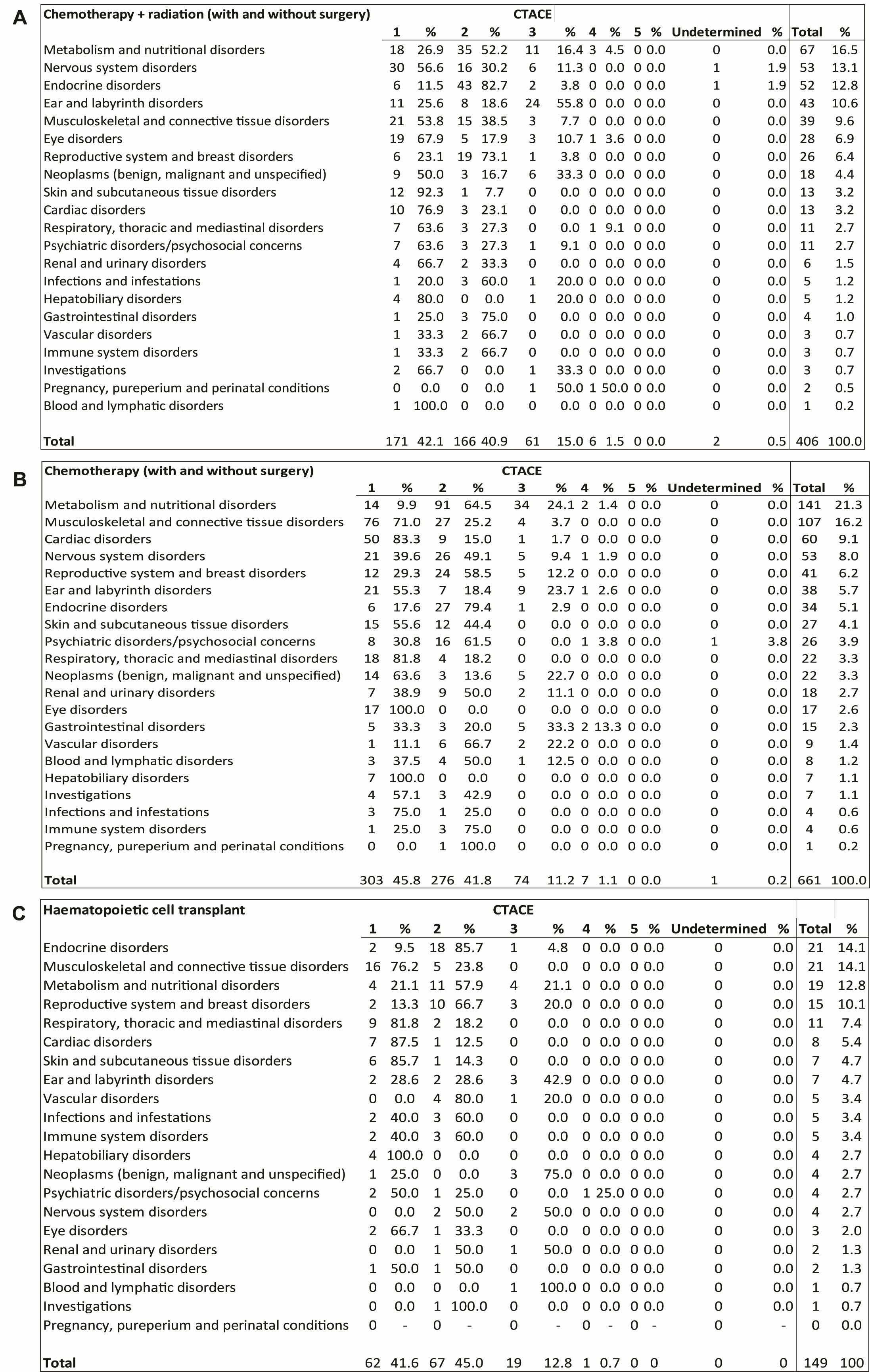
CTCAE: Common Terminology Criteria for Adverse Events
CTCAE version 5.0 severity includes mild (grade 1), moderate (grade 2), severe (grade 3), life-threatening/disabling (grade 4) and fatal (grade 5). Undetermined is indicated when the severity and onset of the late effect cannot be determined with certainty.
Onset of late effects in relationship to cancer type and treatment
CNS and solid tumour survivors most often developed their first late effect within 5 years post-diagnosis (n=39, 67.2% and n=28, 35.9%, respectively). Leukaemia survivors peaked at 10–14 years (n=76, 34.4%), while lymphoma survivors showed steady onset across the first 14 years (n=9, 24.3%) (Fig. 1A). In survivors treated with chemotherapy and radiotherapy (with and without surgery), the odd ratio of developing late effects in the first 5 years post-diagnosis was 4.88 (95% CI 2.98–7.71, P<0.001) compared to chemotherapy (with and without surgery). Survivors treated with surgery, radiotherapy or no treatment alone were excluded from this analysis due to small numbers (Fig. 1B).
Fig. 1. (A) No. of survivors reporting first late effects at various time points from diagnosis. (B) Forest plot of odd ratio of onset of late effects from diagnosis in relation to treatment.
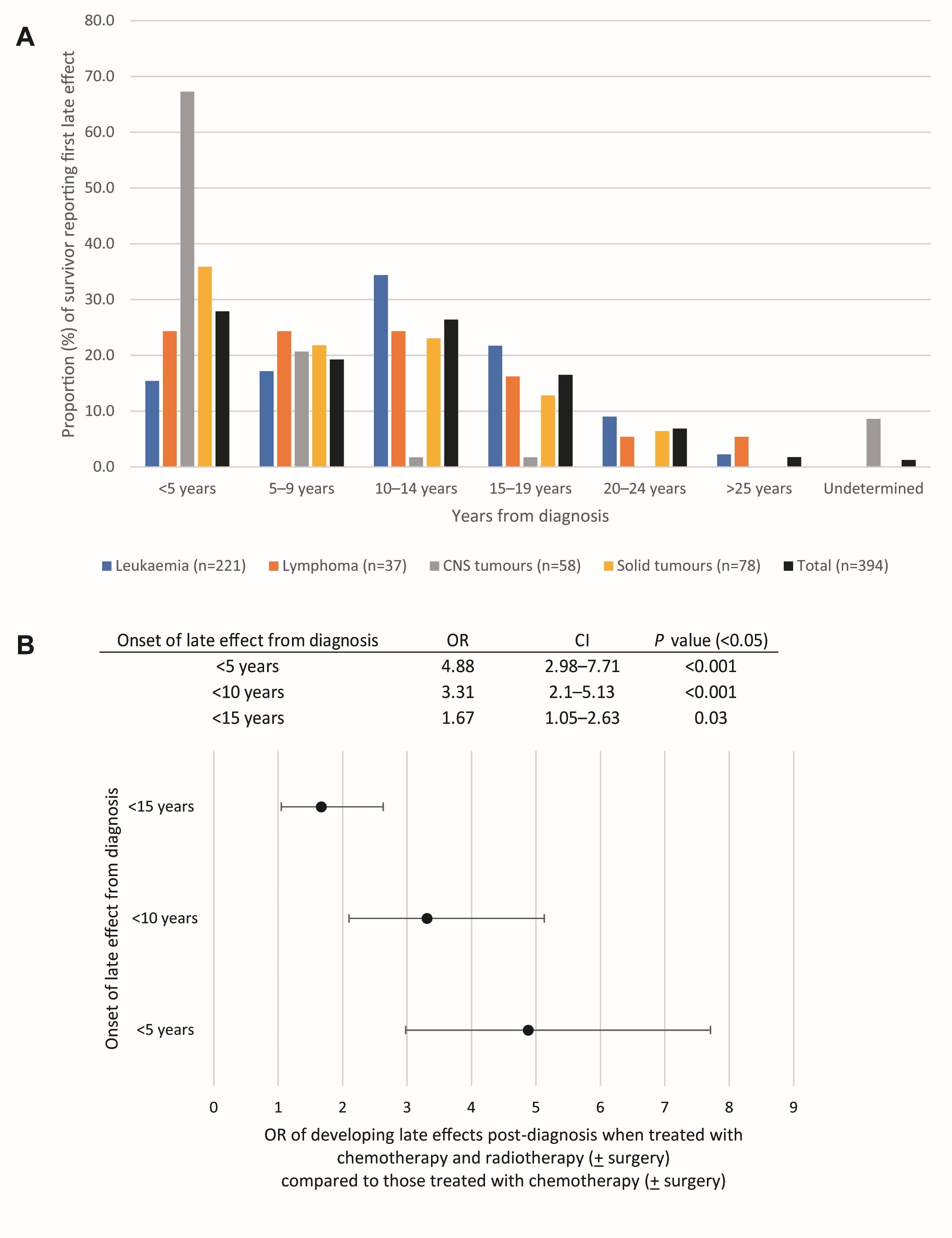
CI: confidence interval; CNS: central nervous system; OR: odds ratio
P value of <0.05 is considered statistically significant.
+: with and without
Onset of particular late effects in relation to cancer type
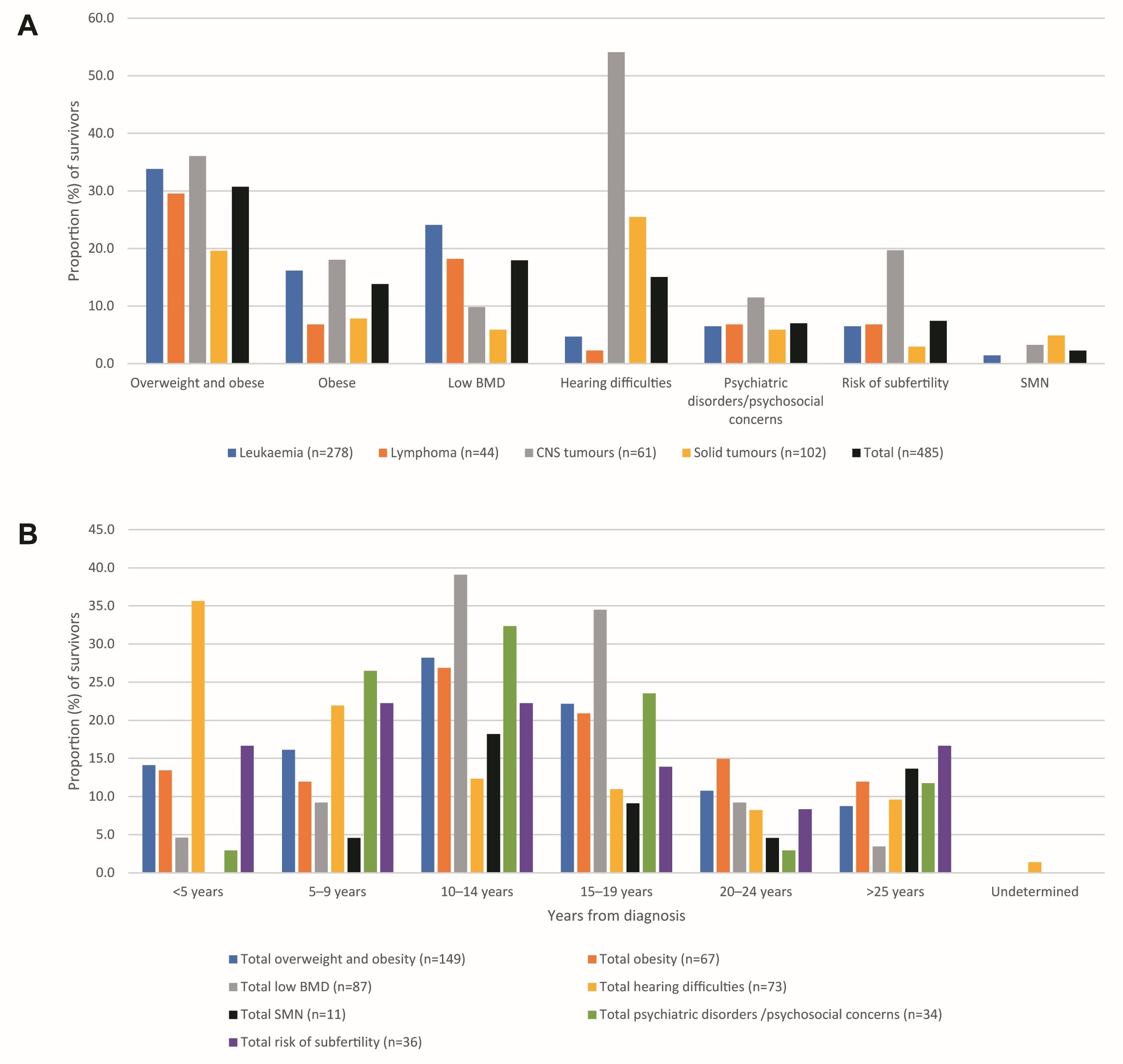
Overweight and obesity (n=149, 30.7%), obesity alone (n=67, 13.8%), low BMD (n=87, 17.9%) and hearing difficulties (n=73, 15.1%) affect a notable proportion of total survivors. Other late effects of interest among all survivors were psychiatric/psychosocial concerns (n=34, 7.0%), risk of subfertility (n=36, 7.4%), SMN (n=11, 2.3%), neurocognitive impairment (n=14, 3.0%) and intellectual disability (n=5, 1.0%). By subgroup, obesity had a high proportion in leukaemia (n=45, 16.2%) and CNS tumour survivors (n=11, 18.0%). Low BMD was commonly seen in leukaemia survivors (n=67, 24.1%). Hearing difficulties were observed in 54.1% of CNS tumour survivors (n=33) and 25.5% of solid tumour survivors (n=26). Psychiatric/psychosocial concerns (n=7, 11.5%) and subfertility risk (n=12, 19.7%) were also notable in CNS tumour survivors (Fig. 2A).
Fig. 2. Proportion of survivors reporting first observed/documented specific late effects (A) in relation to type of malignancies and (B) over years from diagnosis.
BMD: bone mineral density; SMN: secondary malignant neoplasms
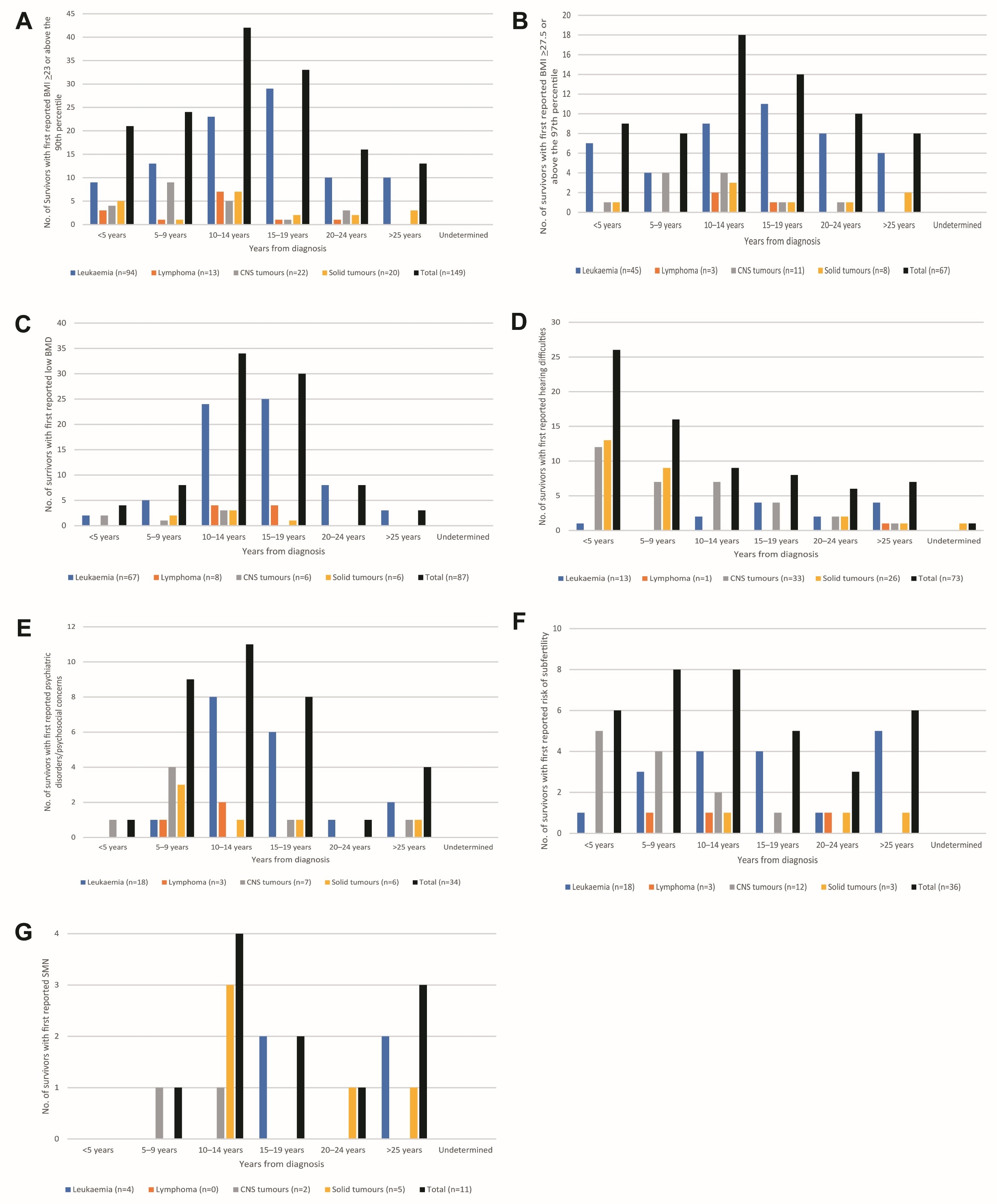
Temporal analysis showed that overweight/obesity and low BMD in leukaemia and the overall cohort occurred 10–19 years post-diagnosis, while hearing difficulties in CNS and solid tumour survivors typically occurred within the first 5 years. Psychological/psychosocial concerns, SMN and subfertility risk continued to emerge even >25 years post-diagnosis (Figs. 2B, 3A–G).
Fig. 3. No. of survivors reporting first observed/documented (A) BMI >23 or >90th percentile, (B) BMI >27.5 or >97th percentile, (C) BMD, (D) hearing difficulties, (E) psychiatric disorders/psychosocial concerns, (F) risk of subfertility and (G) secondary malignant neoplasm (SMN) over years from diagnosis.
BMD: bone mineral density; BMI: body mass index; CNS: central nervous system; SMN: secondary malignant neoplasms
Undetermined is indicated when the severity and onset of the late effect cannot be determined with certainty.
DISCUSSION
This study is among the first comprehensive reviews in Southeast Asia to curate late effects associated with specific paediatric cancer treatments using substantial dataset. Through this retrospective audit, the late effects in childhood cancer survivors in Singapore were evaluated. Most survivors experienced at least 1 CTCAE grades 1–2 late effect, with patterns varying by cancer type and treatment, underscoring the need to refine guidelines for earlier detection and management.
LTFU care in Asia remains inconsistent due to differences in care models, knowledge gaps, limited awareness, cultural barriers and resource constraints.12,21,22 In this study’s cohort, CNS and solid tumour survivors often developed hearing loss within 5 years of diagnosis, while leukaemia survivors commonly presented with overweight/obesity at 10–14 years. As international cohorts report chronic conditions into later adulthood, the findings highlight the need for lifelong surveillance.3,4,8,10,11,23 Identifying time points for specific late effects can tailor screening schedules, improve efficiency and prioritise resource.
Consistent with Western and Asian studies,3,4,8,23,24 similar late effect burdens were found, including obesity, hearing difficulties and low BMD. The type and frequency of late effects varied by cancer type, mirroring Western cohorts.25 The similarities may reflect the adaptation of Western protocols, refined locally through risk stratification, precision therapy, treatment de-escalation and adherence to global screening recommendations.14,26 The data reinforce that LTFU should be diagnosis-, onset- and treatment-specific.25 Similarity to Western cohorts supports the global standardisation of LTFU models with local adaptation.
Overweight/obesity was prominent among leukaemia and CNS tumour survivors. While multifactorial, corticosteroid exposure likely contributes by altering fat deposition, impairing glucose uptake and inducing insulin resistance.27 Additionally, Asians are predisposed to truncal obesity through genetic–environmental interactions.28 Corticosteroids further compromise bone health by reducing osteoblast and simulating osteoclast.29 These mechanisms may underline the high proportion of these late effects in this study’s cohort.
Survivors treated with chemotherapy and radiotherapy developed late effects earlier, especially with CNS, endocrine and auditory disorders. This reflects the localised impact of cranial radiation and CNS-directed therapies.30-35 The consequences of hearing loss on speech, learning and psychosocial development are well-established,32 underscoring the importance of early detection. The late effect burden in HCT survivors was consistent with published literature, notably endocrine and musculoskeletal disorders.36 However, with growing HCT survivors, the spectrum may shift in observing other late effects like infections.36 Recognising these patterns allows providers to counsel survivors on risk, adjust follow-up intensity and optimise care.
In response, this study implemented a structured, cancer- and duration-specific LTFU framework with screening tailored to diagnosis, treatment history and individual risk, guided by international guidelines, which include asymptomatic survivors. Leukaemia and lymphoma survivors require long-term monitoring for metabolic, cardiac and musculoskeletal late effects, extending beyond 25 years. In contrast, CNS and solid tumour survivors need closer follow-up during the first decade, when neurocognitive, endocrine and auditory toxicities emerge. To address this, KKH established a CNS-specific LTFU clinic for intensive surveillance. Solid tumour survivors similarly require comprehensive early follow-up, focusing on metabolism, musculoskeletal health and hearing. Risk-based guidelines provide a framework for individualising surveillance, especially for high-risk groups who received combined chemotherapy and radiotherapy, where late effects often appear within 5 years but persist decades later.12,14
The authors have provided late effect education for survivors, families and healthcare professionals to raise awareness before entering LTFU. The authors also aim to promote regional advocacy focusing on standardised guidelines, resource allocation, multidisciplinary models of care and structured transition protocols to adult services to maintain continuity. Personalised, risk-based approaches can optimise outcomes and improve survivor’s quality of life.12,14
This study has several limitations. As it involves only a single institution, the late effects observed may reflect local practices. The peak in low BMD likely reflects the practice of initiating BMD assessments after age 17 to minimise radiation exposure, possibly missing earlier cases. Collaboration with other centres in Singapore and the region will be essential to harmonise LTFU models. Future refinements should align screening with population-specific risks and COG guidelines. The recent establishment of the LTFU clinic also meant some survivors had long gaps before their first review, where the oldest survivor presented at 44 years post-diagnosis, leading to missing data and underestimation of late effect representation. As a retrospective study, reliance on EHRs may cause incomplete data capture, especially for outcomes like metabolic syndrome, where detail was often insufficient for CTCAE grading. Despite potential selection bias, the audit has impacted improvements in the LTFU framework.
Psychological late effects were underrepresented, as a concurrent study37 utilised hardcopy questionnaires that were not captured in EHRs. Similarly, neurocognitive impairment,34,35 intellectual disability33 and infertility/subfertility38 were underrepresented, as these outcomes were not systematically screened. Contributing factors include limited assessment tools, time constraints and reliance on patient reporting. Longer follow-up may be required for these conditions to manifest. In this audit, the incidence and prevalence of these late effects cannot be determined. Future studies incorporating number-at-risk analyses would provide greater clarity.
Lifestyle factors, such as diet, physical activity, alcohol use, smoking, education and socioeconomic status were not routinely screened, but incorporating them would improve the holistic design of survivorship care. Another limitation is that the audit preceded the use of CAR-T and immunotherapies like blinatumomab. These are now part of the institutional practice and carry unique risks, including hypogammaglobulinemia, cytopenia, immune-related complications, infections, neurotoxicity and cardiac effects.39,40 Therefore, ongoing surveillance will need to capture their evolving late effect profiles.
CONCLUSION
Despite limitations, this comprehensive audit of a large Southeast Asian cohort provides important insights into late effect burden to improve the survivorship platform of KKH. High proportion of overweight/obesity, low BMD and hearing difficulties emphasise the need for proactive, structured follow-up and targeted interventions. The earlier onset of late effects in CNS and solid tumour survivors, and those treated with radiotherapy, underscores the urgency of initiating LTFU early in these high-risk groups. Early detection may mitigate long-term complications and reduce healthcare burden. The findings also offer regional insights into prioritising late effect for surveillance resource allocation. The similarity of the results with Western cohorts highlights the universality of these issues, while underscoring the applicability of international guidelines in local healthcare settings and the need for culturally adapted survivorship models in Asia. Therefore, prospective studies with standardised, comprehensive data collection are necessary to ensure accurate late effect identification. Such efforts will strengthen evidence, guide refinement of care protocols and enhance the impact of survivorship research in Asia. Furthermore, tailored, evidence-based LTFU strategies are essential to improve outcomes and quality of life for childhood cancer survivors globally.
Acknowledgements
The authors would like to give their appreciation to the staff of the KKH LFTU clinic for their dedicated care for the childhood cancer survivors. The authors would also like to thank the survivors for their courage and perseverance.
REFERENCES
- Howlader NN, Krapcho M, Miller D, et al. SEER Cancer Statistics Review, 1975-2018. Bethesda, MD; 2021.
- Armstrong GT, Chen Y, Yasui Y, et al. Reduction in Late Mortality among 5-Year Survivors of Childhood Cancer. N Engl J Med 2016;374:833-42.
- Dixon SB, Liu Q, Chow EJ, et al. Specific causes of excess late mortality and association with modifiable risk factors among survivors of childhood cancer: a report from the Childhood Cancer Survivor Study cohort. Lancet 2023;401:1447-57.
- Bhakta N, Liu Q, Ness KK, et al. The cumulative burden of surviving childhood cancer: an initial report from the St Jude Lifetime Cohort Study (SJLIFE). Lancet 2017;390:2569-82.
- Streefkerk N, Teepen JC, Feijen EAM, et al. The cumulative burden of self-reported, clinically relevant outcomes in long-term childhood cancer survivors and implications for survivorship care: A DCCSS LATER study. Cancer 2024;130:1349-58.
- Salloum R, Chen Y, Yasui Y, et al. Late Morbidity and Mortality Among Medulloblastoma Survivors Diagnosed Across Three Decades: A Report From the Childhood Cancer Survivor Study. J Clin Oncol 2019;37:731-40.
- Esbenshade AJ, Lu L, Friedman DL, et al. Accumulation of Chronic Disease Among Survivors of Childhood Cancer Predicts Early Mortality. J Clin Oncol 2023;41:3629-41.
- Prasad M, Goswami S, Chinnaswamy G, et al. Long-Term Outcomes in Survivors of Childhood Cancer: A 30-Year Experience From India. JCO Glob Oncol 2022;8:e2200044.
- Hudson MM, Ehrhardt MJ, Bhakta N, et al. Approach for Classification and Severity Grading of Long-term and Late-onset Health Events among Childhood Cancer Survivors in the St. Jude Lifetime Cohort. Cancer Epidemiol Biomarkers Prev 2017;26:666-74.
- Feijen EAM, Teepen JC, van Dulmen-den Broeder E, et al. Clinical evaluation of late outcomes in Dutch childhood cancer survivors: Methodology of the DCCSS LATER 2 study. Pediatr Blood Cancer 2023;70:e30212.
- van Kalsbeek RJ, van der Pal HJH, Kremer LCM, et al. European PanCareFollowUp Recommendations for surveillance of late effects of childhood, adolescent, and young adult cancer. Eur J Cancer 2021;154:316-28.
- Cai J, Cheung YT, Hudson MM. Care Models and Barriers to Long-Term Follow-Up Care Among Childhood Cancer Survivors and Health Care Providers in Asia: A Literature Review. JCO Glob Oncol 2024;10:e2300331. Accessed 6 July 2025.
- King JE, O’Connor MC, Shohet E, et al. Clinician perceptions of Passport for Care, a web-based clinical decision support tool for survivorship care plan delivery. Pediatr Blood Cancer 2023;70:e30070.
- Children’s Oncology Group. Long-Term Follow-Up Guidelines for Survivors of Childhood, Adolescent, and Young Adult Cancers Version 6.0, October 2023. COG_LTFU_Guidelines_Comprehensive_v6.pdf. Accessed 6 July 2025.
- Health Promotion Board. Obesity: HPB-MOH Clinical Practice Guidelines 1/2016. obesity-cpg_main_for-online-30-aug.pdf. Accessed 25 August 2025.
- Shepherd JA. Positions of The International Society for Clinical Densitometry and Their Etiology: A Scoping Review. J Clin Densitom 2023;26:101369.
- Martos M, George N, Arreguín-González FE, et al. Childhood Cancer Survivorship Globally: A Systematic Review. JAMA Oncol 2025.
- National Cancer Institute. International Classification of Childhood Cancer (ICCC). https://seer.cancer.gov/iccc/. Accessed 25 August 2025.
- US Department of Health and Human Services. Common Terminology Criteria for Adverse Events (CTCAE) Version 5.0. 27 November 2017. https://dctd.cancer.gov/research/ctep-trials/for-sites/adverse-events/ctcae-v5-5×7.pdf. Accessed 6 July 2025.
- STROBE. Strengthening the reporting of observational studies in epidemiology. https://www.strobe-statement.org/. Accessed 6 July 2025.
- İncesoy Özdemİr S, Taçyıldız N, Varan A, et al. Cross-sectional study: long term follow-up care for pediatric cancer survivors in a developing country, Turkey: current status, challenges, and future perspectives. Turk J Med Sci 2020;50:1916-21.
- Bakker ME, Pluimakers VG, van Atteveld JE, et al. Perspectives on follow-up care and research for childhood cancer survivors: results from an international SIOP meet-the-expert questionnaire in Kyoto, 2018. Jpn J Clin Oncol 2021;51:1554-60.
- van Zyl A, Ndlovu S, Lombard C, et al. High prevalence of long-term and late effects in a South African childhood cancer survivor cohort. EJC Paediatric Oncology 2023;2:100112.
- Livinalli A, Silva MT, Lopes LC. Late adverse effects related to treatment in a cohort of survivors of childhood and adolescent cancer. Medicine (Baltimore) 2019;98:e14921.
- Erdmann F, Frederiksen LE, Bonaventure A, et al. Childhood cancer: Survival, treatment modalities, late effects and improvements over time. Cancer Epidemiol 2021;71:101733.
- Ariffin H, Ab Rahman S, Leong SH, et al. Malaysia-Singapore (MASPORE) leukaemia study group: From common history to successful collaboration. Pediatr Hematol Oncol 2020;5:11-6.
- Bhandari R, Armenian SH, McCormack S, et al. Diabetes in childhood cancer survivors: emerging concepts in pathophysiology and future directions. Front Med (Lausanne) 2023;10:1206071.
- Williams R, Periasamy M. Genetic and Environmental Factors Contributing to Visceral Adiposity in Asian Populations. Endocrinol Metab (Seoul) 2020;35:681-95.
- Kobza AO, Herman D, Papaioannou A, et al. Understanding and Managing Corticosteroid-Induced Osteoporosis. Open Access Rheumatol 2021;13:177-90.
- van Iersel L, Mulder RL, Denzer C, et al. Hypothalamic-Pituitary and Other Endocrine Surveillance Among Childhood Cancer Survivors. Endocr Rev 2022;43:794-823.
- Keilty D, Khandwala M, Liu ZA, et al. Hearing Loss After Radiation and Chemotherapy for CNS and Head-and-Neck Tumors in Children. J Clin Oncol 2021;39:3813-21.
- Bass JK, Knight KR, Yock TI, et al. Evaluation and Management of Hearing Loss in Survivors of Childhood and Adolescent Cancers: A Report From the Children’s Oncology Group. Pediatr Blood Cancer 2016;63:1152-62.
- Jacola LM, Edelstein K, Liu W, et al. Cognitive, behaviour, and academic functioning in adolescent and young adult survivors of childhood acute lymphoblastic leukaemia: a report from the Childhood Cancer Survivor Study. Lancet Psychiatry 2016;3:965-72.
- Phillips NS, Stratton KL, Williams AM, et al. Late-onset Cognitive Impairment and Modifiable Risk Factors in Adult Childhood Cancer Survivors. JAMA Netw Open 2023;6:e2316077.
- Brinkman TM, Krasin MJ, Liu W, et al. Long-Term Neurocognitive Functioning and Social Attainment in Adult Survivors of Pediatric CNS Tumors: Results From the St Jude Lifetime Cohort Study. J Clin Oncol 2016;34:1358-67.
- Inamoto Y, Lee SJ. Late effects of blood and marrow transplantation. Haematologica 2017;102:614-25.
- Fong FJY, Wong BWZ, Ong JSP, et al. Mental wellness and health-related quality of life of young adult survivors of childhood cancer in Singapore. Ann Acad Med Singap 2024;53:530-8.
- Chow EJ, Stratton KL, Leisenring WM, et al. Pregnancy after chemotherapy in male and female survivors of childhood cancer treated between 1970 and 1999: a report from the Childhood Cancer Survivor Study cohort. Lancet Oncol 2016;17:567-76.
- Cappell KM, Kochenderfer JN. Long-term outcomes following CAR T cell therapy: what we know so far. Nat Rev Clin Oncol 2023;20:359-71.
- Chakraborty R, Hill BT, Majeed A, et al. Late Effects after Chimeric Antigen Receptor T cell Therapy for Lymphoid Malignancies. Transplant Cell Ther 2021;27:222-9.
This study was approved by the SingHealth Centralised Institutional Review Board (2018-2022) and SingHealth Data Request (2024-08-00290).
The authors declare there are no affiliations with or involvement in any organisation or entity with any financial interest in the subject matter or materials discussed in this manuscript. All authors have no conflicts of interest to declare. Portions of this work were presented at the SIOP Annual Congress 2024 in Honolulu, Hawaii, US.
Dr Jason Lam Shang Leen, Department of Paediatric Medicine, General Paediatric Service, KK Women’s and Children’s Hospital, 100 Bukit Timah Rd, Singapore 229899. Email: [email protected]
