

ABSTRACT
Introduction: Intolerance frequently limits the use of intragastric balloons (IGBs) in the treatment of obesity. This includes refractory nausea, vomiting and abdominal discomfort. Our study aims to identify predictors of balloon intolerance and early removal, which will help to guide patient selection for this intervention and peri-procedure care.
Method: We conducted a retrospective cohort study of 54 consecutive patients who underwent IGB insertion from July 2017 to July 2022 in a single tertiary institution in Singapore. Forty-seven (87.0%) patients completed therapy, while 7 patients (13.0%) had early removal of the balloon due to intolerance. Characteristics of both groups were compared.
Results: Multivariate analysis revealed significant associations between early balloon removal and both depression (P=0.012) and anxiety (P=0.001) after adjusting for age, sex, ethnicity, height, nulliparity, balloon type and volume. Univariate analysis revealed that anxiety was the main risk factor (P=0.004, odds ratio 9.111, 95% confidence interval 1.624–51.124), while depression was no longer a significant predictor.
Conclusion: Identifying predictors of balloon intolerance and early removal can enhance patient selection and improve peri-procedural care. In patients with a history of depression or anxiety, it is important to ensure adequate counselling and preparation prior to balloon insertion.
CLINICAL IMPACT
What is New
- Our study identified depression and anxiety as significant predictors of intragastric balloon intolerance and early removal.
Clinical Implications
- Peri-procedural support is crucial for patients with depression and anxiety, including counselling on physiological changes and setting realistic treatment goals.
- Optimising psychiatric comorbidities prior to intragastric balloon insertion and involving families in the process are also beneficial.

Obesity, affecting over 2.1 billion people globally, is an escalating health crisis with serious economic consequences.1 It is associated with multiple comorbidities including type 2 diabetes mellitus (T2DM), hypertension, coronary artery disease, stroke, sleep apnea, osteoarthritis and even certain cancers.2 In the US alone, USD190 billion per year is spent on the treatment of obesity and obesity-related complications.3 When compared with normal weight individuals, obese patients are responsible for 46% higher inpatient costs, 27% more outpatient visits and 80% higher spending on prescription medications.4
Clinically significant weight loss of 5–10% from baseline can substantially reduce cardiovascular risk factors and improve obesity-related comorbidities, such as obstructive sleep apnea, non-alcoholic fatty liver disease and the prevention or delay in development of T2DM.5 Lifestyle interventions, including a low-calorie diet, increased physical activity and behaviour modification, is the first line for weight loss. Unfortunately, physiologic adaptations to weight loss result in increased appetite, decreased resting metabolic rate and consequently weight regain. As a result, most patients fail to achieve sustained weight loss with lifestyle interventions alone.6 Pharmacotherapy is an important adjunct to lifestyle and behavioural modifications, and even in patients post-bariatric surgery. However, while glucagon-like peptide-1 (GLP-1) agonists have been shown to be effective in weight loss, its cost has deterred its usage as a first-line therapy. Furthermore, there are also misconceptions about the safety of obesity pharmacotherapy. For example, in Singapore, a survey of the public who attended an obesity forum revealed that 65.1% believed that weight loss medications are dangerous, and only 20.6% thought they were effective for weight loss.7
Metabolic-bariatric surgery (MBS) is the most effective treatment for severe obesity and its metabolic complications, with the percentage of excess weight loss ranging from 60% to 87% in randomised controlled trials.8 Yet, only 1% of patients who quality for MBS undergo the procedure as it is associated with peri-operative risks.9
Intragastric balloon (IGB) therapy has been proposed as a less invasive and reversible approach to weight loss that bridges the gap between lifestyle interventions or pharmacotherapy and MBS. It is a space-occupying device that is either inserted endoscopically or swallowed, which results in gastric distention, delayed gastric emptying, increased satiety and consequently reduced intake.10 IGBs vary in terms of material, duration of therapy, balloon volume, adjustability, method of insertion and removal. Currently, the 3 IGBs approved by the United States Food and Drug and Drug Administration are the Obalon, Orbera and ReShape balloons. Additional balloons approved for use in Europe include the Elipse, End-Ball, Heliosphere BAG, Lexbal, MedSil and Spatz3. Orbera, one of the oldest IGBs still in use, is composed of silicon, filled with 400 to 700 mL of saline and inserted endoscopically into the stomach for up to 6 months. ReShape balloon is similarly inserted endoscopically for up to 6 months and filled with approximately 750 to 900 mL of saline. Both the Obalon and Elipse balloons are swallowed and do not require endoscopy for insertion; however, Elipse is the only IGB that is removed via natural excretion. Spatz3 balloon is unique as its volume can be adjusted.11
IGBs have been shown to be safe and effective for treating obesity and its metabolic complications, producing an initial weight loss between 6% and 15%, which is superior compared to 1% to 5% with lifestyle modifications alone.12 Nonetheless, it is difficult to achieve sustained weight loss with the IGBs, as weight regain is expected to occur after removing the balloon. Furthermore, intolerance of the IGB also limits its use. As the balloon rapidly fills with fluid within the stomach, unwanted symptoms may develop. Nausea and vomiting are the most common symptoms of intolerance, the duration and severity of which vary between individuals. Profuse vomiting with poor intake may also result in dehydration and electrolyte imbalance. Other symptoms of intolerance include abdominal pain, cramps as well as heartburn.13 The incidence of early removal of IGB due to intolerance ranges from 0.44% to 20% across several studies worldwide.13–36 Many studies have evaluated the safety and efficacy of IGBs, but few have scrutinised the predictors of intolerance and early removal. Our study aims to identify predictors of early removal of IGB due to intolerance, which will help to guide patient selection and peri-procedural care.
METHOD
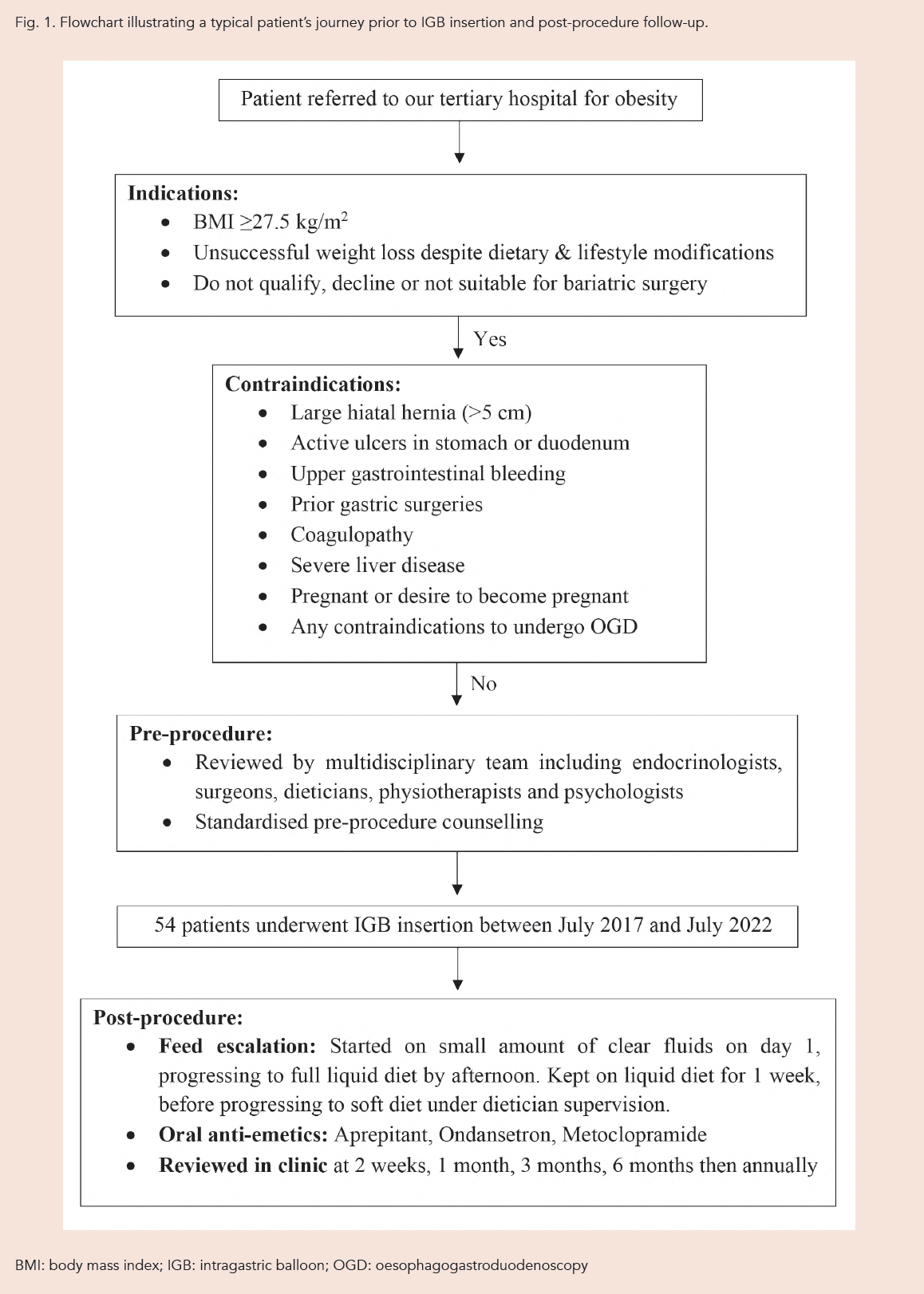
We conducted a retrospective cohort study on 54 consecutive patients who underwent IGB insertion between July 2017 and July 2022 at the Singapore General Hospital. Indications for IGB insertion in our institution include patients with obesity (body mass index [BMI] ≥27.5 kg/m2) who do not qualify, decline or are unsuitable for MBS and who have been unsuccessful in achieving or maintaining weight loss despite dietary and lifestyle modifications. Contraindications to IGB insertion include patients with large hiatal hernia (larger than 5 cm), active ulcers in the stomach or duodenum, upper gastrointestinal bleeding, prior gastric surgeries, coagulopathy, severe liver disease, those who are pregnant or desire to become pregnant, or have any contraindications to undergo oesophagogastroduodenoscopy. All patients received standardised pre-procedure counselling, including informational handouts provided during clinic visits. All patients were evaluated at our weight management unit by a multidisciplinary team consisting of endocrinologists, surgeons, dieticians, physiotherapists, psychiatrists or psychologists prior to commencement of IGB therapy. We optimise the management of any existing psychiatric disorders through medication or therapy to ensure patient is stable prior to the procedure. Post-procedure, our psychologist will continue follow-up and support patients if needed.
Three types of IGB were used in our institution, the Orbera365, Elipse and Spatz3 balloons. The Orbera365 system (Apollo Endosurgery, Austin, TX, US) is a spherical balloon that is filled with 400–700 mL of saline. It is inserted and removed endoscopically and can remain in the stomach for up to 12 months.10 Elipse (Allurion Technologies, Wellesley, MA, US) is the first swallowable gastric balloon that does not require endoscopy or sedation for insertion or removal. The balloon is contained in a capsule and once in the stomach, the capsule dissolves and the balloon is filled with 550 mL of fluid via a catheter. The catheter is dislodged from the balloon once filling is completed and withdrawn through the patient’s mouth. The balloon self-deflates after 4 months and is naturally excreted.37 Spatz3 Adjustable Balloon System (Spatz Medical, Great Neck, NY, US) is a silicone spherical IGB with a catheter that allows adjustments. It is inserted endoscopically and filled with 400 to 700 mL of saline. The volume can be adjusted downwards to improve tolerability or upwards to improve weight loss. It has an implantation duration of up to 12 months before it is removed endoscopically.12 The type of balloon was chosen after a discussion with the patient based on the method of insertion, need for endoscopic removal, adjustability, cost and duration of implantation.
All Elipse balloons were inserted without sedation or anesthesia. The Orbera365 and Spatz3 balloons were inserted endoscopically under sedation (i.e. IV Midazolam). In the first post-procedure day, all patients were commenced on our post-MBS protocol, which included small quantities of clear fluids, progressing to a full liquid diet by the afternoon. Patients will stay on liquid diet for 1 week and gradually progress to stage 3 diet (soft food) under the supervision of our dietician. For anti-emesis, oral Aprepitant (125 mg on night before deployment day, 80 mg daily for 2 days) was prescribed in combination of Ondansetron 4 mg (3 times per day) and Metoclopramide 10 mg (3 times per day) for 5 days. For balloon intolerance, patients were offered option of admission for intravenous Dexamethasone 4 mg (4 times per daily) and intravenous hydration to avert early removal if possible. Patients were reviewed by our multidisciplinary team at 2 weeks post-procedure, followed by review at 1 month, 3 months, 6 months and subsequently annually. Fig. 1 illustrates a typical patient’s journey prior to IGB insertion and post-procedure follow up.
Fig. 1. Flowchart illustrating a typical patient’s journey prior to IGB insertion and post-procedure follow-up.
Our study aims to identify clinical predictors of early removal of IGB due to intolerance. Intolerance referred to patients who experienced accommodative symptoms such as nausea, vomiting, abdominal discomfort or cramps that were severe enough to warrant early removal. Early removal referred to patients who had the balloon removed before the intended treatment duration was completed, i.e. less than 4 months for Elipse and less than 12 months for Orbera365 and Spatz3 balloons. Variables of interest were identified based on clinical observation and literature review. These include the type of balloon, balloon volume, length of stay following IGB insertion, age, sex, ethnicity, height, nulliparity, presence of psychiatric disorder such as anxiety or depression, use of antidepressants or antipsychotics, presence of type 2 diabetes mellitus (T2DM) and whether proton pump inhibitor was prescribed. This information was retrieved from a prospectively collected database that was kept for all patients who underwent IGB insertion at our institution.
Statistical analysis
All categorical variables were given as percentages (%) of subjects affected, and normally distributed continuous variables were presented as the mean ± standard deviation (SD). Patients were divided into those who had early removal and those who completed therapy. Characteristics of these 2 groups were compared using Student’s t-test for continuous variables or chi-square test for categorical variables. When analysing the relationship between multiple independent and dependent variables, a linear and logistic regression model was used. P <0.05 was taken to indicate statistical significance. All analyses were performed using Stata version 16 software (Lakeway Drive, TX, US).
RESULTS
Fifty-four consecutive patients who underwent IGB insertion in a single tertiary institution in Singapore between July 2017 and July 2022 were included in our study. Thirteen patients (24.1%) experienced symptoms of intolerance including nausea, vomiting and abdominal pain, to varying severities. Eight patients (14.8%) required readmission for intravenous hydration and anti-emetics due to persistent vomiting and abdominal pain. Five of these patients experienced improvement in symptoms with medical therapy and eventually completed therapy. One patient had downsizing of the Spatz3 balloon volume from 700 mL to 500 mL and eventually completed therapy. The other 2 patients had requested for early removal of IGB during the admission due to persistent symptoms. A further 5 patients also had early removal of IGB due to intolerance symptoms, but they were not keen for a trial of admission to hospital for symptomatic treatment first. Out of 54 patients in our study, a total of 7 patients (13.0%) had early removal of the balloon due to intolerance while 47 (87.0%) patients completed therapy.
The mean duration of therapy was 263.5 days in those who completed therapy, and 7 days in the early removal group. Consequently, those who had the balloon removed early achieved less weight loss of 4.4 ± 3.6 kg compared to 11.7 ± 6.7 kg in those who completed therapy. The average length of stay post-procedure was comparable between the 2 groups (Table 1).
Table 1. Effects of treatment.
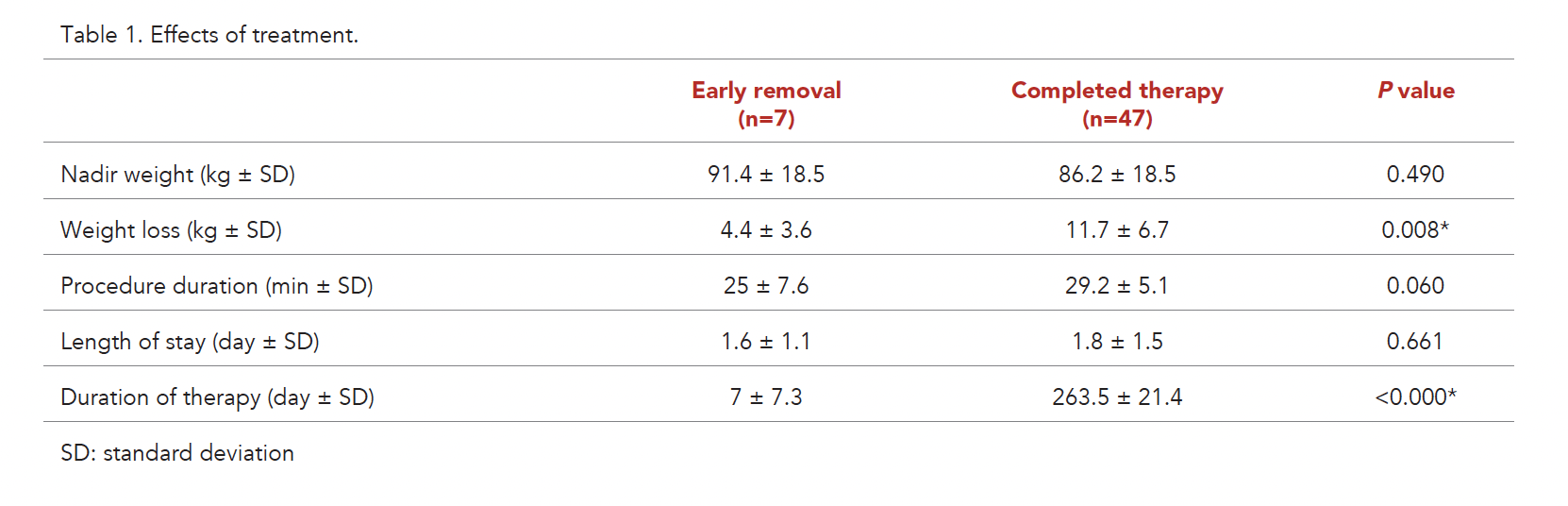
Table 2. Baseline characteristics.
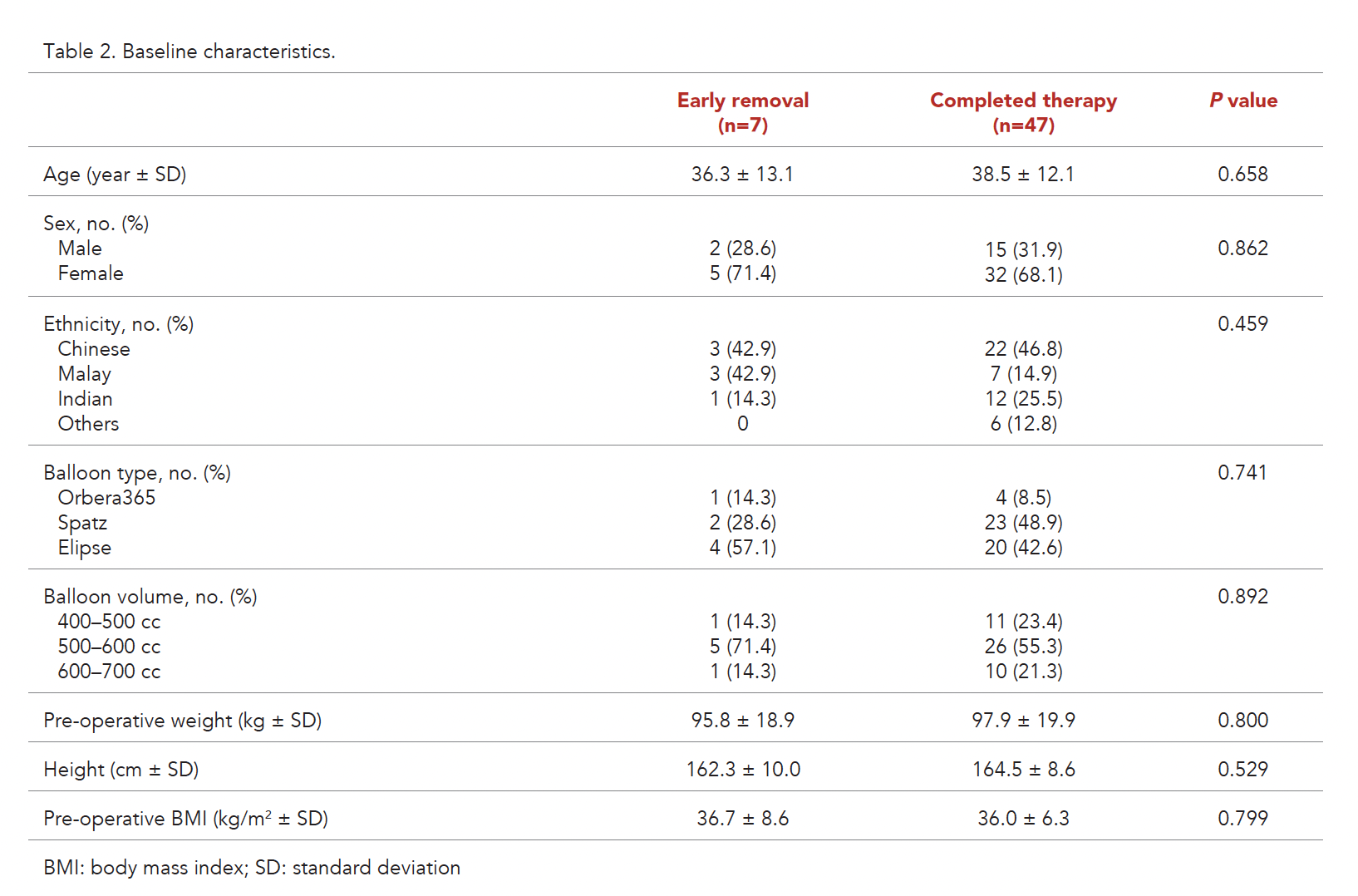
Table 2 compares the baseline characteristics of patients who had early IGB removal with those who completed therapy. There were no significant differences between the 2 groups in terms of age, sex, ethnicity, type of IGB or balloon volume. The pre-operative weight, BMI and height of patients in both groups were also similar, suggesting that these factors were not statistically significant predictors of intolerance and early removal. Among those who received the Spatz3 adjustable balloon, 3 patients experienced intolerance where 2 opted for the balloon to be removed while 1 had the balloon downsized from 700 mL to 500 mL and eventually completed 12 months of therapy. Another 5 patients had their balloon volume increased for weight stagnation.
Table 3. Predictors of early removal of intragastric balloon due to intolerance (univariate analysis).
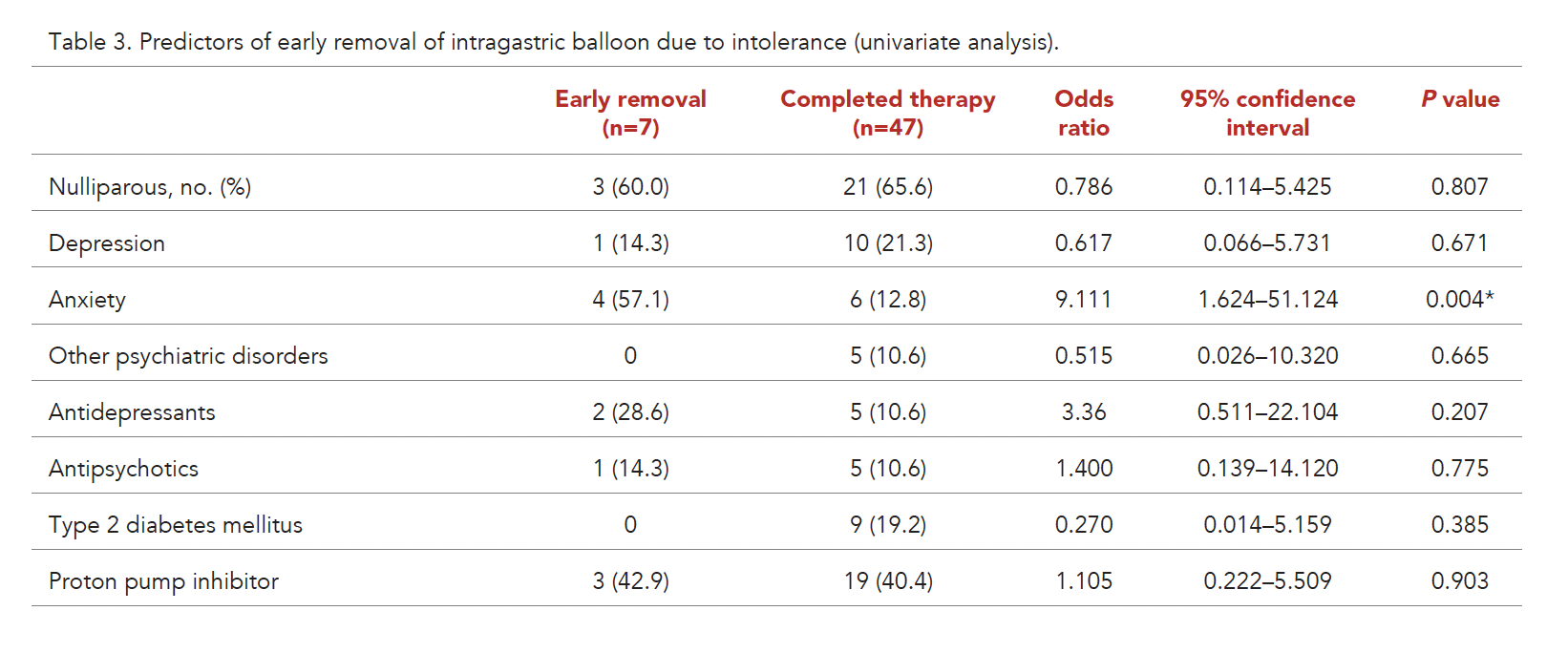
Table 3 compares several clinical parameters, such as nulliparity, depression, anxiety, use of antidepressants or antipsychotics, presence of T2DM or the use of proton pump inhibitors, among those who had early removal and those who completed therapy. On univariate analysis, we found that anxiety disorder was associated with risk of early removal (P=0.004, odds ratio 9.111, 95% confidence interval 1.624–51.124). Logistics regression was used to estimate the relationship between a dependent variable and independent variables. After adjusting for age, sex, ethnicity, height, nulliparity, balloon type and volume, multivariate analysis revealed significant associations between early balloon removal and both depression (P=0.012) and anxiety (P=0.001).
DISCUSSION
Intragastric balloons act as an artificial bezoar that occupies space in the stomach, resulting in early satiety, reduced food intake and consequently weight loss.44 Unlike MBS, they are reversible and do not alter gastrointestinal anatomy. In a meta-analysis of 5 randomised controlled trials38-42 with a total of 903 patients (506 in the IGB group and 397 in the control group), Kotinda et al. showed that the mean percentage of excess weight loss difference between the groups was 17.98% (P<0.00001), significantly in favour of the IGB group over sham and lifestyle intervention.12 Studies have also examined the sustainability of weight loss following balloon removal. In a randomised sham-controlled study with crossover at 3 months, Genco et al. showed that the group that had the balloon inserted for 3 months continued to lose weight at a greater rate in the 3 months following balloon removal, compared to the group that started out without a balloon for 3 months.42 Beyond weight loss, IGBs also induce significant decrease in hepatic steatosis, insulin resistance and improvement in other obesity-associated comorbidities.19
While IGBs are safe and effective, its use is limited by intolerance.43 Table 4 summarises the current literature on the experience with IGB worldwide, where the incidence of early removal due to intolerance varies between 0.44% and 20%. However, data on predictors for intolerance has been relatively scarce, with only 2 prior studies reporting on such predictors in the Caucasian population. The first study by Vargas et al. in the US24 showed that the use of selective serotonin or serotonin-norepinephrine reuptake inhibitors (SSRI/SNRI) at time of balloon placement was associated with increased odds of early removal before 8 weeks. The second study by Luisa de-Castro et al. in Spain21 showed that intolerance was more frequent in females and in patients who complained of digestive symptoms beyond the first month. Our study represents the first and only study of these predictors in an Asian population.
In fact, our study showed that the early removal rate for intragastric balloons was significantly higher in the Asian population (13%) compared to Caucasian populations, which is consistent with the paper by Ganesh et al.16 The only other study conducted specifically in an Asian patient cohort found that 20% of patients required early balloon removal due to refractive nausea and epigastric discomfort, and concluded that intragastric balloons are poorly tolerated by Asian patients even when lower volumes are infused into the balloon to compensate for the smaller Asian stature. Insights into the predictors of early IGB failure in an Asian population represent an important addition to the limited existing literature in this field. By identifying the key predictors of early balloon failure in this population, clinicians can make more informed decisions about patient suitability and tailor their approaches to achieve the best possible results.
While Vargas et al.24 found that the use of SSRI/SNRI was significantly associated with balloon intolerance and early removal, our study did not find this association to be statistically significant (P=0.195). A possible explanation could be that the presence of underlying depression or anxiety that necessitated the use of SSRI/SNRI may have been a confounder to the results in Vargas et al. Similar to how depression, anxiety and stress are associated with functional dyspepsia and irritable bowel syndrome,44 we postulate that these psychiatric disorders contribute to visceral hypersensitivity via complex brain-gut neural pathways, resulting in an increased perception of bloating and nausea following IGB insertion.
In terms of the type of IGB, Al-Subaie et al. reported that patients with the Elipse balloon experienced higher symptom severity immediately after insertion, possibly due to an underestimation of the symptoms since the insertion is procedure-less.29 However, Elipse was found to be rapidly tolerated after the first 72 hours, and Alsabah et al. postulated that its thin polymer film design makes it better tolerated in the stomach compared to the rigid designs of other balloons.30 On the other hand, Spatz3 is an adjustable IGB, where the volume of saline within the balloon can be reduced to improve tolerance. In a retrospective review of 165 consecutive patients who underwent Spatz3 balloon insertion, Usuy et al. showed that downward adjustments of balloon volume alleviated early intolerance in 80% of patients.45 In our study, 1 patient with Spatz3 had the balloon downsized from 700 mL to 500 mL for persistent nausea and vomiting, and eventually completed 12 months of therapy. Overall, our results nonetheless found that there was no statistically significant association between the type of balloon (P=0.741) or balloon volume (P=0.892) on intolerance and early removal. Other factors—including age, sex, ethnicity, pre-operative weight, BMI, height, nulliparity, T2DM and the use of proton pump inhibitors—were not significant predictors of intolerance and early removal.
A limitation of our study is its small sample size, which reduces its statistical power and increases the possibility of a type 2 error. With 3 different IGBs with different proposed dwell times (4 versus 12 months) and different methods of insertion and management (2 with fixed volumes and 1 adjustable), it may be difficult to conclusively tease out the factors for intolerability. Furthermore, as a retrospective review of a single-centre experience, this limits the generalisability of our findings and larger confirmatory studies are needed. With a larger sample size, it may be possible to do a case-matched control study to investigate the incidence and factors for intolerance across the various IGBs. Nonetheless, our study hopes to be hypothesis-generating as there is currently no data available on predictors for early removal of intragastric balloon. Given that depression and anxiety are significantly associated with balloon intolerance and early removal, we hope that this information will help to guide patient selection and pre-procedure counselling. In patients with pre-existing depression or anxiety, peri-procedural support is imperative. This includes counselling them on the physiological changes to be expected post-procedure, clarifying the role of the intragastric balloon and to set realistic treatment goals. It is also equally important to adequately optimise the patient’s underlying psychiatric comorbidities prior to IGB insertion. Involving families in process has also been shown to be beneficial, especially for adolescent patients. It may also be worthwhile to admit these patients for close monitoring and IV anti-emetics after balloon insertion rather than performing it as an ambulatory procedure.
CONCLUSION
In conclusion, while IGBs are a promising, less-invasive alternative to MBS in the treatment of obesity and its metabolic complications, intolerance is a problem especially in Asian populations where the rates of early balloon removal are significantly higher than in Caucasian populations. Identifying patients at risk of intolerance and early removal enables the healthcare team to implement necessary countermeasures, reducing this risk and increasing the success of IGB therapy. It allows clinicians to make informed decisions about patient suitability and tailor their approach to achieve best possible results for each patient.
References
- Ng M, Fleming T, Robinson M, et al. Global, regional, and national prevalence of overweight and obesity in children and adults during 1980–2013: a systematic analysis for the Global Burden of Disease Study 2013. The Lancet 2014;384:766-81.
- Billington CJ, Epstein LH, Goodwin NJ, et al. Overweight, Obesity, and Health Risk. Arch Intern Med 2000;160:898.
- Cawley J, Meyerhoefer C. The medical care costs of obesity: An instrumental variables approach. J Health Econ 2012;31:219-30.
- Finkelstein EA, Trogdon JG, Cohen JW, et al. Annual Medical Spending Attributable To Obesity: Payer-And Service-Specific Estimates. Health Aff (Milwood) 2009;28:w822-w831.
- Lau DCW, Teoh H. Benefits of Modest Weight Loss on the Management of Type 2 Diabetes Mellitus. Can J Diabetes 2013;37:128-34.
- Greenway FL. Physiological adaptations to weight loss and factors favouring weight regain. Int J Obes (Lond) 2015;39:1188-96.
- Lee PC, Ganguly S, Tan HC, et al. Attitudes and perceptions of the general public on obesity and its treatment options in Singapore. Obes Res Clin Pract 2019;13:404-7.
- Buchwald H, Avidor Y, Braunwald E, et al. Bariatric Surgery. JAMA 2004;292:1724.
- Nguyen NT, Varela JE. Bariatric surgery for obesity and metabolic disorders: state of the art. Nat Rev Gastroenterol Hepatol 2017;14:160-9.
- Stavrou G, Shrewsbury A, Kotzampassi K. Six intragastric balloons: Which to choose? World J Gastrointest Endosc 2021;13:238-59.
- Gollisch KSC, Raddatz D. Endoscopic intragastric balloon: a gimmick or a viable option for obesity? Ann Transl Med 2020;8:S8.
- Kotinda APST, de Moura DTH, Ribeiro IB, et al. Efficacy of Intragastric Balloons for Weight Loss in Overweight and Obese Adults: a Systematic Review and Meta-analysis of Randomized Controlled Trials. Obes Surg 2020;30:2743-53.
- Mitura K, Garnysz K. Tolerance of intragastric balloon and patient’s satisfaction in obesity treatment. Wideochirurgia I Inne Techniki Maloinwazyjne 2015;10:445-9.
- Roman S, Napoléon B, Mion F, et al. Intragastric Balloon for “Non-Morbid” Obesity: A Retrospective Evaluation of Tolerance and Efficacy. Obes Surg 2004;14:539-44.
- Genco A, Bruni T, Doldi SB, et al. BioEnterics intragastric balloon: The Italian experience with 2,515 patients. Obes Surg 2005;15:1161-4.
- Ganesh R, Rao AD, Baladas HG, et al. The Bioenteric Intragastric Balloon (BIB) as a treatment for obesity: poor results in Asian patients. Singapore Med J 2007;48:227-31.
- Imaz I, Martínez-Cervell C, García-Álvarez EE, et al. Safety and effectiveness of the intragastric balloon for obesity. A meta-analysis. Obes Surg 2008;18:841-6.
- Dastis SN, François E, Deviere J, et al. Intragastric balloon for weight loss: Results in 100 individuals followed for at least 2.5 years. Endoscopy 2009;41:575-80.
- Forlano R, Ippolito AM, Iacobellis A, et al. Effect of the BioEnterics intragastric balloon on weight, insulin resistance, and liver steatosis in obese patients. Gastrointest Endosc 2010;71:927-33.
- Lopez-Nava G, Rubio MA, Prados S, et al. BioEnterics® intragastric balloon (BIB®). Single ambulatory center spanish experience with 714 consecutive patients treated with one or two consecutive balloons. Obes Surg 2011;21:5-9.
- de Castro ML, Morales MJ, Martínez-Olmos MA, et al. Safety and effectiveness of gastric balloons associated with hypocaloric diet for the treatment of obesity. Rev Esp Enferm Dig 2013;105:529-36.
- Ghoneim H, Hamza I. Intragastric Balloon (BIB) for the Management of Obesity, Report on the First Egyptian Experience. Open J Gastroenterol 2014;04:295-304.
- da Silva JR, Proença L, Rodrigues A, et al. Intragastric Balloon for Obesity Treatment: Safety, Tolerance, and Efficacy. GE Port J Gastroenterol 2018;25:236-42.
- Vargas EJ, Pesta CM, Bali A, et al. Single Fluid-Filled Intragastric Balloon Safe and Effective for Inducing Weight Loss in a Real-World Population. Clin Gastroenterol Hepatol 2018;16:1073-1080.e1.
- Fittipaldi-Fernandez RJ, Zotarelli-Filho IJ, Diestel CF, et al. Intragastric Balloon: a Retrospective Evaluation of 5874 Patients on Tolerance, Complications, and Efficacy in Different Degrees of Overweight. Obes Surg 2020;30:4892-8.
- Neto MG, Silva LB, Grecco E, et al. Brazilian Intragastric Balloon Consensus Statement (BIBC): practical guidelines based on experience of over 40,000 cases. Surg Obes Relat Dis 2018;14:151-9.
- Schwaab ML, Usuy EN, Albuquerque MM, et al. Assessment of weight loss after non-adjustable and adjustable intragastric balloon use. Arq Gastroenterol 2020;57:13-8.
- Machytka E, Gaur S, Chuttani R, et al. Elipse, the first procedureless gastric balloon for weight loss: A prospective, observational, open-label, multicenter study. Endoscopy 2017;49:154-60.
- Al-Subaie S, Khalifa S, Buhaimed W, et al. A prospective pilot study of the efficacy and safety of Elipse intragastric balloon: A single-center, single-surgeon experience. Int J Surg 2017;48:16-22.
- Alsabah S, al Haddad E, Ekrouf S, et al. The safety and efficacy of the procedureless intragastric balloon. Surg Obes Relat Dis 2018;14:311-7.
- Jamal MH, Almutairi R, Elabd R, et al. The Safety and Efficacy of Procedureless Gastric Balloon: a Study Examining the Effect of Elipse Intragastric Balloon Safety, Short and Medium Term Effects on Weight Loss with 1-Year Follow-Up Post-removal. Obes Surg 2019;29:1236-41.
- Ienca R, al Jarallah M, Caballero A, et al. The Procedureless Elipse Gastric Balloon Program: Multicenter Experience in 1770 Consecutive Patients. Obes Surg 2020;30:3354-62.
- Taha O, Abdelaal M, Asklany A, et al. Outcomes of a Swallowable Intragastric Balloon (ElipseTM) on 96 Overweight and Obese Patients. Obes Surg 2021;31:965-9.
- Machytka E, Brooks J, Buzga M, et al. One year adjustable intragastric balloon: safety and efficacy of the Spatz3 adjustable balloons. F1000Res 2014;3:203.
- Abu Dayyeh BK, Maselli DB, Rapaka B, et al. Adjustable intragastric balloon for treatment of obesity: a multicentre, open-label, randomised clinical trial. The Lancet 2021;398:1965-73.
- Ibrahim M, Talha A, Hasouna E. Short-term results of intragastric balloon for management of Egyptian obese patients. Egypt J Surg 2019;38:802-6.
- Tønnesen CJ, Hjelmesæth J, Hofsø D, et al. A novel intragastric balloon for treatment of obesity and type 2 diabetes. A two-center pilot trial. Scand J Gastroenterol 2022;57:232-8.
- Mohammed MA, Anwar R, Mansour AH, et al. Effects of Intragastric Balloon Versus Conservative Therapy on Appetite Regulatory Hormones in Obese Subjects. Trends Med Res 2014;9:58-80.
- Sullivan S, Swain J, Woodman G, et al. Randomized sham-controlled trial of the 6-month swallowable gas-filled intragastric balloon system for weight loss. Surg Obes Relat Dis 2018;14:1876-89.
- Ponce J, Woodman G, Swain J, et al. The REDUCE pivotal trial: a prospective, randomized controlled pivotal trial of a dual intragastric balloon for the treatment of obesity. Surg Obes Relat Dis 2015;11:874-81.
- Ponce J, Quebbemann BB, Patterson EJ. Prospective, randomized, multicenter study evaluating safety and efficacy of intragastric dual-balloon in obesity. Surg Obes Relat Dis 2013;9:290-5.
- Genco A, Cipriano M, Bacci V, et al. BioEnterics® Intragastric Balloon (BIB®): a short-term, double-blind, randomised, controlled, crossover study on weight reduction in morbidly obese patients. Int J Obes 2006;30:129-33.
- Bapaye J, Chandan S, Khan SR, et al. Safety and efficacy of adjustable intragastric balloons for treatment of obesity-a systematic review and meta-analysis. Gastrointest Endosc 2022;95:AB18.
- Zvolensky M, Jardin C, Farris SG, et al. Gut interpretations: how difficulties in emotion regulation may help explain the relation of visceral sensitivity with depression and anxiety among young adults with gastrointestinal symptoms. Psychol Health Med 2018;23:840-5.
- Usuy E, Brooks J. Response Rates with the Spatz3 Adjustable Balloon. Obes Surg 2018;28:1271-6.
Formal consent is not sought as this is a retrospective study that does not use any identifying data.
No funding was received for this work. The authors declare they have no affiliations or financial involvement with any commercial organisation with a direct financial interest in the subject or materials discussed in the manuscript.
Dr Lim Chin Hong, Department of Upper Gastrointestinal & Bariatric Surgery, Singapore General Hospital, 20 College Road, Singapore 169856. Email: [email protected]
