

ABSTRACT
Introduction: An interdisciplinary panel, comprising professionals from medicine, AI and data science, law and ethics, and patient advocacy, convened to discuss key principles on regulation, implementation and evaluation of AI models in healthcare for Singapore.
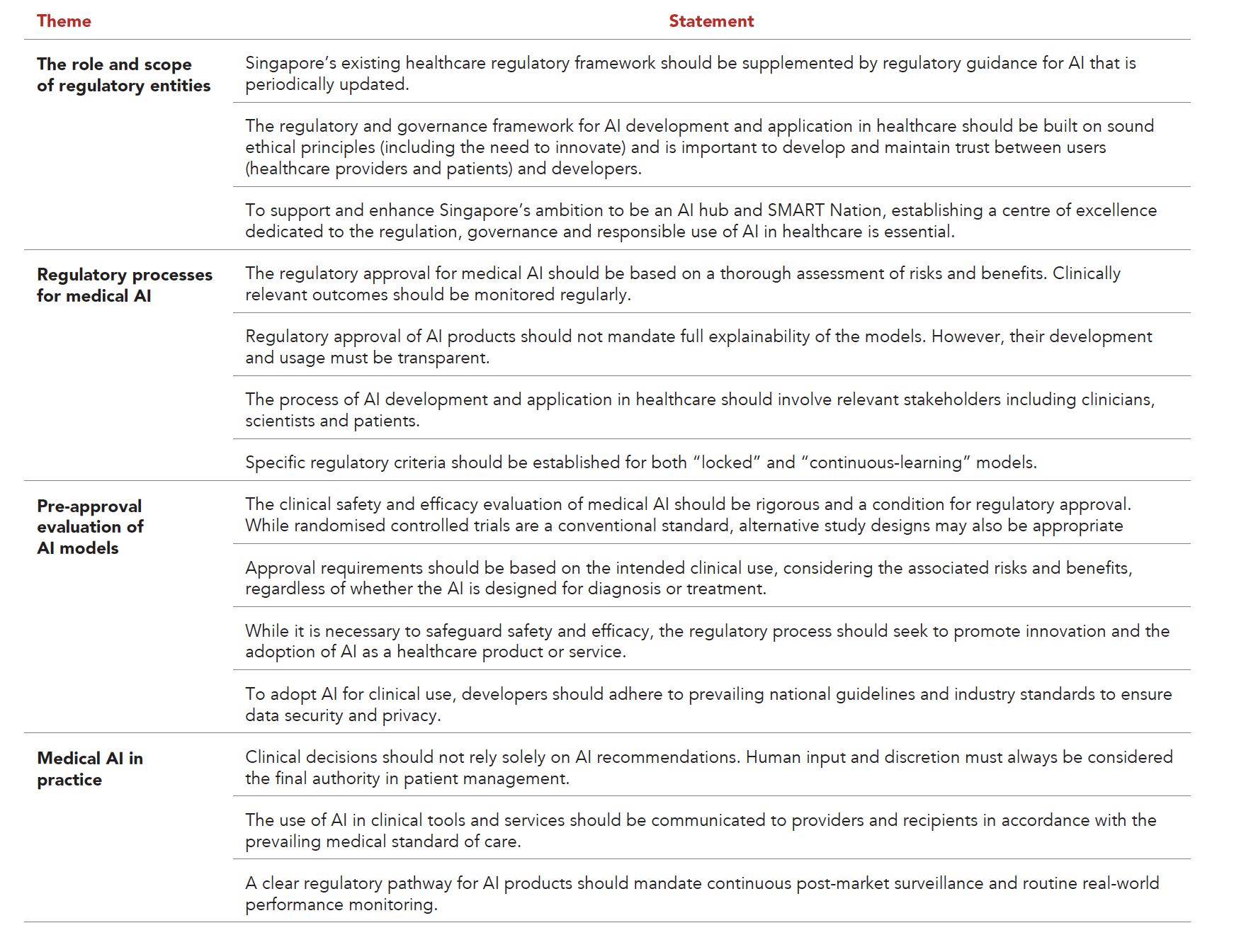
Method: The panel considered 14 statements split across 4 themes: “The Role and Scope of Regulatory Entities,” “Regulatory Processes,” “Pre-Approval Evaluation of AI Models” and “Medical AI in Practice”. Moderated by a thematic representative, the panel deliberated on each statement and modified it until a majority agreement threshold is met. The roundtable meeting was convened in Singapore on 1 July 2024. While the statements reflect local perspectives, they may serve as a reference for other countries navigating similar challenges in AI governance in healthcare.
Results: Balanced testing approaches, differentiated regulatory standards for autonomous and assistive AI, and context-sensitive requirements are essential in regulating AI models in healthcare. A hybrid approach—integrating global standards with local needs to ensure AI complements human decision-making and enhances clinical expertise—was recommended. Additionally, the need for patient involvement at multiple levels was underscored. There are active ongoing efforts towards development and refinement of AI governance guidelines and frameworks balancing between regulation and freedom. The statements defined therein provide guidance on how prevailing values and viewpoints can streamline AI implementation into healthcare.
Conclusion: This roundtable discussion is among the first in Singapore to develop a structured set of statements tailored for the regulation, implementation and evaluation of AI models in healthcare, drawing on interdisciplinary expertise from medicine, AI, data science, law, ethics and patient advocacy.
CLINICAL IMPACT
What is New
- This roundtable discussion is among the first in Singapore to develop a structured set of statements for regulation, implementation and evaluation of AI models in healthcare.
Clinical Implications
- The panel advocates context-specific testing approaches to balance between patient safety and innovation.
- This panel recommends selectively adopting international standards, to fit regulations to suit Singapore’s needs; and engaging patients actively at multiple levels as key stakeholder in AI governance and regulation.

Artificial Intelligence (AI) can transform healthcare by enhancing operational efficiency, improving diagnostics and prognostics, personalising and guiding treatment.1 These advances promise better patient outcomes and more effective resource allocation. However, implementing AI into healthcare also comes with significant risks, including algorithm bias,2 concerns on patient privacy and autonomy,3 cognitive uncertainty in using AI for clinical decision-making,4 and unpredictable affectations on the doctor-patient relationship.5 These risks highlight the need for robust AI governance and regulation to ensure that AI technologies are safe, ethical and transparent. Effective governance regulations can safeguard patient trust, ensure accountability and mitigate unintended consequences. This ensures that healthcare systems are able to harness the benefits of AI responsibly.
In Singapore, regulatory oversight of AI in healthcare currently relies on voluntary compliance to published guidelines.6 Several such guidelines exist, including the Artificial Intelligence in Healthcare Guidelines (AIHGle) developed by Singapore’s Ministry of Health with the Health Sciences Authority (HSA) and the Integrated Health Information Systems.7 The HSA’s regulatory guidelines on AI Medical Devices (AI-MD)8 was aimed at outlining good practices for AI developers and users.6 The AI Governance Testing Framework and Toolkit,9 which comprises 11 key AI ethics principles, is aligned with Singapore’s Model AI Governance Framework10 and other international AI frameworks. In 2024, Singapore issued the Model AI Governance Framework for Generative AI (GenAI). This GenAI framework proposes 9 dimensions that comprises “a systematic and balanced approach to address concerns related to GenAI while continuing to facilitate innovation.”11
In Europe, the European Union (EU) Artificial Intelligence Act tiers AI according to risk; defines obligations and liabilities of stakeholders and users (notably, obligations fall on developers for high-risk AI systems); and demands technical documentation, outlines how to use the AI, and provides a summary on training data.12 The Act also requires model evaluations, adversarial testing, post-deployment tracking (incident reporting) and cybersecurity protections. Finally, the EU Artificial Intelligence Act bans certain AI practices, including real-time biometric identification and social scoring. The approach taken in the US is more diffused, with state legislatures passing AI bills rapidly, setting differing thresholds, coverage and subject matter. There is no federal equivalent of the same scope as the EU Artificial Intelligence Act. The regulatory landscape is also rapidly evolving in China. A proposed AI law has been drafted (Artificial Intelligence Law of the People’s Republic of China) in May 2024, and is circulated for inputs amongst scholars. While there is some initial criticism that the Chinese AI law favours industry over individual protection, its circulation to academia presents unprecedented and exciting opportunity for academic and public inputs to shape practice. Internationally, the World Health Organization (WHO) is actively collaborating with member states to develop comprehensive guidance on governance, ethical standards and regulations. These efforts aim to address emerging opportunities and challenges, mitigate risks, protect public health, and build trust in the use of AI in healthcare.
Differences in AI governance rules could create tensions and present practical challenges for real-world compliance. Currently, there is a lack of common approaches or resolution on what needs to be regulated. To gain holistic perspective, bringing key opinion leaders and stakeholders together to deliberate on critical issues and reach consensus can help provide insights that in turn, informs on actionable policies.
METHOD
This roundtable aimed to deliberate and establish consensus on key issues on AI regulation in healthcare. The roundtable panel comprised of 17 experts in medicine, AI, data science, law, ethics and patient advocacy (Table 1 and Supplementary Table S1). Panellists were selected based on their prior involvement in related initiatives, including those led by the Ministry of Health’s Centre of Regulatory Excellence (MOH-CoRE) and AI Singapore. Additional participants were invited through referrals, chosen for the significance and influence of their roles in the national implementation and deployment of medical AI.
Fourteen statements, representing the themes of “The Role and Scope of Regulatory Entities,” “Regulatory Processes,” “Pre-Approval Evaluation of AI Models” and “Medical AI in Practice” (Table 2) were developed by the working group after a deep read on 71 framework documents published worldwide. Each theme was introduced by a moderator. Panellists deliberated on each statement, with the moderator actively refining and moderating the statements, taking into account the various viewpoints presented. Once discussions converged, panel members would cast their votes. Statements were passed if more than 80% of panellists agreed. Otherwise, discussions were resumed, the statements refined, and then put to a second vote. Regulatory agency observers were present throughout and provided input or guidance where needed.
All published statements have been reviewed by panellists and observers.
RESULTS
Fourteen AI governance statements were drafted, categorised into 4 key themes, in a 1-day roundtable conducted on 1 July 2024 in Singapore. All statements achieved full consensus with at least 80% agreement among panel members. Participant profiles are summarised in Table 1. The finalised statements, observations and interpretations are outlined below.
Table 1. AI governance roundtable members.
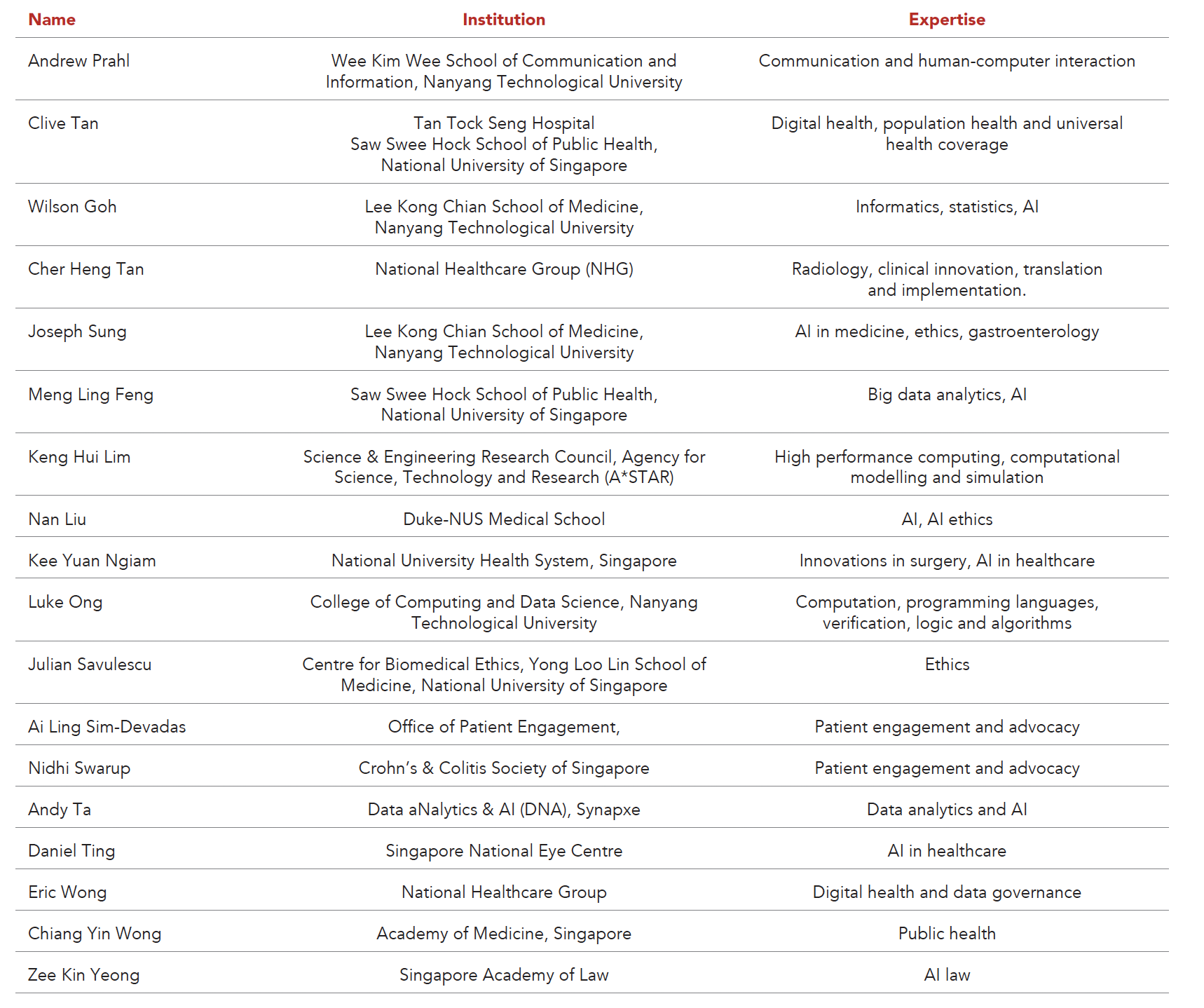
Table 2. Summaries of all 14 consensus statements.
Role and scope of regulatory entities
Statement 1: Singapore’s existing healthcare regulatory framework should be supplemented by regulatory guidance for AI that is periodically updated.
To accommodate the dynamic and rapidly evolving nature of AI technologies, regulatory frameworks must be robust yet adaptive. The panel emphasised that, rather than creating an entirely new framework for each technological paradigm shift in AI, it is more practical to build upon existing healthcare regulatory structure. By incorporating regular, targeted updates to AI regulatory guidelines, the approach ensures that policies remain aligned with technological advancements and address emerging or anticipated risks in a timely and relevant manner.
The panel emphasised the need to balance regulatory oversight with fostering innovation. While overly strict regulations could create opportunity costs, particularly for AI companies, the panel stressed that patient well-being must remain the top priority. To this end, they proposed the development of a regularly updated “code of conduct” to act as a moral compass, guiding ethical AI practices even as technology continues to evolve. Additionally, the panel highlighted the importance of involving diverse stakeholders and experts in the development of regulations. This collaborative approach ensures that guidelines are both inclusive and practical, increasing the likelihood of acceptance and implementation in real-world healthcare settings.
Statement 2: The regulatory and governance framework for AI development and application in healthcare should be built on sound ethical principles (including the need to innovate) and is important to develop and maintain trust between users (healthcare providers and patients) and developers.
Panellists maintained that ethical considerations, while important, should not stifle the imperative to innovate. The need for innovation, to progress society and improve overall well-being, should also be seen as a moral imperative unto itself. Regulations should not only safeguard against exigent and anticipatable risks, but also ensure the advancement of AI technologies that can ultimately save lives. The panel agreed that trust between healthcare providers and patients is paramount and should not be compromised due to AI implementation. Just as critical is the trust between the AI developers and end-users, which has to be formed for smooth AI adoption. This statement highlights a fundamental position that all panellists unanimously agreed with—that the humanistic aspect of the practice of medicine needs to be first and foremost maintained when incorporating AI into patient care.
Statement 3 To support and enhance Singapore’s ambition to be an AI Hub and SMART Nation, establishing a centre of excellence dedicated to the regulation, governance, and responsible use of AI in healthcare is essential.
The panel agreed that a centralised platform would be highly effective in coordinating and addressing the complex challenges of AI regulation, governance, and application in healthcare. Such a platform could foster collaboration among regulatory bodies, healthcare providers and technology developers. To ensure responsible AI integration, the platform must incorporate a “responsible use” dimension, embedding ethical standards and societal values into its initiatives. Key priorities for the centre should include the dissemination of findings, offer continuous learning opportunities to keep stakeholders—such as users, developers and implementers—up to date on advancements in AI regulation and implementation. Additionally, the platform should provide guidance on AI ethics, facilitate collaborative spaces for interdisciplinary research, and act as an advisory body for policymakers to promote informed and ethical decision-making.
Regulatory processes for medical AI
Statement 4: The regulatory approval for medical AI should be based on a thorough assessment of risks and benefits. Clinically relevant outcomes should be monitored regularly.
The panel recommended prioritising benefits over outcomes for a more effective counterbalance to risks in AI deployment. They also highlighted the necessity of continuous monitoring of clinically relevant outcomes,13 acknowledging the dynamic nature of risks and benefits over time. To obtain initial approval, the AI model must demonstrate its ability to meet its defined objectives, particularly in improving patient outcomes. Additionally, the panel stressed the importance of identifying anticipated risks and providing probability estimates for these risks prior to implementation. The panel further underscored the need for follow-up work to enhance specificity and granularity, particularly in clearly defining and categorising risks and benefits, to ensure more precise evaluations and informed decision-making.
Statement 5: Regulatory approval of AI products should not mandate full explainability of the models. However, their development and usage must be transparent.
The panel concurred that requiring full explainability prior to regulatory approval is neither practical nor sustainable, as it risks hindering innovation and limiting the potential benefits of AI. Similarly, mandating evidence from full randomised controlled trials for regulatory approval was deemed unnecessary. The level of explainability required depends significantly on the efforts of developers and adopters to ensure transparency across data processing, model training, validation and the collection of real-world evidence. Although standardised requirements for explainability are currently lacking, developers should aim to provide thorough and well-documented supporting materials to facilitate the review process. Regulators, on the other hand, should prioritise the development of standardised frameworks and processes as AI testing and validation methodologies continue to mature, enabling a more structured and effective evaluation of AI systems.
Statement 6: The process of AI development and application in healthcare should involve relevant stakeholders including clinicians, scientists and patients.
The panel unanimously agreed that multi-stakeholder engagement should encompass the AI lifecycle from development, implementation to post-deployment monitoring. Panellists emphasised that stakeholder engagement should be a continuous process, ensuring that AI systems remain effective, safe, and aligned with end-users’ needs. Ongoing involvement fosters transparency and trust by enabling open discussions about the benefits and risks of AI. By involving stakeholders directly impacted by AI applications, developers and regulators can better address concerns, leading to more ethical and practical AI systems. Additionally, the panel highlighted the importance of aligning with international bodies and adhering to their established best practices.
Statement 7: Specific regulatory criteria should be established for both “locked” and “continuous-learning” models.
Continuous-learning models are a powerful category of AI algorithms that keep learning from new data over time. Due to this quality, such models dynamically update their parameters using real-time data during deployment,14 whereas locked models have static parameters that are updated only during scheduled offline maintenance. The panel highlighted that regulating continuous-learning models is particularly challenging due to their evolving nature, which makes traditional one-time validation insufficient. These models require distinct regulatory criteria, including ongoing monitoring and transparent documentation, to ensure safety and efficacy.
In contrast, locked models, preferred by developers, allow for stable longitudinal validation and simpler regulatory approval processes. Observers noted that Singapore updated its policy for continuous-learning medical devices in 2020 to address these challenges. However, no applications for such models have been submitted or reviewed to date, suggesting either industry hesitation or difficulty in meeting the regulatory requirements. The panel emphasised the need for clearer guidance to encourage safe adoption of continuous-learning models while maintaining high standards of accountability (that the AI systems work as intended while also establishing processes for appeals, corrections and overrides when patients or clinicians question AI decisions) and transparency (the degree to which a model’s decision making rules can be made available for human access, interrogation and understanding).
Pre-approval evaluation of AI models
Statement 8: The clinical safety and efficacy evaluation of medical AI should be rigorous and a condition for regulatory approval. While randomised controlled trials are a conventional standard, alternative study designs may also be appropriate.15
The panel emphasised the importance of rigorously evaluating AI for clinical safety and efficacy, but acknowledged that evaluation processes must be tailored to the specific clinical context. While randomised controlled trials (RCTs) are the gold standard in drug discovery, their application to AI models faces significant challenges, such as patient recruitment, high costs, and unforeseeable risks to real patients. The panel recommended exploring alternative evaluation approaches that are more suited to AI, including performance benchmarking against prior works (similar to meta-analyses) and demonstrating benefits through real-world evidence compared against existing standards of care. Ideally, these evaluations should be prospective and supplemented with rigorous post-market surveillance to identify “unintended outcomes and biases.”16
The panel further highlighted the value of sandbox environments as viable alternatives. Sandboxes are virtual simulation environments that enable testing of AI-specific parameters, and are particularly beneficial for uncommon clinical conditions with limited data. In many cases, sandbox testing may better simulate real-world applications, offering a more practical evaluation framework. In the UK, the Medicines and Healthcare Products Regulatory Agency’s “Software and AI as a Medical Device Change Programme—Roadmap” was also discussed as a potential reference model. The roadmap proposes an “airlock process” for Software as a Medical Device (SaMD), which involves heightened monitoring and clearly defined entry and exit criteria, ensuring safer and more effective AI deployment in clinical practice.
Statement 9: Approval requirements should be based on the intended clinical use, considering the associated risks and benefits, regardless of whether the AI is designed for diagnosis or treatment.
The panel concluded that approval requirements for medical AI should be guided by the intended clinical use and risk-benefit ratio, acknowledging that risks vary depending on the tool, context and application. A nuanced approach to risk assessment is essential, particularly in evaluating the degree of influence AI has on clinical decision-making. The panel emphasised that factors such as whether the AI is fully assistive or automated, patient-facing or physician-facing, should shape regulatory requirements, rather than a blanket definition of safety and efficacy. Furthermore, the purpose of the AI—whether for diagnosis or treatment—does not inherently define its risk level and should not solely dictate regulatory standards.
This stance aligns with frameworks such as the UK’s National Institute of Health and Care Excellence’s Evidence Standards Framework for Digital Health Technologies, which recommends higher levels of evidence (e.g. RCTs) for tools managing medical care, and lower levels for preventative or self-management tools. Similarly, Australia’s Therapeutic Goods Association assesses SaMD based on risk profiles, categorising “recommendation” tools as higher risk than “information-only” tools. The panel also noted that some AI applications may pose minimal risks yet fail to deliver meaningful benefits, underscoring the importance of emphasising value and utility in AI development.
Statement 10: While it is necessary to safeguard safety and efficacy, the regulatory process should seek to promote innovation and the adoption of AI as a healthcare product or service.
The panel agreed that regulatory processes should foster innovation rather than hinder AI adoption with overly stringent safeguards. Maintaining safety and efficacy is not mutually exclusive and should be important criteria during AI evaluation. Broader regulatory considerations should incorporate principles of trustworthy AI, as outlined in the US National Institute of Standards and Technology’s “Artificial Intelligence Risk Management Framework (AI RMF 1.0),” which includes security, explainability, privacy, fairness, validity, reliability, accountability, and transparency. International frameworks, such as the Blueprint for an AI Bill of Rights (2022) in the US, highlight the need for robust protections while promoting innovation to ensure AI improves lives without causing harm.
Statement 11: To adopt AI for clinical use, developers should adhere to prevailing national guidelines and industry standards to ensure data security and privacy.
The panel emphasised the importance of data security and privacy for regulatory approval. However, they noted that relying solely on single prescriptions, such as the Ministry of Health, Singapore’s HealthTech Instruction Manual—which governs data management within public healthcare entities in Singapore—might be too restrictive and could inadvertently exclude broader applications of medical AI across the other parts of the healthcare sector. Other complementary guidelines, such as AIGHle or Cybersecurity Agency of Singapore’s healthcare cybersecurity framework (launched in December 2023), cover key aspects, such as software updates, malware protection, data backup and cyber hygiene. While the panel emphasised that users should adhere to prevailing national guidelines and industry standards, they recognised that this is a rapidly evolving space, which may see the various policies and guidelines converging over time. Some members raised concern that Singapore’s public healthcare stringent data privacy standards could inadvertently hinder the AI development and adoption.
Medical AI in practice
Statement 12: Clinical decisions should not rely solely on AI recommendations. Human input and discretion must always be considered the final authority in patient management.
The panel unanimously agreed, emphasising that human involvement in clinical decision-making is essential, regardless of technological advancements.17,18 While AI can enhance healthcare by improving affordability, accuracy and efficiency, human values must remain central to medical practice. Clinicians play a crucial role in building patient trust and ensuring human autonomy, even when AI is integrated. Patient advocacy representatives stressed that the role and responsibility of doctors should not be diminished. Ultimately, clinicians must oversee and take responsibility for AI use, including interpreting AI outputs and integrating them into clinical procedures.
Statement 13: The use of AI in clinical tools and services should be communicated to providers and recipients in accordance with the prevailing medical standard of care.
The statement emphasised the importance of transparency and consent in the use of AI in clinical settings. Panellists debated the necessity of obtaining explicit patient consent for every instance of AI use, but recognised its impracticality for routine tools, such as automated ECG interpretations. The statement recommends aligning AI communication with the prevailing medical standard of care, reserving explicit consent for scenarios where AI significantly impacts clinical decisions or involves sensitive patient data, while general consent suffices for routine use.
Clinician acknowledgment was also highlighted, stressing the need for healthcare providers to understand AI tools to effectively integrate them into clinical judgment and maintain accountability. The panellists acknowledged challenges, such as reduced patient interaction time, and underscored the importance of personalised communication tailored to patient needs. Transparency and flexibility were deemed essential for fostering trust and ensuring ethical AI adoption. Further discussions were encouraged to clarify how AI-related information should be communicated to patients.
Statement 14: A clear regulatory pathway for AI products should mandate continuous post-market surveillance and routine real-world performance monitoring.
The panel highlighted that building trust in AI requires robust tools and structures, recognising that trust can fluctuate due to various factors. Unlike drugs or some other technologies where constant monitoring is not standard practice, AI’s broader capabilities and roles make post-market surveillance essential.19,20 The panel also noted a lack of clarity around who should be responsible for monitoring, emphasising the need for defined accountability. On AI performance, the panel agreed that while improvement over time is not guaranteed, AI must consistently perform as intended and meet the standards for which it was approved. Establishing a minimum standard for AI performance in healthcare is crucial for ensuring reliability and safety. They stressed the importance of collaboration between healthcare providers and AI developers to maintain accountability. While current practices often rely on consensus among doctors, the panel emphasised that manufacturers and suppliers must also share ongoing responsibility for AI performance and safety.
DISCUSSION
In summary, the panel advocates for a balanced approach to AI testing and regulation in healthcare, emphasising safety, efficacy and ethical considerations.
Key recommendations include:
- Balanced testing: Standardised testing protocols are crucial to detect errors and biases while allowing for innovation.
- Differentiated standards: Autonomous AI systems require stricter regulation than assistive AI systems.
- Risk-based evaluation: AI systems for high-risk conditions should undergo more rigorous testing than those for low-risk applications.
- Global and local standards: A hybrid approach combining global standards with local needs ensures a balance between safety and innovation.
- Human oversight: AI should primarily serve as an assistive technology to support human decision-making.
- Patient involvement: Involving patients in the development process ensures human-centred and patient-friendly technologies.
- Continuous monitoring: Ongoing monitoring is essential to maintain the safety and efficacy of AI systems.
Limitations and further considerations
Methodologically, our approach shares several conceptual similarities with the Delphi method, although we are cautious about presenting it as a full or traditional Delphi implementation. In line with Delphi principles, our process involved the formulation of an initial problem statement by facilitators, the assembly of an expert panel, and iterative rounds of discussion and refinement aimed at reaching a shared understanding or convergence of opinion. However, we do not claim full adherence to the Delphi protocol, particularly in terms of anonymity, multiple structured rounds and quantitative consensus metrics, which are typically associated with formal Delphi studies. Rather, we view our approach as a structured expert elicitation exercise designed to capture an early snapshot of expert perspectives within a rapidly evolving field. Our objective was to surface potential areas of convergence among a curated group of thought leaders, researchers and practitioners working at the intersection of medical AI, healthcare delivery and policy. In a domain characterised by high uncertainty and rapid technological advancement, we believe such early insights are valuable. They not only help frame emerging challenges and opportunities but also serve as a directional compass for subsequent research, collaboration and policy considerations. By documenting and presenting these perspectives, we aim to stimulate further dialogue, refine shared goals, and contribute to the strategic alignment of efforts within the broader medical AI community.
The statements discussed cover various aspects of AI regulation, but there may be other important areas that were not fully addressed. For instance, procedural considerations related to the regulatory process itself need more attention. This includes the role of government in shaping and enforcing these regulations, as well as the specifics of comparing international guidelines and standards. For product-specific areas, such as AI healthcare tools, the influence of standards from bodies like International Organization for Standardization and International Electrotechnical Commission should also be considered, as they play a significant role in defining the regulatory landscape.
Ethical, social and legal concerns deserve particular focus as they play a crucial role in AI regulation.21,22 These issues may require more in-depth discussions and could benefit from exploration in a separate, dedicated forum. The current discourse does not fully address the ethical nuances that arise in AI healthcare applications. Therefore, we intend to address this in a follow-up meeting in second half of 2025.
Greater emphasis is needed on the practical aspects of implementation. Action-oriented meetings and procedural discussions are essential to develop a clear path from concept to the real-world implementation of AI systems in healthcare. A Singapore-focused approach, which could involve the development of instruments and guidelines for clinical translation,23 is necessary to ensure alignment with local needs and regulations. However, comparisons with international standards should also be made to ensure global relevance and the adoption of best practices. This comprehensive approach will support the safe, ethical and effective deployment of AI technologies.
Finally, there is the impact on medicine, and affectations on doctor-patient relationships.24 While AI can transform healthcare, we may risk losing quality engagements with patients. It therefore becomes even more important to think about how to balance technological expertise with humanistic care, especially in areas of doctor training and education.25
Reflections
This was one of the first roundtable discussions on AI regulation in the healthcare sector in Singapore. The panel deliberated on 14 statements across 4 key themes: regulatory bodies, regulatory processes, model evaluation, and the impact on medical practice. While the panel brought together a diverse group of participants from academia, public sectors, healthcare, and regulatory bodies, the structured process enabled respectful and productive dialogue, resulting in the finalised statements. Given the breadth of topics, the discussion spanned a full day (9 am to 5 pm), and time constraints meant that not all statements received equal attention. As an early-stage effort, we focused on pressing issues first. Future sessions will be designed to explore specific sub-topics in greater depth and detail, such as affectations on doctor-patient relationship, and ethics.
CONCLUSION
This roundtable captured opinions of experts to uncover practicable insights for medical AI regulation. The 14 statements highlighted the complexity of AI governance in healthcare, emphasising the need for adaptable regulatory frameworks that balance innovation with patient safety and treatment efficacy. As AI evolves, governance models must remain flexible while upholding ethical and clinical standards. The process underscored the value of multi-disciplinary collaboration among clinicians, patient advocates, AI developers, ethicists, and legal experts to ensure policies address real-world challenges. The discussions revealed both areas of agreement and emerging challenges, providing actionable insights to guide AI governance strategies. These insights provide valuable recommendations for policymakers, healthcare providers, and developers to foster innovation, build trust, and safeguard patient protection.
REFERENCES
- Asan O, Bayrak AE, Choudhury A. Artificial Intelligence and Human Trust in Healthcare: Focus on Clinicians. J Med Internet Res 2020;22:e15154.
- Mittermaier M, Raza MM, Kvedar JC. Bias in AI-based models for medical applications: challenges and mitigation strategies. NPJ Digit Med 2023;6:113.
- Bitterman DS, Aerts HJWL, Mak RH. Approaching autonomy in medical artificial intelligence. Lancet Dig Health 2020;2:e447-9.
- Tikhomirov L, Semmler C, McCradden M, et al. Medical artificial intelligence for clinicians: the lost cognitive perspective. Lancet Digit Health 2024;6:e589-94.
- Lorenzini G, Arbelaez Ossa L, Shaw DM, et al. Artificial intelligence and the doctor-patient relationship expanding the paradigm of shared decision making. Bioethics 2023;37:424-29.
- Chik WB, Sugumaran H. Legal governance of artificial intelligence in healthcare devices and services in Singapore. In: Solaiman B, Cohen IG (Eds) Research Handbook on Health, AI and the Law. Cheltenham: Edward Elgar; 2024.
- Ministry of Health, Singapore. Artificial Intelligence in Healthcare Guidelines (AIHGle) 2021. https://www.moh.gov.sg/docs/librariesprovider5/eguides/1-0-artificial-in-healthcare-guidelines-(aihgle)_publishedoct21.pdf. Accessed 9 July 2024.
- Health Sciences Authority, Singapore. Regulatory Guidelines for Software Medical Devices – A Life Cycle Approach Revision 2.0. 2022. Singapore; HSA; 2022.
- Personal Data Protection Commission. Launch of AI Verify – An AI Governance Testing Framework and Toolkit. https://www.pdpc.gov.sg/news-and-events/announcements/2022/05/launch-of-ai-verify—an-ai-governance-testing-framework-and-toolkit. Accessed 25 September 2024.
- Personal Data Protection Commission Model Artificial Intelligence Governance Framework Second Edition 2020. Singapore: PDPC; 2020.
- AI Verify Foundation and Infocomm Media Development Authority. Model AI Governance Framework for Generative AI: Fostering A Trusted Ecosystem. 2024. Accessed 9 July 2024.
- Schmidt J, Schutte NM, Buttigieg S, et al. Mapping the regulatory landscape for artificial intelligence in health within the European Union. NPJ Dig Med 2024;7:229.
- Andersen ES, Birk-Korch JB, Hansen RS, et al. Monitoring performance of clinical artificial intelligence in health care: a scoping review. JBI Evid Synth 2024;22:2423-46.
- Lee CS, Lee AY. Clinical applications of continual learning machine learning. Lancet Dig Health 2020;2:e279-e81.
- Lam TYT, Cheung MFK, Munro YL, et al. Randomized Controlled Trials of Artificial Intelligence in Clinical Practice: Systematic Review. J Med Internet Res 2022;24:e37188.
- Wu E, Wu K, Daneshjou R, et al. How medical AI devices are evaluated: limitations and recommendations from an analysis of FDA approvals. Nat Med 2021;27:582-84.
- Bakken S. AI in health: keeping the human in the loop. J Am Med Infom Assoc 2023;30:1225-6.
- van Leersum CM, Maathuis C. Human Centred Explainable AI Decision-Making in Healthcare. Journal of Responsible Technology 2025;100108.
- Reniewicz J, Suryaprakash V, Kowalczyk J, et al. Artificial intelligence / machine-learning tool for post-market surveillance of in vitro diagnostic assays. N Biotechnol 2024;79:82-90.
- Denniston AK, Liu X. Responsible and evidence-based AI: 5 years on. Lancet Dig Health 2024;6:e305-7.
- Ning Y, Teixayavong S, Shang Y, et al. Generative artificial intelligence and ethical considerations in health care: a scoping review and ethics checklist. Lancet Dig Health 2024;6:e848-e56.
- Sung J. Artificial intelligence in medicine: Ethical, social and legal perspectives. Ann Acad Med Singap 2023;52:695-9.
- Teo ZL, Kwee A, Lim JC, et al. Artificial intelligence innovation in healthcare: Relevance of reporting guidelines for clinical translation from bench to bedside. Ann Acad Med Singap 2023;52:199-212.
- Allen MR, Webb S, Mandvi A, et al. Navigating the doctor-patient-AI relationship – a mixed-methods study of physician attitudes toward artificial intelligence in primary care. BMC Prim Care 2024;25:42.
- Jong M. Transforming medical education in the AI era: Balancing technological expertise with humanistic care in tomorrow’s doctors. Ann Acad Med Singap 2024;53:754-7.
Ethical approval was not required for this study because there was no personal consent required and no patient data were collected.
This research or project is supported by the National Research Foundation, Singapore under its AI Singapore Programme (AISG3-GV-2021-009). All the authors have no affiliations or financial involvement with any commercial organisation with a direct financial interest in the subject or materials discussed in the manuscript.
Dr May O Lwin, Wee Kim Wee School of Communication and Information, Nanyang Technological University, 31 Nanyang Link, Singapore 637718, email: [email protected]; Prof Joseph Sung, Lee Kong Chian School of Medicine, Nanyang Technological University, 11 Mandalay Rd, Singapore 308232, email [email protected]
