

ABSTRACT
Sarcopenia is the progressive loss of muscle strength and mass that is commonly, though not exclusively, associated with increasing age. It has been well established to be associated with increased risk of adverse health outcomes and is a growing public health challenge. Reported prevalence varies widely by setting and diagnostic criteria, complicating surveillance and cross-study comparisons. The recent development of the conceptual definition of sarcopenia by the Global Leadership Initiative in Sarcopenia marks a critical step towards harmonisation. There have been significant advances in our understanding of the pathophysiological basis, biomarkers, assessment, diagnosis and interventions in sarcopenia. Novel biomarkers (including creatinine–cystatin C indices, myokines and composite multi-marker panels) and artificial intelligence-enabled radiomics from computed tomography, magnetic resonance imaging and ultrasound show promise for scalable, opportunistic case-finding, but currently remain research tools requiring large-scale validation and cost-effectiveness assessments. Management remains grounded in resistance exercise and nutrition, although there is ongoing debate on the optimal type of protein as well as the most effective timing of protein intake in relation to exercise and the amount required. Pharmacological and regenerative approaches are under active investigation but have yet to deliver proven, generalisable clinical benefits. Translation into practice hinges on standardised definitions, validated assessment tools and integrated care pathways that embed sarcopenia screening into chronic disease management and public health programmes. Singapore’s first national sarcopenia consortium aims to accelerate translation into clinical practice and community care by advancing mechanistic research, validating novel biomarkers and developing scalable interventions to enhance muscle health and promote healthy ageing.
CLINICAL IMPACT
What is New
- Advances in biomarkers and artificial intelligence-driven imaging improve detection but require validation.
- Exercise and protein remain the cornerstone of management; pharmacological and regenerative therapies are emerging.
Clinical Implications
- Sarcopenia is the age-related loss of muscle strength and mass. Integrating sarcopenia screening into chronic disease pathways and community case-finding can enhance care delivery.
- Singapore’s first national sarcopenia consortium highlights how research, policy and community engagement can drive population muscle health.
Sarcopenia is the progressive loss of muscle strength and mass,1,2 most commonly age-related but also occurring secondary to chronic disease, malnutrition and inactivity. It is significantly associated with physical disability, reduced quality of life, adverse metabolic outcomes and increased mortality.3 The term “sarcopenia” was first coined by Dr Irvin Rosenberg in 1988.4 Initially, sarcopenia was defined as the age-related loss of muscle mass. However, the definition has since evolved to include not only reduced muscle mass, but also decreased muscle strength and poor physical performance.5 Sarcopenia was recognised as an official medical disease in the International Classification of Diseases, Tenth Revision (ICD-10:M62.84) in 2016.6 Although prevalence rises steadily with age,7 sarcopenia is not solely a disease of ageing. Primary sarcopenia is defined as sarcopenia that results from ageing alone, whereas secondary sarcopenia arises in the context of chronic illness, malnutrition or prolonged inactivity.
Sarcopenia is a significant driver of age-related loss of function.8 The total estimated annual cost of hospitalisation for individuals with sarcopenia is USD40.4 billion in the US.9 Household-level analyses from China found that sarcopenia increases hospitalisations and the odds of catastrophic health expenditure,10 although data on the economic impact of sarcopenia in Asian populations are sparse. Beyond its impact on physical disability and frailty, sarcopenia is an important contributor to cardiometabolic diseases.11 Skeletal muscle is increasingly recognised as an endocrine organ,12 secreting myokines that regulate systemic metabolism, inflammation and vascular health.12 Loss of muscle mass and strength exacerbates insulin resistance, impairs glucose utilisation13 and alters lipid metabolism,11 thereby increasing the risk of type 2 diabetes, obesity, metabolic syndrome, fatty liver and cardiovascular disease.11 Conversely, cardiometabolic disorders accelerate muscle catabolism through mechanisms such as chronic inflammation, mitochondrial dysfunction and hormonal dysregulation, establishing a bidirectional relationship between sarcopenia and metabolic health.11 This interconnection underscores the significance of sarcopenia not only as a geriatric syndrome but also as a systemic condition with implications for morbidity, healthcare costs and population health.
Incorporating sarcopenia screening and management into cardiometabolic disease care pathways11 is essential to improve outcomes and promote healthy longevity. Unlike bone mineral density, muscle mass measurements have not been widely adopted by clinicians,14 and further work is needed for muscle health to become part of routine care.
A global conceptual definition of sarcopenia
Multiple organisations, including the International Working Group on Sarcopenia,3 the Foundation for the National Institutes of Health,15 the Asian Working Group for Sarcopenia (AWGS),1 the Sarcopenia Definition and Outcomes Consortium16 and the European Working Group on Sarcopenia in Older People (EWGSOP)17 have proposed criteria and operational definitions of sarcopenia (Table 1). Previously, the definition of sarcopenia generally encompassed 3 key criteria: (1) loss of skeletal muscle mass together with (2) loss of muscle strength and/or (3) reduced physical performance, with the presence of all 3 criteria being classified as severe sarcopenia. While there are multiple consensus statements and guidelines on sarcopenia, the formation of the Global Leadership Initiative in Sarcopenia (GLIS) has moved us closer towards global consensus.
Table 1. Comparative framework: Sarcopenia diagnostic criteria versus GLIS conceptual definition.
|
Organisation |
Muscle strength |
Muscle mass (assessment) |
Physical performance |
Notes/staging |
|
GLIS2 2024 (conceptual definition) |
Reduced muscle strength (core) |
Reduced muscle mass (method not yet specified; cut-offs TBD) |
Physical performance = outcome, not diagnostic |
Core “components” of sarcopenia: muscle mass, muscle strength and muscle-specific strength (muscle strength/muscle size) Physical performance as an “outcome” No severity staging |
|
AWGS1 2025 |
HGS <28 kg (men), <18 kg (women) |
Age-specific cut-offs
Age ≥65 years ASM/height2 DXA <7.0 kg/m2 (men), <5.4 kg/m2 (women) BIA <7.0 kg/m2 (men), <5.7 kg/m2 (women)
Age 50–64 years ASM/height2 DXA <7.2 kg/m2 (men), <5.5 kg/m2 (women) BIA <7.6 kg/m2 (men), <5.7 kg/m2 (women) |
Physical performance = outcome, not diagnostic |
Focus shifts from diagnosing a “disease” in older people only → to promoting muscle health across the life course
Physical performance as an “outcome”
Removed severity staging |
|
SDOC16 2020 |
HGS <35.5 kg (men), <20 kg (women) |
Not required (muscle mass not essential for diagnosis) |
Gait speed <0.8 m/s |
Sarcopenia defined by ↓ strength and/or ↓ gait speed
Mass is supportive but not diagnostic
No severity staging |
|
EWGSOP217 2019 |
HGS <27 kg (men), <16 kg (women); 5x chair stand >15s |
ASM <20 kg (men), <15 kg (women); ASM/height2 <7.0 kg/m2 (men), <5.5 kg/m2 (women) |
Gait speed ≤0.8 m/s; SPPB ≤8; TUG ≥20 s; 400 m walk ≥6 min/non-completion |
Probable: ↓ muscle strength
Sarcopenia: ↓ muscle strength + ↓ muscle mass
Severe: sarcopenia + poor performance |
|
FNIH15 2014 |
Recommended: HGS <26 kg (men), <16 kg (women)
Alternate: HGSBMI <1.0 (men), <0.56 (women) |
Recommended: ALM/BMI <0.789 (men), <0.512 (women); ALM <19.75 kg (men), <15.02 kg (women)
Alternate: ALM <19.75 kg (men), <15.02 kg (women) |
Not included |
Suspect: poor physical function
Assessment: ↓ strength (HGS)
Diagnosis: ↓ strength + ↓ lean body mass (ALM/BMI) |
|
IWGS3 2011 |
Not separately defined |
ALM/height² ≤7.23 kg/m² (men), ≤5.67 kg/m² (women) |
Gait speed <1.0 m/s |
Case finding: specifically consider patients who are bedridden, cannot independently rise from a chair or ↓ gait speed
Assessment: perform DXA
Diagnosis: ↓ muscle mass + ↓ gait speed |
ALM: appendicular lean mass; ASM: appendicular skeletal muscle mass; AWGS: Asian Working Group for Sarcopenia; BIA: bioelectrical impedance analysis; BMI: body mass index; DXA: dual-energy X-ray absorptiometry; EWGSOP2: European Working Group on Sarcopenia in Older People, 2nd consensus; FNIH: Foundation for the National Institutes of Health Sarcopenia Project; GLIS: Global Leadership Initiative on Sarcopenia; HGS: handgrip strength; HGSBMI: handgrip strength adjusted for BMI; IWGS: International Working Group on Sarcopenia; SDOC: Sarcopenia Definition and Outcomes Consortium; SPPB: short physical performance battery; TBD: to be determined; TUG: timed up and go test
Formed in 2019, GLIS developed a conceptual definition of sarcopenia, where a key conclusion was that muscle mass, strength and muscle-specific strength were all accepted as “components” of sarcopenia, whereas impaired physical performance was accepted as an “outcome” rather than a “component”.2 Significantly, the AWGS 2025 Consensus Update1 has followed suit and adopted the latest GLIS conceptual definition. The severity staging of sarcopenia has been removed.1 These developments represent an important step towards unifying the various working group guidelines. GLIS has also developed a standardised glossary of terms commonly used in sarcopenia research,18 which aims to help advance global research, achieve consensus and facilitate translation into practice.2,18
Prevalence
The prevalence of sarcopenia varies widely, ranging from 9% to 86.5% depending on the context and diagnostic criteria used.19 A systematic review of 41 studies including 34,955 participants found that the prevalence of sarcopenia was higher in institutionalised (51% in men and 31% in women) and hospitalised (23% in men and 24% in women) older adults compared to community-dwelling older adults (11% in men and 9% in women).20 A recent meta-analysis of 140 studies involving 156,325 older adults across Asia found an overall prevalence of sarcopenia of 16.5% among community-dwelling adults ≥60 years.21 In Singapore, prevalence estimates range from 6.1% to 44.3% depending on the setting, assessment methods and diagnostic criteria used.22-24 The prevalence of sarcopenia in primary care was 27.4% and 44.3% in specialist outpatient clinics.22 The prevalence in community-dwelling adults ranges from 27% to 32%.23,25,26
Assessment of sarcopenia
Guidelines1,17,23 recommend a case-finding approach by utilising screening questionnaires, such as the strength, assistance with walking, rising from a chair, climbing stairs and falls (SARC-F) questionnaire.27 SARC-F is a simple questionnaire (Supplementary Table S1), but it has low-to-moderate sensitivity and high specificity for case detection in community settings.27,28 The addition of calf circumference measurement to SARC-F (termed SARC-CalF) has been found to increase the sensitivity in the diagnosis of sarcopenia.29,30
Muscle strength, a key feature of sarcopenia, is primarily assessed by handgrip strength (HGS),31 with the Jamar or Smedley dynamometers being most recommended.31 Most published studies measured both hands or the dominant hand for muscle strength and used the best performance of either 2 or 3 trials. HGS cut-offs are gender-specific, and potential confounders such as hand osteoarthritis and neuromuscular disorders should be considered. The latest AWGS 2025 Consensus Update has recommended a life-course approach towards muscle health, which should expand to include middle-aged adults and cut-offs for those aged 50 years and above.1
There is currently no consensus over the optimal modalities to assess muscle mass, as different measurement methods have different degrees of predictive value for adverse clinical outcomes1,17,23 and new tools emerge.32,33 Dual energy X-ray absorptiometry (DXA) is currently the most widely used method to estimate lean mass,34 although lean mass has been found to have limited predictive value for adverse outcomes and functional decline.16,34 Multifrequency bioelectrical-impedance analysis (BIA) is recognised as a practical tool for assessing muscle mass. However, its readings can be affected by factors such as hydration status, and it is contraindicated in those with pacemakers or cardiac devices. The Singapore Sarcopenia Clinical Guideline has expressed concern about the lack of robust local validation studies of BIA.23 It is important to note that cut-off points are population- and device-specific, and BIA devices designed for home use are not recommended due to suboptimal diagnostic accuracy. D3-creatine dilution measures total body muscle mass34 and has been found to be more strongly associated with outcomes such as mobility limitation, injurious falls, physical performance and strength.35 Both methods have unique logistical arrangements, laboratory, personnel and equipment requirements, which limit their widespread use in clinical practice. Computed tomography (CT) and magnetic resonance imaging (MRI) are the gold standard for assessing muscle mass and quality,32 particularly at the L3 level, which correlates well with total body skeletal muscle volume.17 These imaging techniques provide detailed insights into muscle mass and myosteatosis, which can be quantified using Hounsfield units on CT scans. There is emerging literature on the use of mid-thigh ultrasound in diagnosing sarcopenia.36
Pathophysiology and emerging biomarkers
The pathophysiology of sarcopenia is complex and multifactorial, driven by the dysregulation of protein metabolism, hormonal changes, chronic low-grade inflammation (inflammaging) and neuromuscular factors,11 which in turn are highly influenced by genetic and environmental factors.
Muscle fibre size and quantity begin to progressively decrease from around the fourth to fifth decade, with accelerated loss after the age of 60. By 80 years old, approximately 50% of fibres may be lost compared with young adulthood. The overall decline in fibre number ultimately contributes to muscle atrophy and impaired muscle function, resulting in the development and progression of sarcopenia.37 The maintenance of skeletal muscle mass and function is a dynamic balance between muscle protein synthesis, breakdown and muscle cells in the body. Multiple molecular signalling pathways are involved in maintaining this balance. Insulin-like growth factor 1 (IGF-1) plays a central role in muscle growth, differentiation and regeneration.38 IGF-1 promotes skeletal muscle growth by activating the phosphatidylinositol 3-kinase/protein kinase B/mammalian target of rapamycin (PI3K/Akt/mTOR) pathway.39 With ageing and sarcopenia, IGF-1 levels decline, reducing AKT phosphorylation and mTOR activity. This diminishes protein synthesis and translation efficiency, while activating FoxO transcription factors, which stimulate autophagy and proteasomal degradation, accelerating muscle loss.
Hormonal changes with ageing also contribute to the pathogenesis of sarcopenia. Declines in anabolic and regulatory hormones, including insulin, glucocorticoids, myostatin and testosterone significantly contributes to the pathogenesis of sarcopenia.39 Insulin inhibits skeletal muscle protein breakdown and supports protein synthesis through the regulation of amino acid metabolism. A decline in testosterone levels with ageing is associated with reduced muscle mass and physical performance.40 Testosterone promotes protein synthesis, which increases muscle fibre size and has been found to stimulate the mitotic activity of satellite muscle cells. Testosterone also increases IGF-1 expression, which further increases muscle growth.40 The transforming growth factor β (TGF-β) signalling pathway negatively regulates skeletal muscle development by inhibiting the expression of specific genes and modulating the proliferation of mesenchymal stem cells (MSCs).41 Myostatin, which is part of the TGF-β family, regulates the proliferation and differentiation of skeletal muscle fibroblasts. Some studies suggest that suppressing myostatin reduces reactive oxygen species production, enhancing antioxidant defences, which can effectively prevent sarcopenia.39 Myostatin also inhibits AKT phosphorylation, thereby blocking the activation of the IGF-1/PI3K/AKT pathway. In parallel, chronic low-grade inflammation associated with ageing or inflammaging further accelerates muscle loss. This state is characterised by elevated pro-inflammatory cytokines (IL-1β, IL-6, TNFα) alongside reduced anti-inflammatory mediators, which together promote protein degradation and impair repair mechanisms.42 Additional contributors include excess adiposity, cellular senescence and age-related immune dysfunction, all of which amplify this inflammatory cascade.42 Emerging research also suggests a biological link between gut microbiota and skeletal muscle.43 Gut microbiota regulate amino acid biosynthesis, oxidative stress responses, endothelial cell function and IGF-1 synthesis, thereby maintaining the balance between muscle protein synthesis and degradation.44
These molecular pathways inform the identification of potential biomarkers of sarcopenia, encompassing both upstream pathophysiology and downstream muscle alterations. Biomarkers can be broadly classified into: (1) non-muscle-specific mechanisms such as inflammatory, hormonal and adipokine markers; (2) musculoskeletal-specific indicators including myokines, follistatin and neuromuscular junction-related proteins; (3) metabolic markers, including those derived from gut microbiota; (4) senescence- and ageing-related markers; (5) genetic and epigenetic factors; and (6) emerging composite or multi-marker indices. A non-exhaustive summary of potential biomarkers of sarcopenia is presented in Table 2.
Table 2. Biomarker categories in sarcopenia.
|
Category |
Examples |
|
Inflammatory biomarkers |
CRP, TNF-α, TNF-R1, IL-1β (chronic low-grade inflammation) |
|
Hormonal and endocrine markers |
IGF-1, testosterone, oestradiol, cortisol, DHEA-S |
|
Adipokines and metabolic regulators |
Leptin, adiponectin, visfatin (influence insulin sensitivity, metabolism) |
|
Musculoskeletal-specific markers |
Myokines: myostatin, irisin, GDF-15, BDNF |
|
Senescence and ageing-related markers |
p16^INK4a, p21, p53 (cellular senescence markers) |
|
Gut microbiota-derived markers |
Reduced lactobacillus, bifidobacterium; increased enterobacteriaceae, proteobacteria |
|
Genetic and epigenetic regulators |
Variants in muscle growth genes (e.g. MSTN for myostatin) |
|
Composite/multi-marker indices |
Creatinine/cystatin C ratio |
BDNF: brain-derived neurotrophic factor; ccf-mtDNA: circulating cell-free mitochondrial DNA; CRP: C-reactive protein; DAMPs: damage-associated molecular patterns; DHEA-S: dehydroepiandrosterone sulfate; DNA: deoxyribonucleic acid; GDF-15: growth differentiation factor-15; HMGB1: high mobility group box 1; IGF-1: insulin-like growth factor 1; IL: interleukin; MIF: ; MSTN: myostatin gene (GDF-8); SASP: senescence-associated secretory phenotype; SCFAs: short-chain fatty acids; SPARC: secreted protein acidic and rich in cysteine; TNF-α: tumour necrosis factor-alpha; TNF-R1: tumour necrosis factor receptor 1
Note: This list is non-exhaustive.
However, studies investigating the association of biomarkers with sarcopenia, muscle mass, muscle strength and physical performance have largely reported negative correlations for inflammatory, hormonal, genetic and other biomarker classes.45 Only selected biomarkers, such as IGF-1, growth differentiation factor-15 (GDF-15), follistatin, testosterone, circulating CD34-positive cells and microRNA125b-5p, have shown positive correlations.13,46 Although the correlations of most biomarkers are statistically significant, the majority exhibit weak or negligible associations, and the search for robust and reliable biomarkers of sarcopenia remains ongoing. There is also interest in examining sex-specific differences in biomarkers, with one study reporting normalised myostatin in men and IGF-1 in women being potential biomarkers for frail individuals with low appendicular lean muscle mass.47 At present, no blood or molecular biomarker is recommended for routine clinical diagnosis of sarcopenia; biomarkers remain primarily research tools and do not replace muscle assessment.1
Management of sarcopenia
The mainstay of the management of sarcopenia is non-pharmacological involving exercise and nutrition.23,62,63 Evidence from systematic reviews, meta-analyses and randomised controlled trials (RCTs) has shown the efficacy of different exercise training modes on muscle mass, muscle strength and physical performance in older people with sarcopenia.64,65 A network meta-analysis of 42 RCTs, including 3728 participants with a median follow-up of 12 weeks, found high-to-moderate certainty evidence that resistance exercise, with or without nutritional supplementation, and combined resistance, aerobic and balance training were the most effective strategies for improving quality of life. Exercise with nutritional interventions produced greater improvements in HGS compared with exercise alone.64,66 Progressive resistance-based training is advocated as the optimal exercise mode to prevent sarcopenia.7,23,62,63,67 A network meta-analysis found that strength improvement involved exercise with higher loads, while improvements in muscle hypertrophy involved multiple sets.68 Multicomponent exercises with power and balance/gait training in older adults have also been found to improve the outcomes of older adults with sarcopenia, although the evidence is inconsistent.7,62,69 The Singapore Physical Activity Guidelines for older adults specify a target of 150 to 300 minutes of moderate-intensity aerobic physical activity per week and recommend muscle strengthening activities (≥2 days/week) as well as multi-component physical activity (≥3 days/week) for maintaining muscle strength.70
Evidence supporting the effectiveness of nutritional interventions is mixed.1,8,71 Protein supplementation has been shown to be effective in improving muscle strength and muscle mass when used as an adjunct to resistance exercise training.64,72 Guidelines advocate for increased protein intake in older adults to combat sarcopenia: 1.0–1.2 g/kg body weight (BW)/day for healthy older adults; 1.2–1.5 g/kg BW/day for those with acute or chronic disease; and 2.0 g/kg BW/day for those with frailty, severe illness or malnutrition.71,73,74 The evidence for protein supplementation as a standalone intervention for sarcopenia is less clear,73,75 and ongoing debate surrounds the optimal type of protein such as animal, dairy or plant-based sources, as well as the most effective timing of protein intake in relation to exercise and the amount required.75
Specifically in chronic kidney disease (CKD), guidelines taking both geriatric and nephrology concerns into account have been published. Piccoli et al. highlight that adequate energy intake is the first rule to increase protein utilisation whether in high-protein geriatric or low-protein nephrology approaches.76 In particular, it is recommended that energy intake should not be allowed to fall below the safety threshold of 20–25 kcal per kg per day, and individual monitoring should support decision making and dietary adjustments. In stage 4 and stage 5 CKD patients who are not on renal replacement therapy, a lower total protein intake of 0.4–0.8 g per kg per day may be beneficial,77 especially in the context of rapidly declining renal function. In CKD patients on renal replacement therapy, the normal dietary protein intake for older adults of 1.2–1.5 g per kg per day is recommended.76
Evidence has shown that supplementation with branched-chain amino acids (BCAA), including leucine, increases muscle protein synthesis in different settings. Although the BCAA leucine has been proposed as a promising pharmaconutrient for the prevention and treatment of sarcopenia, results of nutritional intervention studies are not consistent regarding the clinical efficacy of leucine in healthy, active older adults.74,78
Guidelines suggest that vitamin D supplementation (800–1000 IU/day) may be beneficial in older adults with vitamin D insufficiency, which may be useful in patients at risk of sarcopenia.23,71 However, evidence for vitamin D supplementation on sarcopenia and muscle health remains equivocal.1
Advances in the assessment and diagnostic approaches to sarcopenia
In tandem with the discovery of new biomarkers of sarcopenia, indices incorporating creatinine (Cr) and cystatin C (CysC) levels have emerged as potential tools for muscle mass estimation. The Cr-to-CysC ratio (CCR)48 and the sarcopenia index, defined as serum Cr multiplied by eGFR (CysC),49 show strong correlations with skeletal muscle mass and health outcomes such as mortality49 and postoperative complications.50 However, as these were observational studies, causal relationships and mechanisms cannot be established. These markers are relevant because Cr is primarily derived from skeletal muscle metabolism, while CysC reflects renal function but is independent of muscle mass.51 A systematic review of 16 studies involving 5566 participants found that the CCR was the most frequently utilised diagnostic biomarker and had moderate diagnostic accuracy.49
To address limitations of current assessment modalities—such as high cost, limited accessibility and sensitivity to physiological confounders—population-specific equations have been derived to estimate appendicular skeletal muscle mass, particularly in resource-limited or retrospective settings.52,53 The COCONUT study group developed a calf circumference-based equation, which was validated against DXA using data from the US NHANES 1999–2006 cohort (n=15,293 adults)54; while Furushima et al. validated an equation based on HGS and anthropometric data against DXA in Japanese men and women.55 These equations require further validation across diverse populations and settings before they can be adopted into clinical practice. As described above, there is currently no consensus on the best modalities to assess muscle mass, as each method has limitations related to logistics, equipment availability, personnel expertise, cost and feasibility in different clinical settings. Therefore, if simpler approaches to estimating muscle mass, such as Cr–CysC-based indices56 or anthropometric equations, can reliably predict adverse outcomes, this would represent an important advance and should be emphasised in the context of the ongoing debate between DXA and creatine dilution methods.
Another promising area of innovation is the application of artificial intelligence (AI) and machine learning for radiomics-based evaluation of muscle quantity, quality and fat infiltration (myosteatosis). Myosteatosis, which is defined as excessive fat infiltration within skeletal muscle, is commonly used to describe poor muscle quality.57 It exhibits a negative correlation with muscle mass and strength and is a growing concern, especially with rising rates of obesity globally.58 The identification of visceral fat and myosteatosis is important, as body mass index alone is not a reliable gauge of obesity and metabolic health.11,59 The concomitant presence of sarcopenia and obesity, termed “sarcopenic obesity”, has synergistic effects on adverse outcomes that exceed the additive impact of each condition alone.60 Radiomics involves the extraction of large numbers of quantitative features from medical images, enabling a high-dimensional assessment of muscle characteristics that go beyond traditional measures of size or density. By applying AI algorithms to modalities such as CT,32,33 MRI61 and ultrasound,36 muscle volume, architecture, tissue quality and fat infiltration can be characterised with greater precision and reproducibility. AI-enabled approaches to sarcopenia offer the potential for opportunistic, scalable and cost-efficient evaluation.
Pharmacological therapies and innovations on the horizon
To date, no drugs have been approved specifically for the treatment of sarcopenia, and evidence for pharmacological therapies remains limited. There are ongoing trials for several classes of therapeutic agents such as myostatin inhibitors, selective androgen receptor modulators, senolytics and nicotinamide adenine dinucleotide (NAD⁺) precursors, although large-scale, well-powered phase 3 RCTs remain few. Ongoing trials evaluating drugs for sarcopenia and components of sarcopenia identified from ClinicalTrials.gov (as searched on 11 September 2025) are summarised in Supplementary Tables S2–S4. The current literature shows that the myostatin pathway inhibitors lead to increased muscle mass but without proportional functional improvement.79 Similarly, testosterone replacement in older men was found to increase muscle mass, with a transient, non-sustained improvement in muscle strength, but no improvement in physical performance. A dose-dependent increase in testosterone-related adverse events has been reported in older males,80 and testosterone is not licensed for use in sarcopenia at present.
Evidence for metformin’s effects on muscle health varies, with the MASTERS trial showing that metformin inhibited muscle mass gains from resistance exercise in older adults.81 Metformin’s appetite suppression and gastrointestinal side effects adversely affect nutritional intake, especially in older adults.82 The recent double-blind RCT MET-PREVENT trial found that metformin did not lead to improvements in muscle mass, grip strength, physical performance or quality of life after a 4-month trial period. Metformin was poorly tolerated by the participants due to adverse effects and led to high discontinuation rates.83
The rise of geroscience, which seeks to reduce the onset and severity of age-related conditions by targeting the underlying biological mechanisms of ageing, broadens the horizon of therapeutics for ageing and sarcopenia.84 Gerotherapeutics focuses on pathways such as inflammation, mitochondrial dysfunction, epigenetic regulation, proteostasis and cellular senescence. This approach holds promise for novel approaches to prevent or treat sarcopenia as part of broader healthy ageing strategies. For example, the TAME (Targeting Aging with MEtformin)85 trial aims to assess whether metformin can reduce the burden of age-associated diseases, with sarcopenia as one of its key outcomes.
Advances in regenerative medicine and gene editing technologies such as CRISPR/Cas9,86 have created new prospects for muscle restoration. CRISPR/Cas9-mediated knockout of myostatin has been shown to increase muscle mass and strength in animal models.87 Stem cell therapy shows promise in muscle regeneration, with MSCs being able to differentiate into myogenic cells and release paracrine factors that support muscle repair.88 In addition, other stem cell populations beyond MSCs are also being investigated for their regenerative potential.
Despite these advances, translation to clinical practice remains limited,89 hindered by barriers such as high developmental and treatment costs, safety concerns including adverse metabolic and cardiovascular effects, ethical concerns and uncertainties about efficacy in heterogeneous older populations. Standardised definitions and assessment cut-offs, and validation in different populations are necessary before these therapies can be translated clinically and at scale.
Interplay of sarcopenia, frailty and integration with World Health Organization (WHO) Integrated Care for Older People (ICOPE) framework
While recognised as distinct conditions, sarcopenia and frailty share many similarities in aetiology and symptoms.90 There is considerable overlap in criteria, clinical outcomes,91 interventions22,26 and underlying pathophysiology.90 Frailty is a multidimensional construct reflecting a decline in physiological reserves and function across multiple systems, leading to increased vulnerability to stressors and adverse health outcomes such as falls, disability, hospitalisation and mortality.92 Sarcopenia is closely related to physical frailty and may modulate transitions within the frailty status. In recognition of the strong association between sarcopenia, muscle health, frailty and age-related declines in functional capacity, the AWGS 2025 consensus recommends a shift in focus towards muscle health promotion integrated into the WHO ICOPE framework.1 This integration recognises the synergistic relationship between muscle health promotion, frailty and comprehensive geriatric assessment and their convergence within a population health and health promotion framework. Embedding muscle health within comprehensive geriatric assessments (CGA) and ICOPE frameworks93 supports early detection, targeted intervention and monitoring of frailty and functional decline over time.26
Sarcopenia and chronic diseases
Sarcopenia is highly prevalent among individuals with chronic diseases such as chronic obstructive pulmonary disease,94 congestive heart failure,11 chronic liver disease, diabetes mellitus,95 chronic kidney disease,96 malignancy, stroke and osteoporosis. It is increasingly recognised as both a consequence of, and a risk factor for, the progression of these conditions. Reduced muscle mass and function worsen insulin resistance and cardiometabolic risk.11 Conversely, chronic diseases contribute to the development of sarcopenia—termed “secondary sarcopenia” or disease-related sarcopenia—through mechanisms such as inflammation, hormonal dysregulation, metabolic alterations, malnutrition and reduced physical activity.94,96 Muscle loss in secondary sarcopenia is progressive, follows a non-linear trajectory and occurs at a greater magnitude than that observed in primary or age-related sarcopenia.97 Management of secondary sarcopenia not only parallels that of primary sarcopenia, with exercise and nutrition as the cornerstones, but also requires targeted treatment of the underlying chronic disease. While universal screening for sarcopenia at the population level is not recommended and the impact on relevant outcomes is not certain, case-finding for sarcopenia in adults ≥60 years, especially in high-risk populations such as those with chronic diseases, is recommended.23
Accordingly, the integration of sarcopenia assessment and management into multidisciplinary chronic disease care is essential. Routine evaluation of muscle mass and function, alongside interventions such as resistance exercise, nutritional support and emerging pharmacological strategies, should be embedded in disease-specific care pathways. Collaborative models across specialties, involving the multidisciplinary team of dieticians, physiotherapists, health coaches and case managers, are needed to address both the bidirectional impact of sarcopenia on chronic diseases.11,24,26
Sarcopenia in hospitalised patients
Sarcopenia is associated with worse outcomes in hospitalised adults, and hospitalisation can accelerate muscle loss leading to “acute sarcopenia”.98 A systematic review of 6 studies found that the incidence of sarcopenia that developed during hospitalisation in older adults was 12–38.7%.99 Factors associated with hospitalisation such as systemic inflammation, cytokine storm, bed rest, delirium, acute medical illness, side effects of drugs, surgery, poor oral intake and intensive care unit stays precipitate and accelerate acute muscle loss.100 Acute sarcopenia can lead to chronic sarcopenia, as recovery from acute muscle wasting is often incomplete, particularly in older adults.98,100,101 There is no standardised definition of acute sarcopenia and it is not mentioned in several working group consensus criteria.1,16,102 EWGSOP2 recognised acute and chronic sarcopenia as temporal subtypes, using a 6-month duration as the temporal threshold. In general, acute sarcopenia is recognised to be related to acute illness, injury, trauma or surgery. The Australian and New Zealand Society for Sarcopenia and Frailty Research Expert Working Group has published recommendations on screening, diagnosis and management of sarcopenia in hospitalised older adults.103 These include the recommendation to assess probable sarcopenia and sarcopenia based on the assessment of muscle strength and muscle mass, the use of calf circumference as a surrogate estimate in the absence of equipment such as DXA and BIA, multidisciplinary interventions and raising awareness and knowledge. However, there remain challenges in applying the recommended assessments to diagnose sarcopenia in acute hospitalised patients. Hospitalised patients may not be able to cooperate with some assessments, such as HGS or physical performance measures.100,101 Acute illness can confound the accurate measurement of muscle mass and body composition due to hydration status. More studies are needed to assess the impact of sarcopenia interventions such as physical activity and nutrition in acutely ill patients.
Promoting population muscle health and healthy longevity in Singapore
With a rapidly ageing population, sarcopenia has become a national priority for healthy ageing and population health in Singapore. The launch of the Singapore Clinical Practice Guidelines for Sarcopenia in 202223 marked a major milestone, supported by ongoing efforts to raise awareness,14 expand screening and implement community-based interventions.26 These initiatives adopt a life-course approach to address upstream determinants, aiming to reduce disability, preserve independence and support healthy longevity in older adults.104
National consortia that link mechanistic research, biomarker validation and implementation science can accelerate translation. By coordinating efforts across the translational pathway, they help ensure that scientific insights are rapidly tested, validated and scaled into clinical and community practice. Singapore has launched one of the world’s first national sarcopenia consortia. Entitled MAGNET (Mechanistic Investigation and Clinical Innovation for Sarcopenia Diagnosis and Therapy), the consortium brings together clinicians from various specialties, scientists, allied health professionals and community partners to advance mechanistic research, validate novel biomarkers and develop scalable interventions for sarcopenia, while accelerating translation into clinical and community settings. MAGNET brings together existing cohorts to form a national sarcopenia database, and further studies are planned that span biomarker discovery, digital health interventions and implementation science approaches to embed muscle health screening and interventions across hospitals and communities (Fig. 1).
Fig. 1. MAGNET (Mechanistic Investigation and Clinical Innovation for Sarcopenia Diagnosis and Therapy): A bench-to-bedside roadmap for sarcopenia.
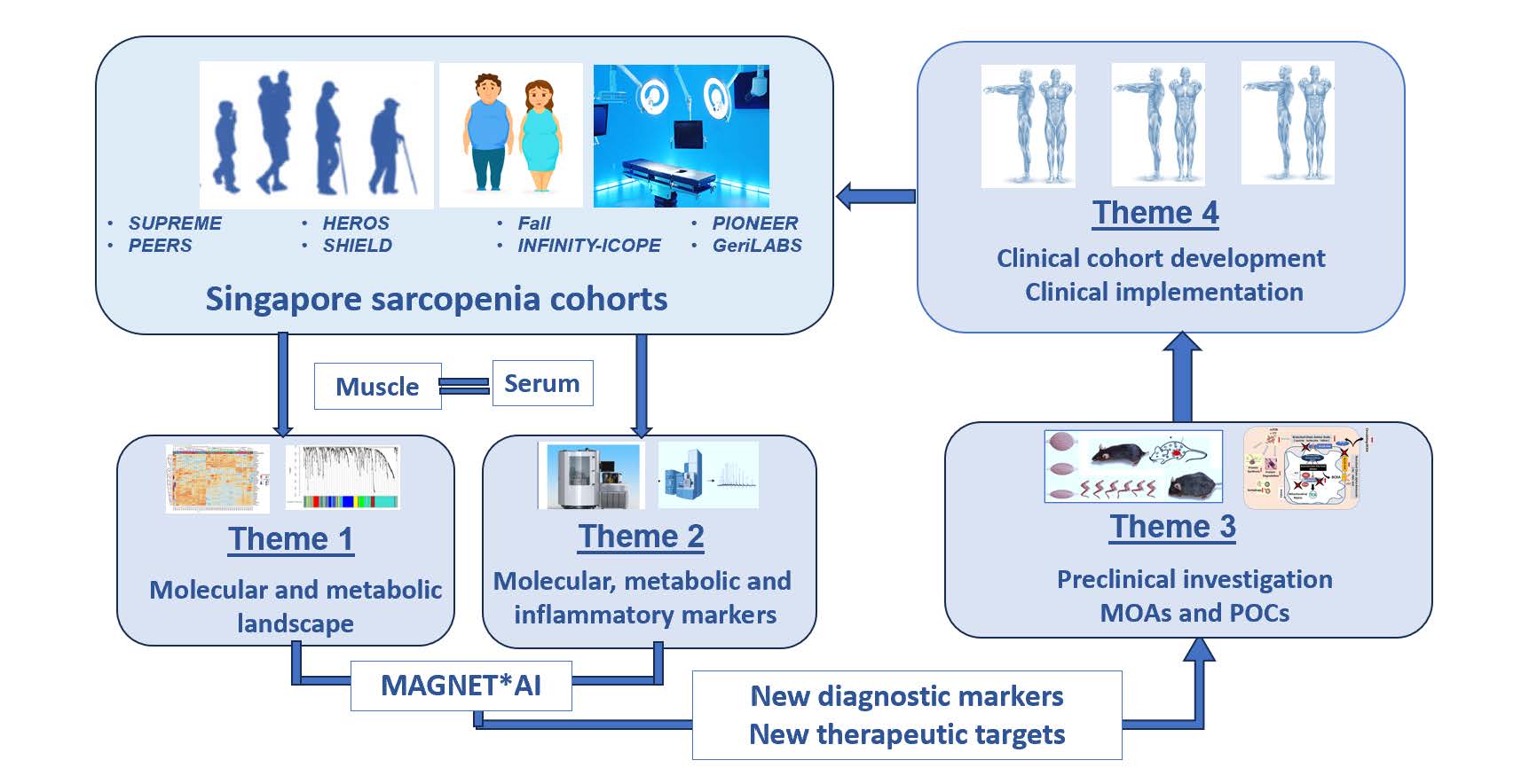
AI: artificial intelligence; ICOPE: Integrated Care for Older People; MOA: mechanisms of action; POCs: proofs of concept
The work of MAGNET closely aligns with Singapore’s national ageing strategies, including HealthierSG and Age Well SG, which emphasise preventive health, centralised care in the community and precision medicine. Integration with community-based resources—such as active ageing centres, community gyms and exercise programmes for not only older adults but also younger adults who may have subclinical sarcopenia—ensures that research findings are rapidly translated into real-world practice. Singapore’s first national sarcopenia consortium illustrates how research, policy and community engagement can drive population muscle health.
CONCLUSION
In summary, sarcopenia is a major and growing public health challenge, which significantly affects chronic disease outcomes, functional ability and healthy longevity. Advances in definitions, biomarkers, assessment tools and therapeutics are rapidly reshaping the field, but translation into practice requires standardisation, validation across populations and integration into health systems. Singapore is leveraging these efforts—through national clinical practice guidelines, a national sarcopenia consortium spanning research to clinical translation, and alignment with national strategies such as HealthierSG and Age Well SG—to lay the foundation for a robust ecosystem to manage and promote muscle health. Effective strategies to manage sarcopenia at the individual and population levels have the potential to reduce disability, extend independence and promote healthy ageing.
Supplementary materials
Table S1. SARC-F screening questionnaire.
Table S2. Medications phase 1 clinical trials for sarcopenia identified from ClinicalTrials.gov.
Table S3. Medications phase 2 clinical trials for sarcopenia identified from ClinicalTrials.gov.
Table S4. Medications phases 3 and 4 clinical trials for sarcopenia identified from ClinicalTrials.gov.
REFERENCES
- Chen LK, Hsiao FY, Akishita M, et al. A focus shift from sarcopenia to muscle health in the Asian Working Group for Sarcopenia 2025 Consensus Update. Nat Aging 2025;5:2164-75.
- Kirk B, Cawthon PM, Arai H, et al. The Conceptual Definition of Sarcopenia: Delphi Consensus from the Global Leadership Initiative in Sarcopenia (GLIS). Age Ageing 2024;53:afae052.
- Fielding RA, Vellas B, Evans WJ, et al. Sarcopenia: an undiagnosed condition in older adults. Current consensus definition: prevalence, etiology, and consequences. International working group on sarcopenia. J Am Med Dir Assoc 2011;12:249-56.
- Rosenberg IH. Sarcopenia: origins and clinical relevance. Clin Geriatr Med 2011;27:337-9.
- Rosenberg IH. Summary comments: Epidemiological and methodological problems in determining nutritional status of older persons. Am J Clin Nutr 1989;50:1231-3.
- Falcon LJ, Harris-Love MO. Sarcopenia and the New ICD-10-CM Code: Screening, Staging, and Diagnosis Considerations. Fed Pract 2017;34:24-32.
- Dent E, Woo J, Scott D, et al. Toward the recognition and management of sarcopenia in routine clinical care. Nat Aging 2021;1:982-90.
- Cruz-Jentoft AJ, Sayer AA. Sarcopenia. Lancet 2019;393:2636-46.
- Goates S, Du K, Arensberg MB, et al. Economic Impact of Hospitalizations in US Adults with Sarcopenia. J Frailty Aging 2019;8:93-9.
- Ye C, Zheng X, Aihemaitijiang S, et al. Sarcopenia and catastrophic health expenditure by socio-economic groups in China: an analysis of household-based panel data. J Cachexia Sarcopenia Muscle 2022;13:1938-47.
- Tan LF, Sia CH, Merchant RA. Sarcopenia and sarcopenic obesity in cardiovascular disease: a comprehensive review. Singapore Med J 2025.
- Ma M, Zhang Z, Bo H, et al. Skeletal Muscle as Endocrine Organ. Adv Exp Med Biol 2025;1478:513-43.
- Tuttle CSL, Thang LAN, Maier AB. Markers of inflammation and their association with muscle strength and mass: A systematic review and meta-analysis. Ageing Res Rev 2020;64:101185.
- Teng JJW, Goh RKH, Tan MMY, et al. Knowledge and attitudes towards sarcopenia among healthcare professionals. Ann Acad Med Singap 2024;54:57-61.
- Studenski SA, Peters KW, Alley DE, et al. The FNIH sarcopenia project: rationale, study description, conference recommendations, and final estimates. J Gerontol A Biol Sci Med Sci 2014;69:547-58.
- Bhasin S, Travison TG, Manini TM, et al. Sarcopenia Definition: The Position Statements of the Sarcopenia Definition and Outcomes Consortium. J Am Geriatr Soc 2020;68:1410-8.
- Cruz-Jentoft AJ, Bahat G, Bauer J, et al. Sarcopenia: revised European consensus on definition and diagnosis. Age Ageing 2019;48:16-31.
- Cawthon PM, Visser M, Arai H, et al. Defining terms commonly used in sarcopenia research: a glossary proposed by the Global Leadership in Sarcopenia (GLIS) Steering Committee. Eur Geriatr Med 2022;13:1239-44.
- Petermann-Rocha F, Balntzi V, Gray SR, et al. Global prevalence of sarcopenia and severe sarcopenia: a systematic review and meta-analysis. J Cachexia Sarcopenia Muscle 2022;13:86-99.
- Papadopoulou SK, Tsintavis P, Potsaki P, et al. Differences in the Prevalence of Sarcopenia in Community-Dwelling, Nursing Home and Hospitalized Individuals. A Systematic Review and Meta-Analysis. J Nutr Health Aging 2020;24:83-90.
- Weng SE, Huang YW, Tseng YC, et al. The Evolving Landscape of Sarcopenia in Asia: A Systematic review and meta-analysis following the 2019 Asian working group for sarcopenia (AWGS) diagnostic criteria. Arch Gerontol Geriatr 2025;128:105596.
- Tan LF, Lim ZY, Choe R, et al. Screening for Frailty and Sarcopenia Among Older Persons in Medical Outpatient Clinics and its Associations With Healthcare Burden. J Am Med Dir Assoc 2017;18:583-7.
- Lim WS, Cheong CY, Lim JP, et al. Singapore Clinical Practice Guidelines For Sarcopenia: Screening, Diagnosis, Management and Prevention. J Frailty Aging 2022;11:348-69.
- How LA, Lee XX, Hui-En SAL, et al. The Impact of Sarcopenic Obesity on Frailty, Cognition, and Function in Community-Dwelling Older Adults. J Frailty Sarcopenia Falls 2025;10:150-6.
- Pang BWJ, Wee SL, Lau LK, et al. Prevalence and Associated Factors of Sarcopenia in Singaporean Adults-The Yishun Study. J Am Med Dir Assoc 2021;22:885 e1-10.
- Tan LF, Teng J, Chew ZJ, et al. Geriatric Services Hub – A Collaborative Frailty Management Model between The Hospital and Community Providers. J Frailty Aging 2023 12:316-21.
- Malmstrom TK, Morley JE. SARC-F: a simple questionnaire to rapidly diagnose sarcopenia. J Am Med Dir Assoc 2013;14:531-2.
- Mohd Nawi SN, Khow KS, Lim WS, et al. Screening Tools for Sarcopenia in Community-Dwellers: A Scoping Review. Ann Acad Med Singap 2019;48:201-16.
- Bahat G, Erbas Sacar D. SARC-F can detect sarcopenia with a high sensitivity. Aging Clin Exp Res 2021;33:2017.
- Chen LK, Woo J, Assantachai P, et al. Asian Working Group for Sarcopenia: 2019 Consensus Update on Sarcopenia Diagnosis and Treatment. J Am Med Dir Assoc 2020;21:300-7.e2.
- Roberts HC, Denison HJ, Martin HJ, et al. A review of the measurement of grip strength in clinical and epidemiological studies: towards a standardised approach. Age Ageing 2011;40:423-9.
- Koh JH, Tan LTP, Lim CYJ, et al. Association of head and neck CT-derived sarcopenia with mortality and adverse outcomes: A systematic review. Arch Gerontol Geriatr 2024;126:105549.
- Kumar AA, Wong WSY, Zheng Y, et al. Effect of psoas muscle index on early postoperative outcomes in surgically treated spinal tumours in an Asian population. J Clin Neurosci 2024;126:214-20.
- Evans WJ, Hellerstein M, Orwoll E, et al. D(3) -Creatine dilution and the importance of accuracy in the assessment of skeletal muscle mass. J Cachexia Sarcopenia Muscle 2019;10:14-21.
- Cawthon PM, Orwoll ES, Peters KE, et al. Strong Relation Between Muscle Mass Determined by D3-creatine Dilution, Physical Performance, and Incidence of Falls and Mobility Limitations in a Prospective Cohort of Older Men. J Gerontol A Biol Sci Med Sci 2019;74:844-52.
- Yik V, Kok SSX, Chean E, et al. Diagnosing Sarcopenia with AI-Aided Ultrasound (DINOSAUR)-A Pilot Study. Nutrients 2024;16:2768.
- Verdijk LB, Snijders T, Drost M, et al. Satellite cells in human skeletal muscle; from birth to old age. Age (Dordr) 2014;36:545-7.
- Rommel C, Bodine SC, Clarke BA, et al. Mediation of IGF-1-induced skeletal myotube hypertrophy by PI(3)K/Akt/mTOR and PI(3)K/Akt/GSK3 pathways. Nat Cell Biol 2001;3:1009-13.
- Ziaaldini MM, Marzetti E, Picca A, et al. Biochemical Pathways of Sarcopenia and Their Modulation by Physical Exercise: A Narrative Review. Front Med (Lausanne) 2017;4:167.
- Shin MJ, Jeon YK, Kim IJ. Testosterone and Sarcopenia. World J Mens Health 2018;36:192-8.
- Lan XQ, Deng CJ, Wang QQ, et al. The role of TGF-beta signaling in muscle atrophy, sarcopenia and cancer cachexia. Gen Comp Endocrinol 2024;353:114513.
- Liang Z, Zhang T, Liu H, et al. Inflammaging: The ground for sarcopenia? Exp Gerontol 2022;168:111931.
- Chew W, Lim YP, Lim WS, et al. Gut-muscle crosstalk. A perspective on influence of microbes on muscle function. Front Med (Lausanne) 2022;9:1065365.
- Liu C, Cheung WH, Li J, et al. Understanding the gut microbiota and sarcopenia: a systematic review. J Cachexia Sarcopenia Muscle 2021;12:1393-407.
- Liu G, Jiang S, Xie W, et al. Biomarkers for sarcopenia, muscle mass, muscle strength, and physical performance: an umbrella review. J Transl Med 2025;23:650.
- Jones RL, Paul L, Steultjens MPM, et al. Biomarkers associated with lower limb muscle function in individuals with sarcopenia: a systematic review. J Cachexia Sarcopenia Muscle 2022;13:2791-806.
- Chew J, Tay L, Lim JP, et al. Serum Myostatin and IGF-1 as Gender-Specific Biomarkers of Frailty and Low Muscle Mass in Community-Dwelling Older Adults. J Nutr Health Aging 2019;23:979-86.
- Dent E, Morley JE, Cruz-Jentoft AJ, et al. International Clinical Practice Guidelines for Sarcopenia (ICFSR): Screening, Diagnosis and Management. J Nutr Health Aging 2018;22:1148-61.
- Izquierdo M, de Souto Barreto P, Arai H, et al. Global consensus on optimal exercise recommendations for enhancing healthy longevity in older adults (ICFSR). J Nutr Health Aging 2025;29:100401.
- Shen Y, Shi Q, Nong K, et al. Exercise for sarcopenia in older people: A systematic review and network meta-analysis. J Cachexia Sarcopenia Muscle 2023;14:1199-211.
- Beckwee D, Delaere A, Aelbrecht S, et al. Exercise Interventions for the Prevention and Treatment of Sarcopenia. A Systematic Umbrella Review. J Nutr Health Aging 2019;23:494-502.
- Merchant RA, Chan YH, Anbarasan D, et al. Impact of exercise and leucine-enriched protein supplementation on physical function, body composition, and inflammation in pre-frail older adults: a quasi-experimental study. Front Med (Lausanne) 2023;10:1204198.
- Oliveira JS, Pinheiro MB, Fairhall N, et al. Evidence on Physical Activity and the Prevention of Frailty and Sarcopenia Among Older People: A Systematic Review to Inform the World Health Organization Physical Activity Guidelines. J Phys Act Health 2020;17:1247-58.
- Currier BS, McLeod JC, Banfield L, et al. Resistance training prescription for muscle strength and hypertrophy in healthy adults: a systematic review and Bayesian network meta-analysis. Br J Sports Med 2023;57:1211-20.
- Tan LF, Chan YH, Seetharaman S, et al. Impact of Exercise and Cognitive Stimulation Therapy on Physical Function, Cognition and Muscle Mass in Pre-Frail Older Adults in the Primary Care Setting: A Cluster Randomized Controlled Trial. J Nutr Health Aging 2023;27:438-47.
- Gov.sg. Singapore Physical Activity Guidelines. https://www.activesgcircle.gov.sg/campaigns/spag. Accessed 12 January 2026.
- Chen LK, Arai H, Assantachai P, et al. Roles of nutrition in muscle health of community-dwelling older adults: evidence-based expert consensus from Asian Working Group for Sarcopenia. J Cachexia Sarcopenia Muscle 2022;13:1653-72.
- Kang L, Gao Y, Liu X, et al. Effects of why protein nutritional supplement on muscle function among community-dwelling frail older people: A multicenter study in China. Arch Gerontol Geriatr 2019;83:7-12.
- Bauer J, Biolo G, Cederholm T, et al. Evidence-based recommendations for optimal dietary protein intake in older people: a position paper from the PROT-AGE Study Group. J Am Med Dir Assoc 2013;14:542-59.
- Deutz NEP, Bauer JM, Barazzoni R, et al. Protein intake and exercise for optimal muscle function with aging: recommendations from the ESPEN Expert Group. Clin Nutr 2014;33:929-36.
- Andrews RD, MacLean DA, Riechman SE. Protein intake for skeletal muscle hypertrophy with resistance training in seniors. Int J Sport Nutr Exerc Metab 2006;16:362-72.
- Piccoli GB, Cederholm T, Avesani CM, et al. Nutritional status and the risk of malnutrition in older adults with chronic kidney disease – implications for low protein intake and nutritional care: A critical review endorsed by ERN-ERA and ESPEN. Clin Nutr 2023;42:443-57.
- Awdishu L, Maxson R, Gratt C, et al. KDIGO 2024 clinical practice guideline on evaluation and management of chronic kidney disease: A primer on what pharmacists need to know. Am J Health Syst Pharm 2025;82:660-71.
- Bauer JM, Verlaan S, Bautmans I, et al. Effects of a vitamin D and leucine-enriched whey protein nutritional supplement on measures of sarcopenia in older adults, the PROVIDE study: a randomized, double-blind, placebo-controlled trial. J Am Med Dir Assoc 2015;16:740-7.
- Tabara Y, Kohara K, Okada Y, et al. Creatinine-to-cystatin C ratio as a marker of skeletal muscle mass in older adults: J-SHIPP study. Clin Nutr 2020;39:1857-62.
- Lin T, Jiang T, Huang X, et al. Diagnostic test accuracy of serum creatinine and cystatin C-based index for sarcopenia: a systematic review and meta-analysis. Age Ageing 2024;53:afad252.
- Zheng C, Wang E, Li JS, et al. Serum creatinine/cystatin C ratio as a screening tool for sarcopenia and prognostic indicator for patients with esophageal cancer. BMC Geriatr 2022;22:207.
- Ottosson Frost C, Gille-Johnson P, Blomstrand E, et al. Cystatin C-based equations for estimating glomerular filtration rate do not require race or sex coefficients. Scand J Clin Lab Invest 2022;82:162-66.
- Coelho-Júnior HJ, Álvarez-Bustos A, Russo A, et al. Associations between malnutrition and physical performance, sarcopenia, and frailty in older adults. BMC Geriatrics 2025;25:612.
- Beaudart C, Bruyère O, Geerinck A, et al. Equation models developed with bioelectric impedance analysis tools to assess muscle mass: A systematic review. Clin Nutr ESPEN 2020;35:47-62.
- Santos LP, Gonzalez MC, Orlandi SP, et al. New Prediction Equations to Estimate Appendicular Skeletal Muscle Mass Using Calf Circumference: Results From NHANES 1999-2006. JPEN J Parenter Enteral Nutr 2019;43:998-1007.
- Furushima T, Miyachi M, Iemitsu M, et al. Development of prediction equations for estimating appendicular skeletal muscle mass in Japanese men and women. J Physiol Anthropol 2017;36:34.
- Santos LP, Gonzalez MC, Orlandi SP, et al. New Prediction Equations to Estimate Appendicular Skeletal Muscle Mass Using Calf Circumference: Results From NHANES 1999-2006. JPEN J Parenter Enteral Nutr 2019;43:998-1007.
- Lee K, Shin Y, Huh J, et al. Recent Issues on Body Composition Imaging for Sarcopenia Evaluation. Korean J Radiol 2019;20:205-17.
- Sorensen TIA. Forecasting the global obesity epidemic through 2050. Lancet 2025;405:756-7.
- Wang J, Thornton JC, Russell M, et al. Asians have lower body mass index (BMI) but higher percent body fat than do whites: comparisons of anthropometric measurements. Am J Clin Nutr 1994;60:23-8.
- Ji T, Li Y, Ma L. Sarcopenic Obesity: An Emerging Public Health Problem. Aging Dis 2022;13:379-88.
- Smith AC, Laguna JM, Wesselink EO, et al. Leg Muscle Volume, Intramuscular Fat and Force Generation: Insights From a Computer-Vision Model and Fat-Water MRI. J Cachexia Sarcopenia Muscle 2025;16:e13735.
- Wetzlich B, Nyakundi BB, Yang J. Therapeutic applications and challenges in myostatin inhibition for enhanced skeletal muscle mass and functions. Mol Cell Biochem 2025;480:1535-53.
- Tsai SY. Lost in translation: challenges of current pharmacotherapy for sarcopenia. Trends Mol Med 2024;30:1047-60.
- Walton RG, Dungan CM, Long DE, et al. Metformin blunts muscle hypertrophy in response to progressive resistance exercise training in older adults: A randomized, double-blind, placebo-controlled, multicenter trial: The MASTERS trial. Aging Cell 2019;18:e13039.
- Yerevanian A, Soukas AA. Metformin: Mechanisms in Human Obesity and Weight Loss. Curr Obes Rep 2019;8:156-64.
- Witham MD, McDonald C, Wilson N, et al. Metformin and physical performance in older people with probable sarcopenia and physical prefrailty or frailty in England (MET-PREVENT): a double-blind, randomised, placebo-controlled trial. Lancet Healthy Longev 2025;6:100695.
- Kroemer G, Maier AB, Cuervo AM, et al. From geroscience to precision geromedicine: Understanding and managing aging. Cell 2025;188:2043-62.
- Hu D, Xie F, Xiao Y, et al. Metformin: A Potential Candidate for Targeting Aging Mechanisms. Aging Dis 2021;12:480-93.
- He L, Ding Y, Zhao Y, et al. CRISPR/Cas9/AAV9-mediated in vivo editing identifies MYC regulation of 3D genome in skeletal muscle stem cell. Stem Cell Reports 2021;16:2442-58.
- Elashry MI, Schneider VC, Heimann M, et al. CRISPR/Cas9-Targeted Myostatin Deletion Improves the Myogenic Differentiation Parameters for Muscle-Derived Stem Cells in Mice. J Dev Biol 2025;13:5.
- Dogan B, Kaan D, Ulger H. The effect of growth factors on induction of mesenchymal stem cell to the skeletal muscle cells. Bratisl Lek Listy 2020;121:853-7.
- Kaliya-Perumal AK, Roberts O, Tan BY. Systemic disconnects in musculoskeletal healthcare across the care continuum. Ann Acad Med Singap 2025;54:585-7.
- Mori H, Tokuda Y. Differences and overlap between sarcopenia and physical frailty in older community-dwelling Japanese. Asia Pac J Clin Nutr 2019;28:157-65.
- Tan JA, Koh JH, Merchant RA, et al. Frailty as a predictor of mortality in the oldest old: A systematic review and meta-analysis. Geriatr Gerontol Int 2025;25:102-7.
- Clegg A, Young J, Iliffe S, et al. Frailty in elderly people. Lancet 2013;381:752-62.
- Tan LF, How AL, Lee XX, et al. Intrinsic capacity deficits across the lifespan in a nationally representative community cohort: findings from the Queenstown study. Arch Gerontol Geriatr 2026;140:106031.
- Limpawattana P, Inthasuwan P, Putraveephong S, et al. Sarcopenia in chronic obstructive pulmonary disease: A study of prevalence and associated factors in the Southeast Asian population. Chron Respir Dis 2018;15:250-7.
- Yamamoto S, Hashimoto Y, Takahashi F, et al. Mortality Risk of Sarcopenia and Malnutrition in Older Patients with Type 2 Diabetes Mellitus. Nutrients 2025;17:2622.
- Duarte MP, Almeida LS, Neri SGR, et al. Prevalence of sarcopenia in patients with chronic kidney disease: a global systematic review and meta-analysis. J Cachexia Sarcopenia Muscle 2024;15:501-12.
- Bauer J, Morley JE, Schols A, et al. Sarcopenia: A Time for Action. An SCWD Position Paper. J Cachexia Sarcopenia Muscle 2019;10:956-61.
- Welch C, Hassan-Smith ZK, Greig CA, et al. Acute Sarcopenia Secondary to Hospitalisation – An Emerging Condition Affecting Older Adults. Aging Dis 2018;9:151-64.
- Wan SN, Thiam CN, Ang QX, et al. Incident sarcopenia in hospitalized older people: A systematic review. PLoS One 2023;18:e0289379.
- Montero-Errasquin B, Cruz-Jentoft AJ. Acute Sarcopenia. Gerontology 2023;69:519-25.
- Damanti S, Senini E, De Lorenzo R, et al. Acute Sarcopenia: Mechanisms and Management. Nutrients 2024;16:3428.
- Dhar M, Kapoor N, Suastika K, et al. South Asian Working Action Group on SARCOpenia (SWAG-SARCO) – A consensus document. Osteoporos Sarcopenia 2022;8:35-57.
- Daly RM, Iuliano S, Fyfe JJ, et al. Screening, Diagnosis and Management of Sarcopenia and Frailty in Hospitalized Older Adults: Recommendations from the Australian and New Zealand Society for Sarcopenia and Frailty Research (ANZSSFR) Expert Working Group. J Nutr Health Aging 2022;26:637-51.
- Allen DM, Kiyota E, Wong JEL, et al. Health District at Queenstown: Catalyst for translational research. Ann Acad Med Singap 2024;53:264-7.
This is a narrative review of published literature and does not require study participants.
The authors declare there are no affiliations with or involvement in any organisation or entity with any financial interest in the subject matter or materials discussed in this manuscript.
Dr Frederick H Koh, Colorectal Service, Department of General Surgery, Sengkang General Hospital, 110 Sengkang East Way, Singapore 544886. Email: [email protected]
