

ABSTRACT
Introduction: Acute coronary syndrome (ACS) carries a high early risk of recurrent events, yet time-to-target low-density lipoprotein cholesterol (LDL-C) is often prolonged, and goal attainment is suboptimal in real-world practice. The authors aimed to develop expert consensus recommendations for post-ACS lipid management in Singapore, focusing on LDL-C targets, pharmacotherapy, escalation strategies, and implementation tools to improve adherence and reduce therapeutic inertia.
Methods: A modified Delphi methodology was employed with a panel of 10 members. Evidence was synthesised from guidelines, randomised trials, meta-analyses, and observational studies. Thirty-two statements were drafted across 5 domains (LDL-C targets; timing/monitoring; pharmacotherapy; special populations; implementation/adherence/health-system strategies) and rated anonymously on a 5-point Likert scale. Consensus thresholds were defined as high (≥75% concordant), moderate (55–74%), and low (<55%).
Results: After the final round, 30 of 32 statements achieved high consensus, and 2 received low consensus. Key agreements included measuring lipids within 24 hours of admission and retesting at 4–6 weeks, early initiation of high-intensity statins, and upfront combination therapy with statin + ezetimibe when monotherapy is unlikely to achieve the goals. Consideration of a proprotein convertase subtilisin/kexin type 9 inhibitor at discharge was recommended if LDL-C remained >1.4 mmol/L. Special considerations included older adults, familial hypercholesterolaemia, lower statin adherence among women, and the role of lipoprotein(a). The panel recommended adopting objective metrics, integrating electronic health record prompts, and developing localised pathways to harmonise care transitions.
Conclusions: The consensus recommendations provide a tailored approach for Singapore, emphasising early action, proactive escalation, and systems-level interventions to improve post-ACS outcomes.
CLINICAL IMPACT
What is New
- This expert consensus provides structured, Delphi-based recommendations for optimising post-acute coronary syndrome (ACS) low-density lipoprotein cholesterol management in Singapore.
- It highlights key gaps in current practice and provides tailored, context-specific recommendations across diagnosis, treatment initiation, follow-up, and system-level implementation.
Clinical Implications
- The recommendations advocate for early combination therapy, timely reassessment, and proactive treatment intensification, particularly in very high-risk ACS patients.
- This guidance may improve clinical outcomes, reduce recurrent events, and support national efforts to standardise lipid management practices.
Among ischaemic heart diseases (IHDs), acute coronary syndrome (ACS) remains the leading cause of death worldwide, with nearly half of cases arising from the Asia–Pacific region.1 In Singapore, IHD accounted for 19.7% of all deaths in 2023.2 Beyond mortality, ACS imposes substantial direct healthcare costs and indirect losses through impaired productivity and reduced quality of life.3
Low-density lipoprotein cholesterol (LDL-C) is the primary modifiable therapeutic target, especially in individuals at high risk of future events.4 Yet many patients fail to achieve recommended LDL-C goals after an ACS. Guidelines advocate a stepwise escalation of lipid-lowering therapy (LLT): initiation with high-intensity statin, followed by ezetimibe, and subsequent escalation with a proprotein convertase subtilisin/kexin type 9 (PCSK9) inhibitor (PCSK9i) when targets remain unmet. In practice, however, this approach may delay LDL-C goal achievement, especially during the high-risk post-ACS phase.3
Emerging evidence suggests that faster, more intensive strategies can improve both timeliness of control and clinical outcomes. A “PCSK9i fast-track” approach has been reported as safe and effective for achieving LDL-C targets more rapidly than the conventional stepwise pathway in real-world ACS cohorts.5 Achieving LDL-C targets within 12 weeks after ACS is associated with significantly fewer cardiovascular events.6 Likewise, systematic adoption of a personalised “strike early and strong” LLT strategy has yielded higher goal-achievement rates and lower risk of major adverse cardiovascular events (MACE) at 1 year compared with a stepwise approach.7 Real-world data from Korean patients further show that reaching the LDL-C goal within 4–12 weeks after discharge is linked to fewer recurrent MACE in very-high-risk atherosclerotic cardiovascular disease (ASCVD), particularly in ACS.6
International guidance increasingly reflects this urgency. European guidance supports intensifying the use of a PCSK9i by 4–6 weeks after ACS if lipid goals are unmet. In contrast, the current Singapore lipid guidelines emphasise reassessment after 12 weeks of maximally tolerated statin plus ezetimibe, without ACS-specific escalation advice.8,9 Such differences are likely to contribute to greater practice variability, slower time-to-target LDL-C, and missed opportunities for early risk reduction.
Data from the Singapore cohort of the Dyslipidaemia International Study II reported suboptimal statin doses and infrequent use of combination therapy among patients admitted with ACS.10 Collectively, these observations suggest the need for better systems for monitoring, timely reassessment, and therapy intensification.
To address these gaps, a structured, modified Delphi process was undertaken to formulate practical, evidence-based recommendations tailored to Singapore for optimising LDL-C management in the post-ACS setting. This consensus was ACS-specific, rather than a general ASCVD framework. The focus was on gathering insights on early LLT optimisation and appropriate follow-up to enable timely treatment intensification. In addition, implementation-oriented aspects, such as auditable quality metrics, care-transition processes, and system-level approaches aimed at reducing therapeutic inertia and improving LDL-C goal attainment in routine clinical practice were also included.
METHODS
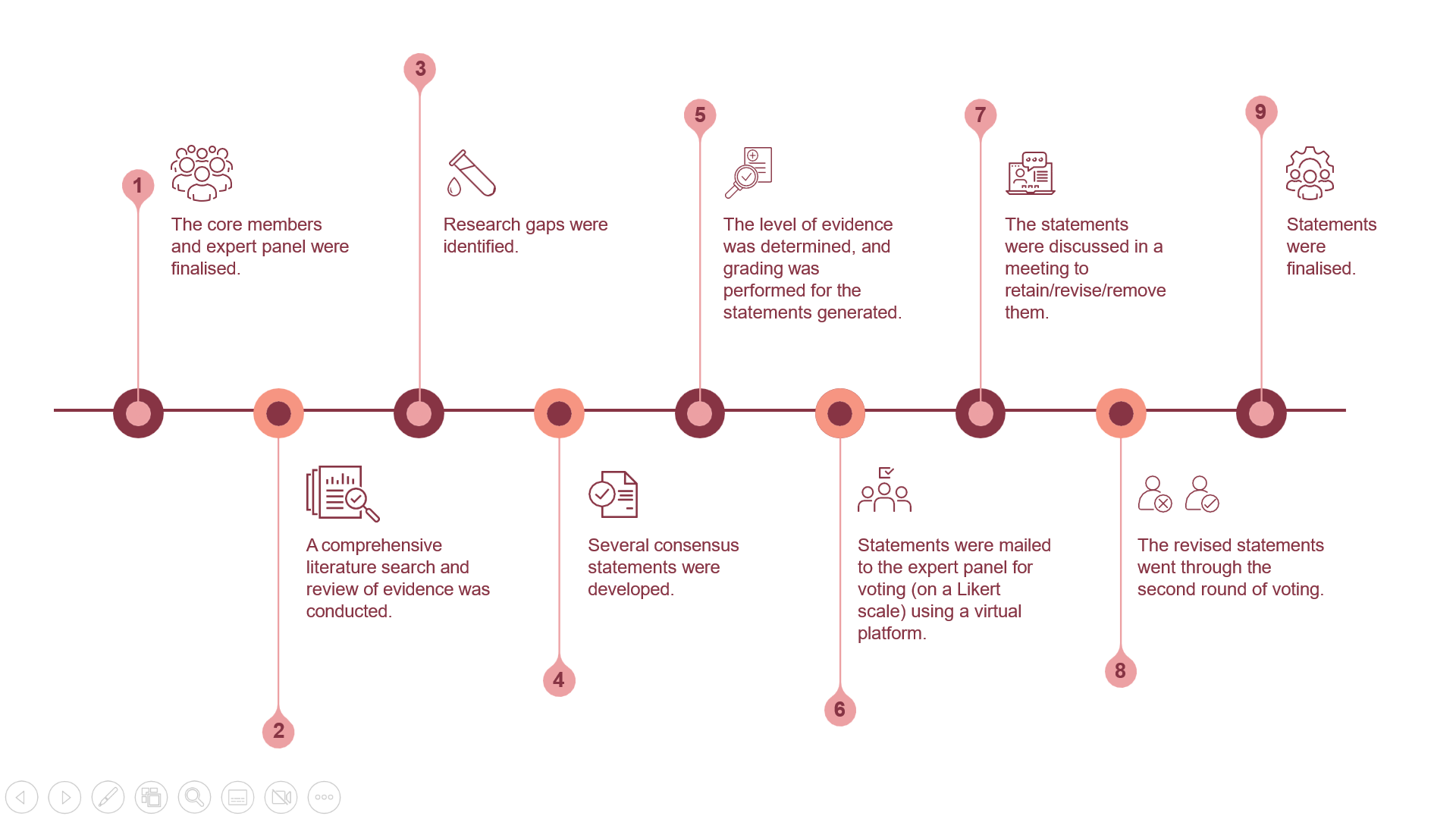
This study aimed to develop consensus-based recommendations on lipid management among patients with ACS, focusing on recent therapeutic advances. To achieve this, a modified Delphi-based approach was employed, designed to harness collective expertise and refine understanding through iterative feedback. While this study was not prospectively registered, it adhered to a transparent process in alignment with established consensus development practices. The outcomes are reported in accordance with the ACCORD guidelines (Supplementary Annex S1). An overview of the workflow is summarised in (Fig. 1).
Fig. 1. Overview of the consensus development process.
Selection of the expert panel and finalising core objectives
A panel of 10 experts with diverse clinical backgrounds was invited to participate in the voting and structured discussions (Supplementary Annex S2). Panellists were selected based on: (1) established subject-matter expertise, (2) peer-reviewed research contributions, and (3) substantial clinical experience in the management of ACS. One member with extensive experience in the relevant domain was designated as chair. The chair outlined the methodological approach, oversaw the process, and moderated all proceedings to ensure balanced participation. To minimise bias, the chair abstained from all voting.
At the outset, the panel agreed on the objectives of the consensus exercise, which were to:
- Analyse current clinical practices in lipid management after ACS.
- Evaluate existing international and Singapore recommendations and supporting evidence.
- Develop consensus statements to facilitate optimal, locally relevant care for patients with ACS in Singapore.
Review of evidence and formulation of consensus statements
A comprehensive search of the PubMed database was conducted to identify relevant literature published in English in the last 10 years. A scoping review of identified articles was conducted to inform the development of consensus statements. Broad domains were identified, and consensus statements were drafted. Studies with adequate methodological rigour were included (e.g. randomised controlled trials [RCTs], systematic reviews, meta-analyses, and cohort studies). Major guidelines/consensus statements were also reviewed. A summary of the literature search was shared with the expert panel as a pre-read. Separate piloting of the survey instrument was not conducted.
Delphi survey rounds and consensus thresholds
The draft statements were formatted into a structured questionnaire and circulated to the expert panel via a secure online survey platform. Each panellist completed the survey anonymously. Panellists recorded their position on each statement using a 5-point Likert scale: strongly agree, agree, neither agree nor disagree, disagree, and strongly disagree.
For every statement, responses were quantified and classified according to predefined consensus levels: (1) high agreement: ≥75% agreement or disagreement; (2) moderate agreement: 55–74% agreement or disagreement; low agreement: <55% agreement or disagreement.
Consensus development process
A modified Delphi approach was used, combining 2 survey rounds with a consensus meeting. In round 1, panellists completed the anonymised questionnaire (5-point Likert scale). The responses were aggregated and classified using the prespecified consensus thresholds. A meeting was then convened to review the results of round 1. The panel discussed each statement to decide whether to retain as is, revise, or remove. Following the meeting, all panellists were invited to participate in revoting.
The session chair ensured balanced participation and explicitly captured disagreements. Before finalising recommendations, the panel reviewed a summary of majority positions and documented minority opinions where relevant so that differing viewpoints were addressed and reflected transparently in the final manuscript.
RESULTS
This consensus was carried out between March and June 2025. The participants were provided with 15 days to complete the questionnaire. The participation rate was 100% for all rounds. The initial Delphi round comprised 32 statements organised into 5 thematic sections: LDL-C targets (n=3); timing and monitoring of therapy (n=5); pharmacotherapy (n=11); special considerations (n=4); and implementation, adherence, and health-system strategies (n=9). Of these 32 statements, 28 achieved high consensus, while 4 achieved moderate consensus in round 1. The panel reviewed the aggregate responses and the accompanying evidence at the subsequent meeting. Based on the discussion, 6 statements were modified to improve clarity and scope and to align the recommendation with the strength of evidence.
All 6 revised statements were recirculated for a second vote. Four of the 6 attained high consensus after revision, while 2 fell to low consensus on revote. The 2 statements with low consensus were reported as areas of divergent expert opinion and/or targets for future research. The finalised consensus statements are presented in Tables 1–5.
DISCUSSION
Lipid management in the post-ACS phase remains critical. Several studies have suggested the importance of aggressive LDL-C lowering. The concept of a “strike early-strike strong” approach, initiating intensive LLT soon after ACS, has shown significant reductions in LDL-C levels and cardiovascular events.11 However, discrepancies in the timing of therapy escalation, selection of combination regimens, and system-level implementation call for further standardisation of Singapore protocols for lipid management to ensure optimal patient outcomes.
LDL-C targets for ACS (Table 1)
In routine care, post-ACS lipid surveillance remains inconsistent. A considerable proportion of patients do not have a repeat LDL-C measurement after discharge, and among those who were retested, fewer than half have been reported to achieve guideline LDL-C goals. This highlights a substantial opportunity to improve post-ACS lipid management in community practice.10,12 The panel agreed that there was a need to optimise lipid management in patients with ACS.
Randomised trials and meta-analyses consistently indicate that pushing LDL-C lower than previously recommended thresholds has yielded additional clinical benefit.13,14 An approximately 22% reduction in major vascular events per 1.0 mmol/L decrease in LDL-C at 1 year has been reported, with significant relative reductions of approximately 25% during each subsequent year of continued therapy.14
Table 1. Consensus statements on LDL-C targets for ACS.
|
Statement no. |
Finalised statement |
Level of evidence |
Finalised in round |
Level of agreement |
|
1 |
Despite recommendations on aggressive lipid-lowering therapy, real-world data indicate that suboptimal lipid management in ACS patients remains prevalent, justifying the urgency to address this issue. |
2b12 |
1 |
100% |
|
2 |
In patients with ACS, an LDL-C reduction of ≥50% from baseline† and a therapeutic target of <55 mg/dL (1.4 mmol/L)‡ are recommended. |
‡1b13; †2b15 |
1 |
100% |
|
3 |
An LDL-C reduction below 40 mg/dL (1.0 mmol/L) should be considered in patients with a second vascular event within 2 years while taking maximally tolerated statin-based therapy. |
1b16 |
1 |
78% |
ACS: acute coronary syndrome; LDL-C: low-density lipoprotein cholesterol
‡,† Portions of the statement are indicated with respective supporting evidence.
Superscript numbers: refer to REFERENCES
In the Improved Reduction of Outcomes: Vytorin Efficacy International Trial (IMPROVE-IT) trial among patients hospitalised for ACS, assignment to simvastatin 40 mg + ezetimibe 10 mg achieved a median time-weighted LDL-C of 1.4 mmol/L versus 1.8 mmol/L with simvastatin 40 mg alone (P<0.001). Over a median 6-year follow-up, the primary composite endpoint (cardiovascular death, non-fatal myocardial infarction [MI], re-hospitalisation for unstable angina, coronary revascularisation, or nonfatal stroke) occurred in 32.7% with combination therapy versus 34.7% with statin monotherapy (hazard ratio [HR] 0.94, 95% confidence interval [CI] 0.89–0.99; P=0.016).13 These findings, reinforced by pivotal trials such as Further Cardiovascular Outcomes Research with PCSK9 Inhibition in Subjects with Elevated Risk (FOURIER) and Evaluation of Cardiovascular Outcomes After an Acute Coronary Syndrome During Treatment With Alirocumab (ODYSSEY OUTCOMES), establish the value of intensive therapy, particularly in patients at the highest risk.
Beyond absolute thresholds, the magnitude of LDL-C reduction is also critical. Achieving a ≥50% decrease is independently associated with fewer cardiovascular events in ACS, even among patients who have reached a level of <55 mg/dL (1.4 mmol/L). Conversely, suboptimal LDL-C lowering (<50%) predicts higher event rates even when the on-treatment absolute LDL-C appears low, signalling residual risk from insufficient relative reduction.15 Long-term observational data after percutaneous coronary intervention (PCI) showed that patients achieving >50% LDL-C reduction and LDL-C <1.4 mmol/L experienced the lowest 7-year risk of major adverse cardiac and cerebrovascular events, suggesting that both absolute and relative reductions may provide additional benefit.17 The panellists therefore agreed that a ≥50% reduction should remain a fundamental objective for any patient presenting with high LDL-C levels, even if the absolute target is met.
The European Society of Cardiology/European Atherosclerosis Society (ESC/EAS) recommendations are based mainly on the findings of the IMPROVE-IT, FOURIER, and ODYSSEY OUTCOMES trials, which showed significant risk reduction in patients at a higher risk of future cardiovascular events.13,16,18 The ESC/EAS guidelines recommend considering an LDL-C target of <1.0 mmol/L (<40 mg/dL) for patients with a second cardiovascular event within 2 years. No attenuation of the clinical benefit of lowering LDL-C below 1.0 mmol/L has been reported.19 The panel members reached consensus on using this threshold for patients with a second vascular event within 2 years. During the discussion, some panellists pointed out that patients with ACS who also have diabetes, polyvascular disease, multivessel PCI, or a high-risk genetic profile should be directed to an even lower LDL-C target, although data remain limited for these specific phenotypes.
Timing and monitoring of therapy (Table 2)
Despite its established importance, lipid testing is often underutilised in patients presenting with ACS. Baseline lipids carry prognostic value and should be measured within 24 hours of admission.20 The panel emphasised that measurement within 24 hours of admission is important as LDL-C levels fall by approximately 10–20% within 24–48 hours of acute MI. An “acute-phase dip” underestimates the true baseline and can mask the need for earlier therapy intensification.
Table 2. Consensus statements on timing and monitoring of therapy.
|
Statement no. |
Finalised statement |
Level of evidence |
Finalised in round |
Level of agreement |
|
4 |
LDL-C measurement should be performed within the first 24 hours of hospitalisation to establish a treatment baseline and support early therapy optimisation. |
2b20 |
2 |
100% |
|
5 |
For ACS patients, LDL-C levels should be re-evaluated at 4–6 weeks post-event to assess the effectiveness of lipid-lowering therapy and guide intensification. |
2b6 |
1 |
100% |
|
6 |
Suboptimal LDL-C control in the first 12 months post-ACS is a major driver of recurrent events and re-hospitalisation. |
2b21 |
1 |
100% |
|
7 |
Early achievement of LDL-C targets (4–12 weeks) is associated with a lower risk of recurrent MACE, sustained lower LDL-C levels over the long term, and lower healthcare resource utilisation among those with ACS. |
2b6 |
1 |
100% |
|
8 |
Patients with more frequent follow-up visits show a greater reduction in LDL-C levels compared to those with only 1 visit, 12 months after hospital discharge. |
2b22 |
1 |
100% |
ACS: acute coronary syndrome; LDL-C: low-density lipoprotein cholesterol; MACE: major adverse cardiovascular events
Superscript numbers: refer to REFERENCES
A follow-up LDL-C assessment at 4–6 weeks after an event is essential to judge the response to initial therapy and to escalate promptly when needed.6 The panel put forth the pharmacokinetic rationale that the full statin effect is realised by approximately 4 weeks, and the MI-related lipid dip rebounds by that time. Although direct outcome data tied to the 4–6-week measurement are limited, earlier reassessment shortens the time to intensification, which is clinically meaningful in the high-risk early post-ACS window.
Failure to achieve LDL-C goals during the first year after ACS is associated with higher risk of recurrent cardiovascular events and re-hospitalisation, reinforcing the need for proactive, aggressive lipid-lowering early in recovery.21 Conversely, achieving LDL-C targets within 4–12 weeks has been linked to reduced risk of MACE, sustained LDL-C control, and lower healthcare utilisation and costs.6 These observations argue against therapeutic inertia and favour the timely escalation of therapy.
Along these lines, more frequent follow-up facilitates closer monitoring, supports medication adherence, and enables earlier treatment adjustments. Patients with multiple follow-ups are more likely to meet LDL-C targets than those seen only once at 12 months.22 The panel emphasised that lipid therapy should be fully optimised before transferring patients into shared-care models. In the panel discussion, it was highlighted that current hospital practices vary in timing and intensity, and harmonisation is needed to ensure consistent early goal attainment.
Pharmacologic therapy (Table 3)
Initiation of high-intensity statin therapy as early as possible in statin-naive patients with ACS, irrespective of baseline LDL-C levels, is supported by robust evidence and international guideline recommendations.23 The panel agreed that every patient should leave the hospital on at least a moderate- to high-intensity statin, and that tracking this proportion at discharge should serve as a core quality metric to reduce unwarranted variation in care.
Table 3. Consensus statements on pharmacologic therapy.
|
Statement no. |
Finalised statement |
Level of evidence |
Finalised in round |
Level of agreement |
|
9 |
High-intensity statins should be initiated in statin-naive patients with ACS as early as possible, irrespective of LDL-C values. |
1b24 |
1 |
100% |
|
10 |
In patients with ACS, it is recommended to initiate combination therapy upfront, especially when statin monotherapy is unlikely to achieve LDL-C targets. |
1a25 |
1 |
100% |
|
11 |
PCSK9 inhibitors should be considered at the time of discharge for patients with ACS with LDL-C >1.4 mmol/L despite statin + ezetimibe therapy to avoid delays in optimisation. |
1a26,27 |
1 |
78% |
|
12 |
In patients with ACS, the combination of statin and PCSK9 inhibitors can facilitate favourable changes in coronary atherosclerosis consistent with stabilisation and regression by 12 months. |
1b28,29 |
1 |
100% |
|
13 |
The early introduction of the PCSK9 inhibitor alongside statin therapy in patients with ACS can ameliorate plaque phenotype,†‡ effects that are closely linked to a more substantial lowering of LDL-C levels even within a short-term period‡ (i.e. 4–12 weeks) following the acute event. |
‡2b30; †2a31 |
1 |
100% |
|
14 |
In statin-intolerant patients, greater LDL-C reductions can be observed with PCSK9 inhibitors compared to ezetimibe, with lower rates of musculoskeletal adverse events. |
1b32 |
1 |
100% |
|
15 |
Bempedoic acid could be a useful treatment option† in statin-intolerant patients for addressing both residual cholesterol and inflammatory risk after ACS.‡ |
†1b33; ‡2b34 |
1 |
100% |
|
16 |
Elevated inflammatory markers, such as hsCRP (e.g. >2 mg/L), during follow-up of ACS may prompt consideration of more intensive lipid-lowering therapies even when LDL-C is at goal. |
1b35 |
2 |
44% |
|
17 |
Elevated apoB in patients during post-ACS follow-up with metabolic disease may prompt consideration of more aggressive lipid-lowering therapy even when LDL-C is at goal. |
2a36 |
2 |
44% |
|
18 |
Assessing lipoprotein(a) levels appears promising for risk stratification in ACS, offering valuable insights for tailoring secondary prevention strategies. For patients with ACS, a lipoprotein(a) level above 50 mg/dL (or 125 nmol/L) can be considered elevated and associated with increased cardiovascular risk. |
2a37 |
2 |
100% |
|
19 |
Acute high-dose statin therapy administered prior to PCI significantly reduces the risk of post-PCI no-reflow events in patients presenting with ACS. |
2a38 |
1 |
89% |
ACS: acute coronary syndrome; apoB: apolipoprotein B; hsCRP: high-sensitivity C-reactive protein; LDL-C: low-density lipoprotein cholesterol; PCI: percutaneous coronary intervention; PCSK9: proprotein convertase subtilisin/kexin type 9
‡,† Portions of the statement are indicated with respective supporting evidence.
Superscript numbers: refer to REFERENCES
PCI remains the preferred reperfusion strategy in ACS but is occasionally complicated by the no-reflow phenomenon, which is associated with poor prognosis, reduced left ventricular ejection fraction, and adverse remodelling. The panel agreed on the use of high-dose statin therapy before PCI in patients with ACS to mitigate this risk, as it has been shown to significantly reduce post-PCI no-reflow events.38
Although a sequential pathway (statin → add ezetimibe → consider PCSK9i) is biologically and economically intuitive, it assumes adequately resourced post-hospital care and cardiac rehabilitation. However, these services remain limited, with only a minority of eligible patients participating.39
Given that high-intensity statin monotherapy often fails to deliver recommended targets in ACS, up-front combination LLT, particularly with ezetimibe, has been recommended.25 In the IMPROVE-IT trial, adding ezetimibe 10 mg to simvastatin 40 mg after ACS achieved a lower median time-weighted LDL-C level (1.4 versus [vs] 1.8 mmol/L; P<0.001) and a modest but significant reduction in the composite endpoint over 6 years (HR 0.94, 95% CI 0.89–0.99). Notably, even with the ezetimibe add-on, LDL-C was lowered by approximately 40%, indicating that further intensification is frequently required to reach the dual goal of <1.4 mmol/L and ≥50% reduction in this population.
Cholesterol-lowering agents that target PCSK9 include monoclonal antibodies (mAbs) (alirocumab and evolocumab) and inclisiran. When added to statins ± ezetimibe, both classes demonstrate considerable LDL-C-lowering potential. Biweekly alirocumab biweekly lowers LDL-C by approximately 45–60% (dose-dependent, 75 vs 150 mg) and by approximately 50% with 300 mg monthly. Evolocumab reduces LDL-C by approximately 60% with 140 mg biweekly and by approximately 55% with 420 mg monthly. Inclisiran achieves approximately 50% peak reduction at approximately 30 days after the dose, with approximately 53% reduction still observed around day 180. However, interindividual variability in LDL-C response can be seen with both mAbs and inclisiran, requiring further characterisation of predictors of response.40
For patients with LDL-C >1.4 mmol/L despite dual therapy (statin + ezetimibe), the panel recommended considering a PCSK9i at discharge to avoid therapeutic inertia.26,27 Existing data suggest differences in effectiveness between PCSK9is, with some evidence pointing towards a more pronounced effect with evolocumab.41,42 However, head-to-head, outcome-focused evidence remains limited.
Beyond LDL-C metrics, the combination of statins + PCSK9i has shown consistent efficacy in promoting plaque stabilisation/regression. Intravascular imaging studies, Global Assessment of Plaque Regression With a PCSK9 Antibody as Measured by Intravascular Ultrasound (also known as GLAGOV) and High-Resolution Assessment of Coronary Plaques in a Global Evolocumab Randomized Study (also known as HUYGENS), demonstrated favourable changes in percent atheroma volume and fibrous-cap thickness when evolocumab was added to statins in patients with established ASCVD, including recent ACS.28,29
In patients with statin intolerance, PCSK9is provide substantially greater LDL-C reductions than ezetimibe and are associated with fewer musculoskeletal adverse events, making them the preferred nonstatin backbone in this setting.32 Bempedoic acid also offers a nonstatin option to address residual LDL-C and inflammation.33 The Cholesterol Lowering via Bempedoic Acid (ECT1002), an ACL-Inhibiting Regimen (CLEAR) Harmony trial highlighted significant LDL-C reductions with bempedoic acid alongside notable high-sensitivity C-reactive protein (hsCRP) lowering.34 A single 180 mg daily dose reduces LDL-C by approximately 24.5% as monotherapy and by approximately 38–40% in a fixed-dose combination with ezetimibe.43 However, the evidence is stronger in primary prevention, with more conclusive secondary prevention data still needed.44 A post hoc reconstruction of the CLEAR Outcomes trial suggested 30% lower all-cause mortality with bempedoic acid in the primary prevention subgroup, whereas in secondary prevention, there was a nonsignificant trend toward higher all-cause mortality (approximately 15%). A similar pattern was reported for cardiovascular mortality, warranting careful interpretation and further study.45
Biomarkers for risk assessment (Table 3)
Assessment of lipoprotein(a) or Lp(a) has emerged as a valuable tool for post-ACS risk stratification. Elevated levels of Lp(a) are linked to higher recurrent-event risk and may guide the choice and intensity of LLT, especially in patients with a family history of premature ASCVD or when residual risk persists.37 The panel aligned on ≥125 nmol/L (approximately 50 mg/dL) as the “elevated” threshold and advised measuring outside the acute phase because Lp(a) drops transiently during MI.46,47 The optimal timing for Lp(a) measurement is not well defined.46
While achieving LDL-C targets remains paramount, the panel also discussed hsCRP and apolipoprotein B (apoB) as potential risk markers. However, the panel felt that evidence is limited for therapy guidance based on these markers in post-ACS care. The Justification for the Use of Statins in Prevention: An Intervention Trial Evaluating Rosuvastatin (also known as JUPITER) trial, which is often cited for hsCRP, did not study the ACS population,35 likely explaining the group’s mixed view. A practical barrier noted was access to testing, with many hospitals not having the resources for the hsCRP test. Some panellists favoured using hsCRP as a risk enhancer, particularly when hsCRP is high without alternative inflammatory causes, while acknowledging that multiple conditions can elevate hsCRP and definitions of “elevated” can vary. For apoB, the panellists felt that the rationale was strong, but evidence for directing therapy based on apoB was not well established.
Special considerations (Table 4)
Meta-analyses show that LLTs, including statins, ezetimibe, and PCSK9is, are effective in older adults (age ≥75 years), significantly reducing cardiovascular events. Although relative risk reductions may be modest compared with those in younger cohorts, absolute benefits are comparable because the baseline risk is higher in this age group.48 The panel agreed that age alone should not preclude intensive LDL-C lowering.
Table 4. Consensus statements on special considerations.
|
Statement no. |
Finalised statement |
Level of evidence |
Finalised in round |
Level of agreement |
|
20 |
Lipid-lowering therapy is equally effective in reducing cardiovascular events in patients aged ≥75 years as in younger populations, substantiating its use, including nonstatin treatment, in older patients. |
1a48 |
1 |
89% |
|
21 |
Lower adherence to statins in women, often due to side effects, may necessitate tailored strategies such as dose adjustment. |
2a49 |
1 |
78% |
|
22 |
During hospitalisation for ACS, very high LDL-C levels should prompt an investigation of familial hypercholesterolaemia. |
2b50 |
1 |
100% |
|
23 |
In patients with heterozygous familial hypercholesterolemia with inadequate control of LDL-C, PCSK9 inhibitors can be considered. |
1b51 |
1 |
100% |
ACS: acute coronary syndrome; LDL-C: low-density lipoprotein cholesterol; PCSK9: proprotein convertase subtilisin/kexin type 9
Superscript numbers: refer to REFERENCES
Lower adherence to statin therapy has been reported among women, often driven by perceived or real side effects and differences in risk perception.49 The panel agreed that tailored adherence strategies, including targeted patient education, lower initial statin doses, and judicious use of nonstatin alternatives (e.g. ezetimibe, bempedoic acid), can improve adherence. These approaches aim to maintain momentum toward both absolute LDL-C targets and ≥50% reductions.
Very high LDL-C levels in hospitalised patients with ACS should trigger evaluation for familial hypercholesterolaemia (FH), particularly in those <65 years of age.50 Early identification enables the timely initiation of intensive LLT, including high-intensity statin, ezetimibe, and/or PCSK9is.
The phenotype of heterozygous FH (HeFH) is variable, and many people with the condition are unaware of it unless they undergo genetic testing or experience an ischaemic event. Patients with HeFH often fail to achieve LDL-C targets. PCSK9is can be effective and safe for LDL-C reduction in such patients. Data from the Reduction of LDL-C With PCSK9 Inhibition in Heterozygous Familial Hypercholesterolemia Disorder-2 (also known as RUTHERFORD-2) trial showed approximately 60% LDL-C reductions in patients with HeFH treated with evolocumab.51
Patients with homozygous FH (HoFH) also exhibit a variable phenotype but are generally easier to recognise. They show a reduced and more variable LDL-C response. It has been reported that inclisiran does not meaningfully reduce LDL-C in HoFH, despite lowering circulating PCSK9.52 The panel agreed that early identification will enable the timely initiation of intensive LLT (high-intensity statin, ezetimibe, and/or PCSK9 inhibition).
Implementation, adherence, and health system strategies (Table 5)
Poor adherence and treatment discontinuation remain major barriers to LDL-C control. Patient misinformation or fear about statin adverse effects can be a leading contributor to suboptimal outcomes. For example, the perception that Asians are more susceptible to high-intensity statin side effects can hinder adherence. Patient-centred education about the proven benefits of statins and clarity on potential adverse effects can help mitigate noncompliance.53 Implementing a dedicated lipid adherence programme, such as pharmacist-led interventions or follow-up by trained healthcare professionals, can considerably improve medication adherence and clinical outcomes.54 The expert panel agreed that there is a need to implement such structured, evidence-driven interventions as effective strategies to bridge adherence gaps. Despite clear eligibility and benefit, many high-risk patients remain undertreated with PCSK9is, even after suboptimal response to maximally tolerated statin plus ezetimibe.55 This gap indicates the need for system-wide strategies to improve identification and referral pathways to ensure that appropriate patients are escalated promptly.
Table 5. Consensus statements on implementation, adherence, and health system strategies.
|
Statement no. |
Finalised statement |
Level of evidence |
Finalised in round |
Level of agreement |
|
24 |
In cases of non-compliance, patients should be counselled on the risks and benefits of statins, as misinformation is a common cause for lack of compliance. |
2b53 |
1 |
100% |
|
25 |
Dedicated lipid adherence programmes (e.g. pharmacist-led interventions) should be implemented to improve post-discharge adherence. |
1a54 |
1 |
100% |
|
26 |
A considerable proportion of patients eligible for PCSK9 inhibitors remain undertreated, underscoring the need for targeted identification and intervention. |
2b55 |
1 |
100% |
|
27 |
When cost remains a concern, it is important to select patients with the highest baseline risk who would gain the most from further intensification of lipid-lowering therapy with PCSK9 inhibitors. |
2b56 |
1 |
100% |
|
28 |
A nonstatin lipid-lowering agent can be recommended for patients already on a maximally tolerated statin who have an LDL-C level of ≥70 mg/dL (1.8 mmol/L). |
1b13,16,57 |
1 |
100% |
|
29 |
Singapore protocols similar to ACS lipid EuroPath tool should be developed to identify optimisation opportunities and support standardised lipid management in post-ACS patients. |
458 |
2 |
100% |
|
30 |
Tracking metrics, such as high-intensity statin use at discharge, should be used as a quality indicator. |
459 |
2 |
89% |
|
31 |
A structured discharge planning programme for patients with ACS can facilitate higher satisfaction and reduce unexpected readmissions. |
1b60 |
1 |
100% |
|
32 |
Electronic health records and clinical decision-support tools should be leveraged to prompt lipid testing and therapy optimisation. |
1b61 |
1 |
89% |
ACS: acute coronary syndrome; LDL-C: low-density lipoprotein cholesterol; PCSK9: Proprotein convertase subtilisin/kexin type 9
Superscript numbers: refer to REFERENCES
The cost of PCSK9is remains a principal constraint. However, prioritising therapy for the highest-risk patients is both clinically and economically rational.56 The panel was in consensus that in cost-sensitive settings, an LDL-C level of ≥1.8 mmol/L can serve as a trigger for intensification, balancing benefit and cost impact. The broader use of PCSK9is, inclisiran, and bempedoic acid requires consideration of real-world constraints, including cost, reimbursement variability, and long-term adherence to complex treatment regimens, especially for injectables. In November 2023, the National Drug Advisory Committee listed evolocumab for subsidy under the Medication Assistance Fund in Singapore, aiming to increase its prescription among eligible patients. However, audits will be essential to determine whether this cost-subsidy strategy has led to improved LDL-C goal attainment.
Singapore protocols modelled on frameworks such as ACS EuroPath can help establish best practices, standardise algorithms, and enable clinicians to identify optimisation opportunities at every transition of care.58 The panel noted that current clinical practice guidelines lack a step-by-step ACS lipid protocol to guide clinicians. Recognising the gap in Singapore, the panel highlighted the need to design better tools to suit the Singapore context. The panel recognised that localised protocols could support consistent lipid management, especially during acute-to-long-term care transition.
Quality improvement initiatives should include tracking metrics, such as the proportion of patients discharged on high-intensity statins, as these serve as process indicators of care quality and adherence to guidelines.59 Similarly, structured discharge planning programmes have demonstrated efficacy in improving patient satisfaction and reducing unplanned readmissions by ensuring continuity of care and appropriate medication titration.60 The metrics suggested by the panel included (1) prescription of moderate/high-intensity statin (or documented intolerance) at discharge and (2) LDL-C retested by 6 weeks and at 3 months. The discussion highlighted the need for metrics that can be audited objectively. Conducting regular audits and providing feedback to providers may help close the gap between research and practice.23 Integrating electronic health records (EHRs) and clinical decision-support systems can significantly enhance lipid management by providing real-time alerts for lipid testing, flagging suboptimal LDL-C values, and prompting timely intensification of therapy.61 Together, these tools can help close care gaps and ensure that high-risk patients are not lost to follow-up.
Study limitations
This study had some limitations. The literature review relied only on PubMed with English language as a filter, which may have resulted in the exclusion of a few other relevant studies indexed in other databases. The modified Delphi approach ensured systematic refinement, but some recommendations lacked high-quality RCT evidence, making them reliant on lower levels of evidence. Additionally, some statements received a proportion of “neither agree nor disagree” responses, highlighting areas of ongoing uncertainty that need further research.
Key insights from the discussion
The recommendations presented in this consensus are broadly aligned with contemporary ESC/EAS and American College of Cardiology/American Heart Association guidance in emphasising early initiation of high-intensity statin therapy, aggressive LDL-C lowering, and the need for treatment intensification in patients who do not achieve recommended targets (Table 6).62,63 The present consensus builds on this evidence base by providing guidance on the timing of lipid assessment (including measurement within 24 hours and reassessment at 4–6 weeks), earlier consideration of combination therapy in patients unlikely to achieve targets with statin monotherapy, and explicit guidance on treatment decision-making at hospital discharge (Fig. 2). In addition, it incorporates implementation-oriented considerations, including structured follow-up, care-transition processes, and the use of system-level tools such as auditable metrics and EHR–supported prompts to facilitate timely treatment intensification in routine clinical practice. From a Singapore perspective, the panel identified several priorities for post-ACS lipid management:
- Evidence-based biomarker use: Clinically actionable data are required before hsCRP or apoB can guide LLT titration. Currently, these biomarkers are useful for risk assessment but are not ready for routine, protocol-driven therapy decisions.
- Localised lipid pathways: Singapore would benefit from context-aware, locally adapted lipid protocols specifying testing intervals, LDL-C thresholds, and therapy escalation steps, aligned with regional healthcare constraints.
- Harmonisation across care transitions: Standardising care from hospital to primary care is essential to ensure continuity and timely optimisation of therapy.
- Objective, auditable metrics: Implementation should be supported by measurable indicators, enabling tracking, benchmarking, and quality improvement.
- Granular implementation tools: Effective operationalisation of pathways requires discharge planning, EHR prompts, escalation algorithms, and patient education to minimise therapeutic inertia and close existing practice gaps.
Table 6. Comparison of ACS-specific lipid management guidelines with this consensus.
|
Domain |
ESC/EAS 2025 Focused update of 2019 guidelines |
ACC/AHA (2026 dyslipidaemia) |
Present consensus (Singapore ACS) |
|
Overall approach |
Emphasises early and intensive lipid lowering after ACS |
Recommends high-intensity statin with stepwise addition of nonstatin therapy |
Emphasises early lipid lowering with consideration of timely intensification |
|
LDL-C targets |
<55 mg/dL (1.4 mmol/L); consider <40 mg/dL in recurrent events |
<55 mg/dL for very-high-risk ASCVD; thresholds used to guide therapy escalation |
<55 mg/dL with ≥50% reduction; <40 mg/dL considered for recurrent events |
|
LDL-C reduction target (relative) |
Recommends ≥50% reduction from baseline in addition to absolute LDL-C target |
High-intensity statins defined by ≥50% LDL-C reduction; percentage reduction used to assess treatment response |
Recommends ≥50% reduction from baseline in addition to absolute LDL-C target |
|
Initial therapy |
High-intensity statin for all patients with ACS |
High-intensity statin for all patients with ACS |
High-intensity statin for all patients with ACS |
|
Combination therapy |
Consider statin + ezetimibe early if targets unlikely with statin alone |
Add ezetimibe and/or PCSK9 mAb if LDL-C remains above goal despite statin |
Consider early combination therapy when statin monotherapy is unlikely to achieve targets |
|
PCSK9 inhibitors |
Consider if targets not achieved after initial therapy |
Consider after statin if LDL-C remains above threshold |
Consider in patients not achieving targets despite statin + ezetimibe; may be considered at discharge in selected patients |
|
Timing of lipid testing |
Early measurement recommended; reassessment at 4–6 weeks |
Reassessment recommended at 4–12 weeks |
Measurement within 24 hours; reassessment at 4–6 weeks |
|
Treatment intensification |
Encourages early intensification based on LDL-C response |
Stepwise intensification based on LDL-C thresholds |
Emphasises timely reassessment and treatment intensification |
|
Follow-up |
Reassessment after initiation or adjustment of therapy |
Follow-up recommended to assess LDL-C response |
Early follow-up (4–6 weeks) with further monitoring as needed |
|
Implementation considerations |
Limited discussion of implementation strategies |
Limited discussion of implementation strategies |
Includes considerations for care pathways, follow-up processes, and adherence |
|
Adherence strategies |
General emphasis on adherence |
General emphasis on adherence |
Highlights adherence support and follow-up strategies |
|
Care transitions |
Not specifically detailed |
Not specifically detailed |
Notes the importance of coordination across care settings |
|
Biomarkers |
Lp(a) recognised for risk assessment |
Lp(a) recommended at least once; apoB selectively used |
Lp(a) considered for risk stratification; limited role for hsCRP and apoB |
|
Special populations |
Addressed (e.g. elderly, FH) |
Addressed (e.g. elderly, FH) |
Addressed (e.g. elderly, women, FH, polyvascular disease) |
ACC: American college of cardiology; ACS: acute coronary syndrome; AHA: American heart association; FH: familial hypercholesterolaemia; LDL-C: low-density lipoprotein cholesterol; Lp(a): lipoprotein(a); mAb: monoclonal antibody; PCSK9: proprotein convertase subtilisin/kexin type 9
Fig. 2. Acute coronary syndrome lipid management consensus workflow. Consensus statements (statement numbers within square brackets) with high degrees of agreement (≥75%) are condensed and mapped onto sequential epochs during a typical acute coronary syndrome event: hospitalisation (red), early post-discharge (orange), and late post-discharge (yellow), bounded by non-linearly scaled timepoints. Non-time-specific statements that outline the clinical justification for the workflow development in the grey box.
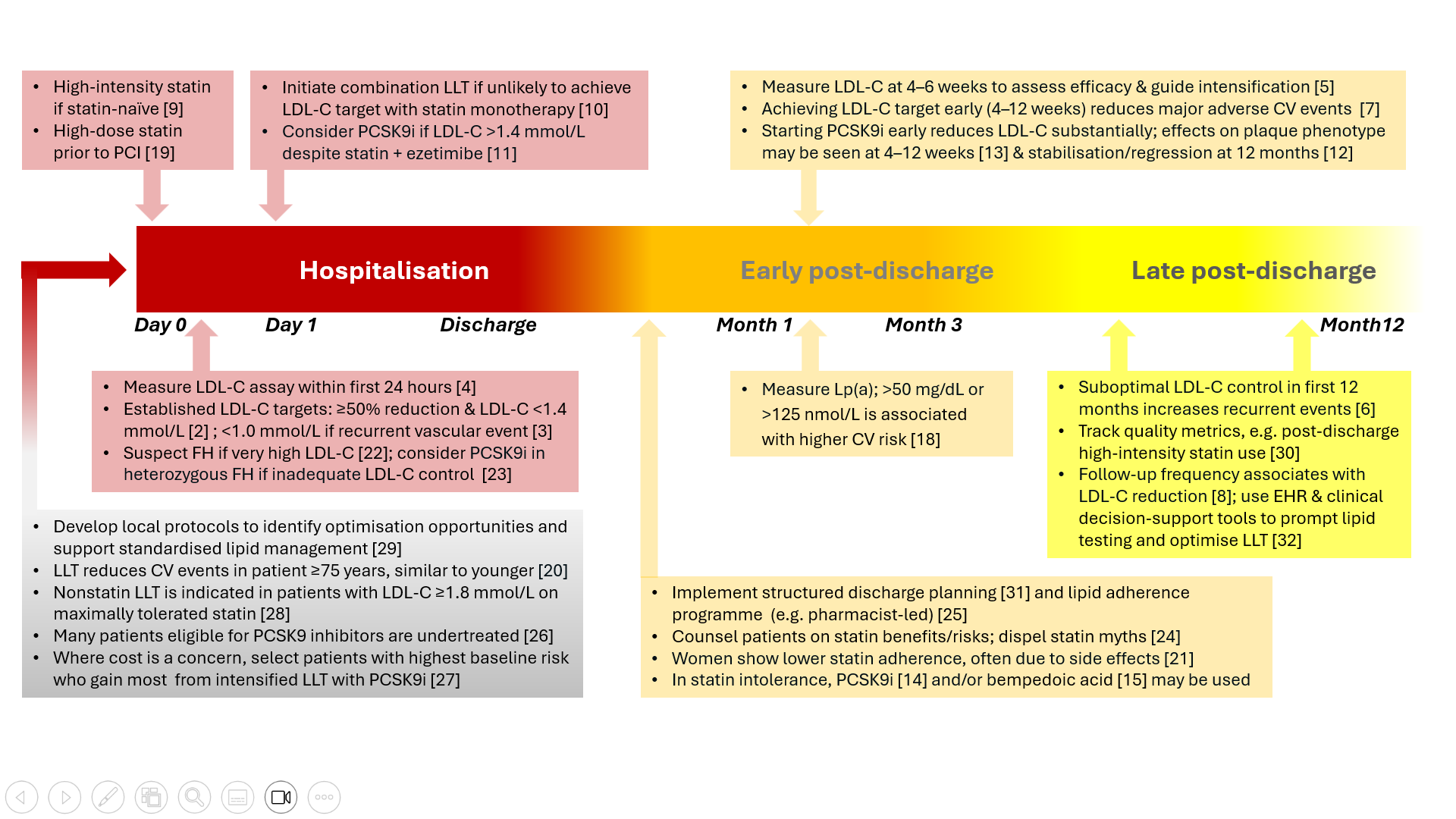
CV: cardiovascular; EHR: electronic health record: LDL-C: low-density lipoprotein cholesterol; LLT: lipid-lowering therapy: PCI: percutaneous coronary intervention; PCSK9i: proprotein convertase subtilisin/kexin type 9 inhibitor
CONCLUSION
This expert consensus underscores the critical role of timely LLT in patients with ACS to reduce recurrent cardiovascular events and optimise long-term outcomes. Evidence supports early initiation of high-intensity statins, combination therapy with ezetimibe or PCSK9is when indicated, and consideration of nonstatin alternatives in statin-intolerant patients. Special populations, including older adults, women, and patients with FH, require tailored approaches to maximise benefit. By synthesising the available evidence and expert experience, these recommendations provide a structured, evidence-informed framework for post-ACS lipid management in Singapore.
Annex S1. ACcurate COnsensus Reporting Document (ACCORD) guidelines.
Annex S2. Panel of experts.
Acknowledgements
The authors would like to thank BioQuest Solutions Pvt Ltd for its editorial support.
Data availability statement
All data generated or analysed during this study are included in this article and its supplementary files.
REFERENCES
- Nabovati E, Farzandipour M, Sadeghi M, et al. A global overview of acute coronary syndrome registries: A systematic review. Curr Probl Cardiol 2023;48:101049.
- Singapore Heart Foundation. Heart disease statistics. https://www.myheart.org.sg/health/heart-disease-statistics/. Accessed 16 Jun 2025.
- Pogran E, Burger AL, Zweiker D, et al. Lipid-lowering therapy after acute coronary syndrome. J Clin Med 2024;13:2043.
- Ray KK, Haq I, Bilitou A, et al. Treatment gaps in the implementation of LDL cholesterol control among high- and very high-risk patients in Europe between 2020 and 2021: the multinational observational SANTORINI study. Lancet Reg Health Eur 2023;29:100624.
- D’Andrea D, Capone V, Bellis A, et al. PCSK9 inhibitors “fast track” use versus “stepwise” lipid-lowering therapy in patients with acute coronary syndrome: A retrospective single-center study in a “real-world” population. J Clin Med 2025;14:2992.
- Kim AR, Han JY, Kim M, et al. Cardiovascular outcomes of early LDL-C goal achievement in patients with very-high-risk ASCVD. Cardiol Ther 2025;14:101-15.
- Patti G, Cumitini L, Bosco M, et al. Impact of a personalized, strike early and strong lipid-lowering approach on low-density lipoprotein-cholesterol levels and cardiovascular outcome in patients with acute myocardial infarction. Eur Heart J Cardiovasc Pharmacother 2025;11:143-54.
- Mach F, Baigent C, Catapano AL, et al. 2019 ESC/EAS guidelines for the management of dyslipidaemias: lipid modification to reduce cardiovascular risk. Atherosclerosis 2019;290:140-205.
- Chapter of Cardiologists, College of Physicians, Singapore, Academy of Medicine, Singapore. Clinical practice guidelines: management of lipids. December 2023. https://www.ams.edu.sg/view-pdf.aspx?file=media/7093_fi_79.pdf&ofile=AMS+CPG+Management+of+Lipids_+FINAL.pdf. Accessed 20 March 2025.
- Poh KK, Chin CT, Tong KL, et al. Cholesterol goal achievement and lipid-lowering therapy in patients with stable or acute coronary heart disease in Singapore: results from the Dyslipidemia International Study II. Singapore Med J 2019;60:454-62.
- Gargiulo P, Basile C, Galasso G, et al. Strike early-strike strong lipid-lowering strategy with proprotein convertase subtilisin/kexin type 9 inhibitors in acute coronary syndrome patients: real-world evidence from the AT-TARGET-IT registry. Eur J Prev Cardiol 2024;31:1806-16.
- Navar AM, Matskeplishvili ST, Urina-Triana M, et al. Prospective evaluation of lipid management following acute coronary syndrome in non-Western countries. Clin Cardiol 2021;44:955-62.
- Cannon CP, Blazing MA, Giugliano RP, et al. Ezetimibe added to statin therapy after acute coronary syndromes. N Engl J Med 2015;372:2387-97.
- Cholesterol Treatment Trialists’ (CTT) Collaboration, Baigent C, Blackwell L, et al. Efficacy and safety of more intensive lowering of LDL cholesterol: A meta-analysis of data from 170,000 participants in 26 randomised trials. Lancet 2010;376:1670-81.
- Fujioka S, Shishikura D, Kusumoto H, et al. Clinical impact of ≥50% reduction of low density lipoprotein cholesterol following lipid lowering therapy on cardiovascular outcomes in patients with acute coronary syndrome. J Clin Lipidol 2025;19:247-55.
- Schwartz GG, Steg PG, Szarek M, et al. Alirocumab and cardiovascular outcomes after acute coronary syndrome. N Engl J Med 2018;379:2097-107.
- Kang D, Choi KH, Yang S, et al. Clinical significance of low-density lipoprotein cholesterol percentage reduction and attained levels after percutaneous coronary intervention. CMAJ 2025;197:E442-52.
- Sabatine MS, De Ferrari GM, Giugliano RP, et al. Clinical benefit of evolocumab by severity and extent of coronary artery disease: analysis from FOURIER. Circulation 2018;138:756-66.
- Marston NA, Giugliano RP, Park JG, et al. Cardiovascular benefit of lowering low-density lipoprotein cholesterol below 40 mg/dL. Circulation 2021;144:1732-34.
- Pitt B, Loscalzo J, Ycas J, et al. Lipid levels after acute coronary syndromes. J Am Coll Cardiol. 2008;51:1440-5.
- Massia D, Giovas P, Papadopoulos N, et al. Real-world management of hypercholesterolemia in patients after acute coronary syndrome in Greece. Atheroscler Plus 2025;60:20-6.
- Rajtar-Salwa R, Bobrowska B, Batko J, et al. Lipid-lowering therapy after acute coronary syndrome in outpatient practice – how to achieve goal. J Clin Med 2023;12:6579.
- Claessen BE, Guedeney P, Gibson CM, et al. Lipid management in patients presenting with acute coronary syndromes: A review. J Am Heart Assoc 2020;9:e018897.
- Ray KK, Cannon CP, McCabe CH, et al. Early and late benefits of high-dose atorvastatin in patients with acute coronary syndromes: results from the PROVE IT–TIMI 22 trial. J Am Coll Cardiol 2005;46:1405-10.
- de Oliveira Almeida G, Balieiro C, Bertoli ED, et al. Cardiovascular benefits of statin plus ezetimibe combination therapy versus statin monotherapy in acute coronary syndrome: a meta-analysis of randomized controlled trials. Coron Artery Dis 2025;36:9-17.
- Yifan D, Yue M, Yubin Z, et al. The impact of early in-hospital use of PCSK9 inhibitors on cardiovascular outcomes in acute coronary syndrome patients: A systematic review and meta-analysis. Int J Cardiol 2024;399:131775.
- Shi W, Xu Y, Zhou L, et al. In-hospital initiation of a PCSK9 inhibitor in patients with acute coronary syndrome: A systematic review and meta-analysis of randomized controlled trials. Medicine (Baltimore) 2024;103:e37416.
- Nicholls SJ, Kataoka Y, Nissen SE, et al. Effect of evolocumab on coronary plaque phenotype and burden in statin-treated patients following myocardial infarction. JACC Cardiovasc Imaging 2022;15:1308-21.
- Nicholls SJ, Puri R, Anderson T, et al. Effect of evolocumab on progression of coronary disease in statin-treated patients: the GLAGOV randomized clinical trial. JAMA 2016;316:2373-84.
- Yano H, Horinaka S, Ishimitsu T. Effect of evolocumab therapy on coronary fibrous cap thickness assessed by optical coherence tomography in patients with acute coronary syndrome. J Cardiol 2020;75:289-95.
- Hakim DI, Qhabibi FR, Yusuf M, et al. Safety and efficacy of PCSK9 inhibitors and effect on coronary plaque phenotype in statin-treated patients following acute coronary syndrome: a systematic review and meta-analysis. Egypt Heart J 2024;76:135.
- Moriarty PM, Thompson PD, Cannon CP, et al. Efficacy and safety of alirocumab vs ezetimibe in statin-intolerant patients, with a statin rechallenge arm: the ODYSSEY ALTERNATIVE randomized trial. J Clin Lipidol 2015;9:758-69.
- Nissen SE, Lincoff AM, Brennan DM, et al. Bempedoic acid and cardiovascular outcomes in statin-intolerant patients. N Engl J Med 2023;388:1353-64.
- Ridker PM, Lei L, Ray KK, et al. Effects of bempedoic acid on CRP, IL-6, fibrinogen and lipoprotein(a) in patients with residual inflammatory risk: a secondary analysis of the CLEAR Harmony trial. J Clin Lipidol 2023;17:297-302.
- Ridker PM, Danielson E, Fonseca FAH, et al. Rosuvastatin to prevent vascular events in men and women with elevated C-reactive protein. N Engl J Med 2008;359:2195-207.
- Witt C, Renfroe LG, Lyons TS. Discordance between serum cholesterol concentration and atherogenic lipoprotein particle number in people with metabolic disease: A systematic review. Diabetes Obes Metab 2025;27:2940-54.
- Wang G, Xia M, Liang C, et al. Prognostic value of elevated lipoprotein(a) in patients with acute coronary syndromes: A systematic review and meta-analysis. Front Cardiovasc Med 2024;11:1362893.
- Anayat S, Majid K, Nazir HS, et al. Meta-analysis on the efficacy of high-dose statin loading before percutaneous coronary intervention in reducing no-reflow phenomenon in acute coronary syndrome. Am J Cardiol 2023;195:9-16.
- Brandts J, Ray KK. Maturation of lipid management in the 2025 ACC/AHA acute coronary syndrome guideline: What it is and what it might have been. J Am Coll Cardiol 2025;85:2107-10.
- Arnold N, Koenig W. PCSK9 inhibitor wars: how does inclisiran fit in with current monoclonal antibody inhibitor therapy? Considerations for patient selection. Curr Cardiol Rep 2022;24:1657-67.
- Toth PP, Worthy G, Gandra SR, et al. Systematic review and network meta-analysis on the efficacy of evolocumab and other therapies for the management of lipid levels in hyperlipidemia. J Am Heart Assoc 2017;6:e005367.
- Zhang L, Li B, Chen W, et al. Effects of inclisiran, alirocumab, evolocumab, and evinacumab on lipids: a network meta-analysis. Rev Cardiovasc Med 2025;26:25248.
- Ruscica M, Sirtori CR, Carugo S, et al. Bempedoic acid: for whom and when. Curr Atheroscler Rep 2022;24:791-801.
- Mousavi I, Nambi V, Abushamat LA, et al. Bempedoic Acid in Secondary Prevention. Am J Prev Cardiol 2024;19:100715.
- Sayed A, Brophy JM. Effect of bempedoic acid on mortality and cardiovascular events in primary and secondary prevention: A post-hoc analysis of the CLEAR Outcomes trial. Int J Cardiol 2024;406:132074.
- González-Aguado N, Franco-Hita R, Larrubia-Valle JI, et al. Impact of Lipoprotein(a) on Residual Cardiovascular Risk After an Acute Coronary Syndrome. J Clin Med 2026;15:1688.
- Loh W, Yeo C, Koh X, et al. Lipoprotein (a) may be Falsely Lowered in Patients with Ischaemic Heart Disease with Elevated Troponin T. Heart Lung and Circ 2024;33:S358-9.
- Gencer B, Marston NA, Im K, et al. Efficacy and safety of lowering LDL cholesterol in older patients: a systematic review and meta-analysis of randomised controlled trials. Lancet 2020;396:1637-43.
- Bots SH, Inia JA, Peters SAE. Medication adherence after acute coronary syndrome in women compared with men: A systematic review and meta-analysis. Front Glob Womens Health 2021;2:637398.
- Amor-Salamanca A, Castillo S, Gonzalez-Vioque E, et al. Genetically confirmed familial hypercholesterolemia in patients with acute coronary syndrome. J Am Coll Cardiol 2017;70:1732-40.
- Raal FJ, Stein EA, Dufour R, et al. PCSK9 inhibition with evolocumab (AMG 145) in heterozygous familial hypercholesterolaemia (RUTHERFORD-2): A randomised, double-blind, placebo-controlled trial. Lancet 2015;385:331-40.
- Raal F, Durst R, Bi R, et al. Efficacy, safety, and tolerability of inclisiran in patients with homozygous familial hypercholesterolemia: results from the ORION-5 randomized clinical trial. Circulation 2024;149:354-62.
- Lim HM, Ng CJ, Abdullah A, et al. Online health information behaviour and its association with statin adherence in patients with high cardiovascular risk: A prospective cohort study. Digit Health 2024;10:20552076241241250.
- Oñatibia-Astibia A, Malet-Larrea A, Gastelurrutia MÁ, et al. Community pharmacist interventions to improve adherence to lipid-lowering medication and their influence on clinical outcomes: a systematic review and meta-analysis. J Eval Clin Pract 2021;27:451-63.
- Smith A, Johnson D, Banks J, et al. Trends in PCSK9 inhibitor prescriptions before and after the price reduction in patients with atherosclerotic cardiovascular disease. J Clin Med 2021;10:3828.
- Fonarow GC, Keech AC, Pedersen TR, et al. Cost-effectiveness of evolocumab therapy for reducing cardiovascular events in patients with atherosclerotic cardiovascular disease. JAMA Cardiol 2017;2:1069-78.
- Sabatine MS, Giugliano RP, Keech AC, et al. Evolocumab and clinical outcomes in patients with cardiovascular disease. N Engl J Med 2017;376:1713-22.
- Sionis A, Catapano AL, De Ferrari GM, et al. Improving lipid management in patients with acute coronary syndrome: the ACS Lipid EuroPath tool. Atheroscler Suppl 2020;42:e65-71.
- Gouda P, Welsh RC, Padarath M, et al. Landscape of lipid management following an acute coronary syndrome event: survey of Canadian specialists. CJC Open 2020;2:625-31.
- Cajanding RJ. Effects of a structured discharge planning program on perceived functional status, cardiac self-efficacy, patient satisfaction, and unexpected hospital revisits among filipino cardiac patients: A randomized controlled study. J Cardiovasc Nurs 2017;32:67-77.
- Shah NN, Ghazi L, Yamamoto Y, et al. Pragmatic trial of messaging to providers about treatment of HyperLIPIDemia (PROMPT-LIPID): A randomized clinical trial. Circ Cardiovasc Qual Outcomes 2024;17:e010335.
- Writing Committee Members, Blumenthal RS, Morris PB, et al. 2026 ACC/AHA/AACVPR/ABC/ACPM/ADA/AGS/APhA/ASPC/NLA/PCNA Guideline on the Management of Dyslipidemia: A Report of the American College of Cardiology/American Heart Association Joint Committee on Clinical Practice Guidelines. Circulation 2026;153:e1154-276.
- Mach F, Koskinas KC, Roeters van Lennep JE, et al. 2025 Focused Update of the 2019 ESC/EAS Guidelines for the management of dyslipidaemias. Eur Heart J 2025;46:4359-78.
Not applicable as no study subjects were recruited. All data were derived from expert opinion and literature review as part of a structured Delphi consensus process.
Amgen provided financial support exclusively for the purpose of publication and had no role in the conception, study design, data interpretation, or the decision to submit this manuscript. Ru San Tan received an honorarium for chairing meetings. Jonathan Yap received speaker honoraria from Abbott, Biosensors, Biotronik, Boston Scientific, Edwards, Johnson & Johnson, Medtronic, and Terumo. Colin Yeo received honoraria from Amgen. Kian Keong Poh, Peter Chee Hong Yan, Pow Li Chia, Michael Chun Leng Lim, David Foo, Fahim Haider Jafary, and Natalie Si Ya Koh declare that they have no affiliations with or involvement in any organisation or entity with any financial interest in the subject matter or materials discussed in this manuscript.
Dr Ru San Tan, Department of Cardiology, National Heart Centre Singapore, Duke-NUS Medical School, Singapore, Singapore. Email: [email protected]
