

ABSTRACT
Introduction: Sexual health is integral to women’s overall well-being, yet sexual dysfunction among women of reproductive age remains under-recognised and undertreated. These guidelines provide evidence-based recommendations for the screening, assessment, education, and optimisation of sexual health in this population.
Methods: A multidisciplinary workgroup developed these guidelines using the Grading of Recommendations, Assessment, Development, and Evaluations (GRADE)-ADOLOPMENT framework, supplemented by the appraisal of existing international guidelines using the Appraisal of Guidelines for Research & Evaluation II instrument. Two systematic reviews evaluated evidence on sexual health screening and interventions in women aged 21–45 years. The recommendations were adopted, adapted, or developed de novo based on certainty of evidence, balance of benefits and harms, patient values, resource considerations, and local applicability, and are classified as either evidence-informed or consensus-based with source attributions documented in a master recommendation table. Consensus was achieved through iterative discussion and formal voting across 2 rounds, with all recommendations reaching 100% agreement among the 20-member workgroup.
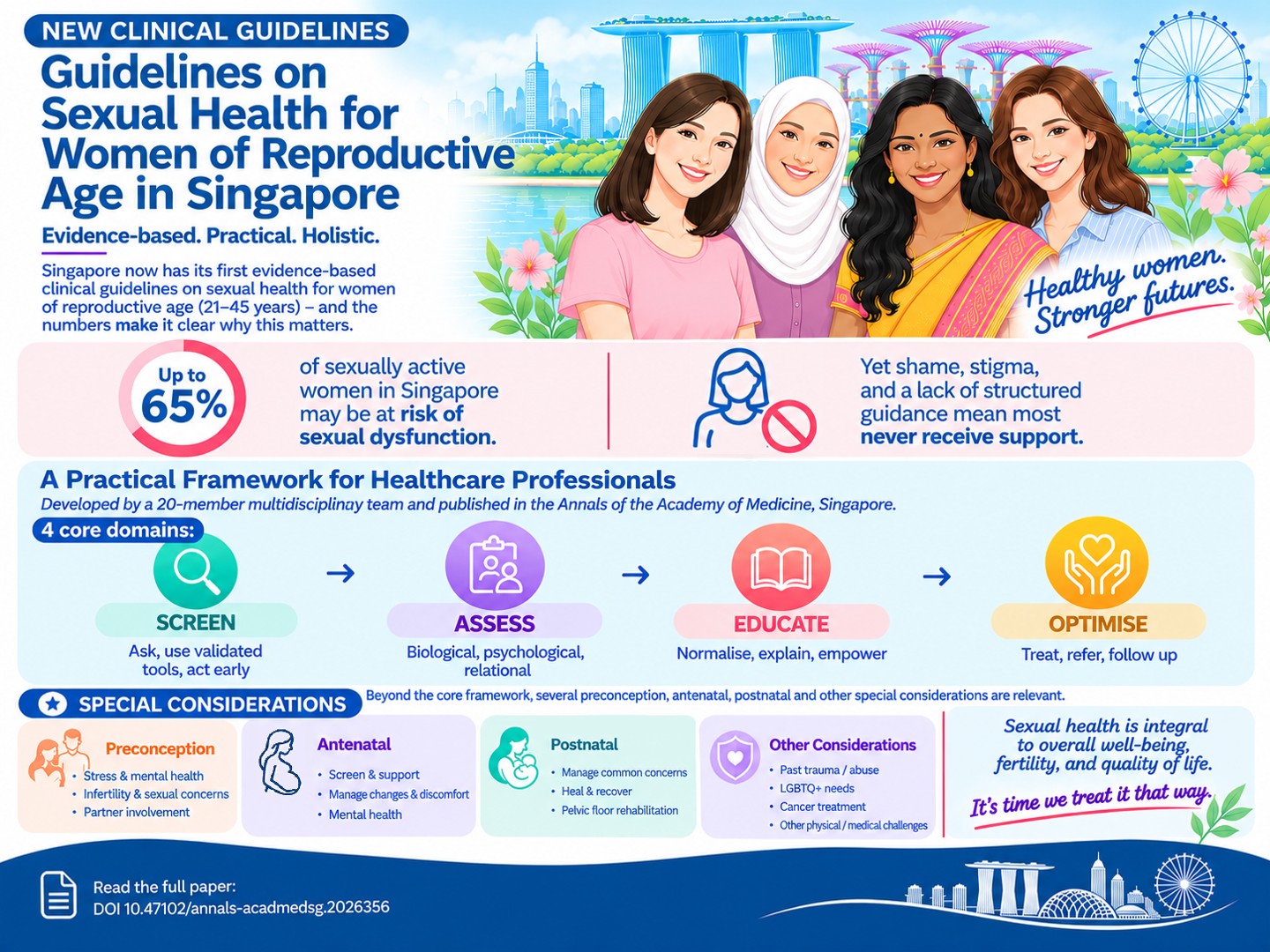
Results: These guidelines cover 4 core domains: (1) Screening—promoting proactive sexual health discussions and the use of validated assessment tools; (2) Assessment—differentiating transient concerns from persistent dysfunction while considering medical, psychosocial, and relational contributors; (3) Education—enhancing sexual health literacy, promoting safe practices, and normalising variation; and (4) Optimisation—managing underlying medical conditions, promoting pelvic health, and facilitating timely specialist access. Special considerations for preconception, antenatal, postnatal, and other high-risk groups are included.
Conclusion: These guidelines provide a structured, evidence-based framework to support sexual health among women of reproductive age. Implementation may enhance early identification and promote holistic, patient-centred management of sexual dysfunction, supporting positive sexual and overall health outcomes.
CLINICAL IMPACT
What is New
- To the authors’ knowledge, these are the first Singapore-specific consensus guidelines on sexual health for women of reproductive age, informed by systematic reviews, formulated based on international clinical practice guidelines, and appraised through the Evidence-to-Decision framework.
- These guidelines address under-recognised sexual dysfunction through 4 evidence-based domains: screening, assessment, education, and optimisation.
Clinical Implications
- These guidelines also integrate medical, psychosocial, and relational considerations with practical tools for diverse care settings, and enable systematic implementation moving from ad hoc to holistic, patient-centred care across preconception, pregnancy, and postpartum periods.
- These recommendations enhance healthcare delivery through validated screening tools, multidisciplinary collaboration, and improved patient engagement.
Sexual health is a fundamental component of overall health and well-being. The World Health Organization (WHO) defines sexual health as “a state of physical, emotional, mental, and social well-being related to sexuality; it is not merely the absence of disease, dysfunction, or infirmity.”1 Achieving sexual health requires a positive and respectful approach to sexuality and relationships, as well as the opportunity for pleasurable and safe sexual experiences free from coercion, discrimination, and violence.1 The attainment and maintenance of sexual health therefore depend on the protection and fulfilment of individuals’ sexual rights.1
Healthy sexual expression confers important physical and psychological benefits, contributing to emotional intimacy, relationship satisfaction, and overall quality of life.1-3 Female sexual function forms a central component of this broader construct and plays a significant role in fertility and reproductive health, particularly during preconception, pregnancy, and the postpartum period.3,4
Despite its importance, sexual dysfunction among women remains under-recognised and undertreated globally. Global estimates suggest that 50.75% (95% confidence interval [CI] 41.73–59.78) of reproductive-age women experience some form of sexual problem, including low sexual desire, arousal difficulties, orgasmic disorders, or sexual pain.4 Prevalence estimates vary considerably across countries and populations in Asia with ethnic and sociocultural factors similar to those in Singapore, with studies reporting rates of general sexual difficulty ranging from 5.8% to 63.3%.5 This reflects differences in sample characteristics, assessment tools, and cut-off values applied.5 Variation in definitions, diagnostic criteria, and assessment instruments complicates direct comparison across studies and settings, and further complicates identification and clinical management.4
The local burden
In Singapore, various studies have found that women of reproductive age are at risk of sexual problems. In a survey of 514 women aged 21–35 years using the 6-item Female Sexual Function Index (FSFI)-6, 46.5% (no CI reported) were identified to be at risk of sexual dysfunction,6 with poorer body image and lower self‑esteem—rather than body mass index (BMI)—emerging as the strongest modifiable predictors.7 A preconception cohort study found that 58.9% of participants had low sexual function and this was associated with a 27% reduction in fecundability (fecundability ratio 0.73; 95% CI 0.54–0.99) after adjusting for demographic and reproductive factors.8 More recently, a cross-sectional study of 755 sexually active women of reproductive age found that nearly two-thirds (65.0%) were identified to be at risk for sexual dysfunction on the FSFI-6,6 exceeding both regional and global estimates.4,9 Chinese ethnicity and lower spousal educational attainment were independently associated with lower scores, with early postpartum status emerging as an additional risk factor in sensitivity analyses.9 These findings point to sociocultural and relational determinants as primary drivers of sexual dysfunction in this population—a pattern supported by psychophysiological evidence demonstrating comparable arousal responses between East Asian and Euro-Canadian women, suggesting that cultural rather than biological factors predominate.9,10
Collectively, these data indicate that low sexual function is highly prevalent among women of reproductive age in Singapore, shaped by sociocultural and relational factors specific to this population, and likely underestimated given persistently low rates of help-seeking. This burden carries relevance in the context of Singapore’s record-low resident total fertility rate of 0.87 in 2025,11 where unaddressed sexual problems during the reproductive years have implications beyond individual well-being.
Barriers to care
Many women do not perceive sexual health concerns as medical issues and may hesitate to raise them with healthcare professionals (HCPs), citing uncertainty about how to initiate conversations, confusion about which clinician to consult, and societal stigma.12-14 Among Chinese women—the largest ethnic group in Singapore and the group with the highest burden of low sexual function—shame is the main barrier to help-seeking across all ages, education levels, and marital statuses, with only 7.5% (no CI reported) seeking medical consultation and up to 39.0% (no CI reported) never seeking help, meaning those most affected are least likely to present.15 HCPs may also avoid these discussions because of personal discomfort, insufficient training, time constraints, or concerns about professional boundaries.12-14 In Singapore, these challenges are compounded by cultural norms discouraging open discussion of sexual health and the absence of a structured local framework to guide clinical practice.
Existing international guidelines from the 5th International Consultation on Sexual Medicine (ICSM 2024),16 American College of Obstetricians and Gynecologists (ACOG),14 the International Society for the Study of Women’s Sexual Health (ISSWSH),12 National Institute for Health and Care Excellence (NICE),17,18 and the Practice Committees of the American Society for Reproductive Medicine and the Society for Reproductive Endocrinology and Infertility19 provide valuable reference points. However, these were developed for Western contexts and do not address the sociocultural landscape, healthcare infrastructure, or patient population of Singapore. Key dimensions absent from international frameworks include the disproportionate burden among Chinese women and its cultural underpinnings, the centrality of relational factors such as spousal educational attainment, the vulnerability of early postpartum women, and the structural barriers to help-seeking that make proactive HCP-initiated screening essential. These gaps collectively underscore the need for Singapore-specific, culturally informed clinical guidelines.
Addressing female sexual health is essential to improving overall health, relationships, and reproductive outcomes.1,12,14 HCPs are uniquely positioned to integrate sexual health into routine care across the reproductive life course, requiring multidisciplinary collaboration and recognition of sexual health as an essential component of comprehensive clinical care.1,12,14 To the authors’ knowledge, these guidelines represent Singapore’s first consensus-based, locally contextualised clinical practice guidelines on sexual health for women of reproductive age (21–45 years). They were developed through a structured process that maps the existing evidence base via the Grading of Recommendations, Assessment, Development, and Evaluations (GRADE)-ADOLOPMENT framework,20 which appraises relevant international clinical practice guidelines and applies expert consensus to formulate recommendations appropriate to the Singapore context. Where existing international recommendations were applicable, these were incorporated and contextualised locally. Where gaps in the international literature or Singapore evidence base were identified, recommendations were developed from the available evidence and expert consensus. In doing so, these guidelines aim to provide a practical, culturally informed, and evidence-based resource to support HCPs across all disciplines in delivering holistic sexual healthcare.
Definitions and classifications
Female sexual dysfunction (FSD) encompasses various disorders affecting sexual desire, arousal, orgasm, and sexual pain. According to the Diagnostic and Statistical Manual of Mental Disorders, Fifth Edition,21 FSD includes:
- Female sexual interest/arousal disorder: A lack or significant reduction in sexual interest/arousal.
- Female orgasmic disorder: Difficulty achieving orgasm or reduced orgasmic intensity.
- Genito-pelvic pain/penetration disorder (GPPPD): Pain during intercourse or penetration attempts, fear or anxiety about pain, or tensing of pelvic floor muscles.
A diagnosis of FSD requires symptoms that are persistent (≥6 months), present in at least 75% of sexual encounters, cause significant personal distress, and cannot be better explained by relationship factors, significant stressors, cultural influences, medical conditions, substance use, or another mental disorder.21
Target audience
The guidelines aim to provide practical, evidence-based recommendations for screening, assessment, education, intervention, and referral, and are intended for all HCPs to recognise and manage sexual health concerns among women of reproductive age. These HCPs include general practitioners, family physicians, obstetricians and gynaecologists, nurses, midwives, pelvic health physiotherapists, and mental health professionals such as psychiatrists, psychologists, counsellors, and social workers.
METHODS
These guidelines were developed by the College of Obstetricians and Gynaecologists Singapore (COGS) Sexual Health Guidelines Work Group using the GRADE-ADOLOPMENT framework.20 The framework20 includes the Evidence-to-Decision (EtD) framework, which offers a rigorous, systematic process for appraising the balance of desirable and undesirable effects; the certainty of the supporting evidence; cost considerations; and the feasibility, acceptability, and equity implications of the recommendations. This methodology integrates the adoption of high-quality evidence-based recommendations from existing guidelines, their adaptation to the Singapore clinical and cultural context, and the development of new recommendations where evidence gaps exist.
Guidelines development group
The multidisciplinary workgroup comprised obstetricians and gynaecologists, family physicians, physiotherapists, psychologists, sexual health specialists, mental health professionals, public health practitioners, and representatives from relevant professional societies. Members were selected based on their expertise in sexual health, women’s health, and guidelines methodology. All participants declared potential conflicts of interest prior to participation.
Evidence review and identification of main reference
A review was undertaken to map the existing evidence base and landscape of clinical practice guidelines relevant to sexual health among women of reproductive age. This review identified the scope, focus areas, and quality of available international guidelines and literature, informing the selection of main reference guidelines and the design of the subsequent systematic reviews.
Based on the review, ICSM 2024, WHO 2022, ISSWSH 2019, ACOG 2019, NICE 2021, NICE 2020, Practice Committees of the American Society for Reproductive Medicine and the Society for Reproductive Endocrinology and Infertility, and the study by Grussu et al. were identified as the primary references, given their comprehensive scope and methodological rigour.12,14,16-19,22,23 Candidate reference guidelines were appraised using the Appraisal of Guidelines for Research & Evaluation II24 instrument to assess their quality across domains, including scope and purpose, stakeholder involvement, rigour of development, clarity of presentation, applicability, and editorial independence.
Underlying evidence was updated through the subsequent systematic reviews to ensure that recommendations adopted or adapted from these references reflected current best evidence prior to incorporation into the Singapore guidelines.
Systematic reviews for evidence update
Two systematic reviews were conducted to update the underlying evidence base before recommendations were adopted or adapted. The first review focused on sexual health screening and education among women of reproductive age (aged 21–45 years), including validated tools, optimal timing of screening, and implementation strategies across primary care and specialist settings. The second review examined sexual health interventions, including both pharmacological and non-pharmacological approaches, with emphasis on their effectiveness in women of reproductive age between 21 and 45 years. Searches were conducted in PubMed, Embase, Scopus, and PsycINFO, supplemented by grey literature from guidelines repositories and relevant health agency websites. Search strategies combined controlled vocabulary and keywords related to sexual health, screening, intervention, and women of reproductive age. Studies published from January 2015 to December 2025 were reviewed. The review methodology and reporting were aligned with the Preferred Reporting Items for Systematic Reviews and Meta-Analyses (PRISMA) 2020 checklist to ensure completeness, transparency, and rigour in the conduct of these systematic reviews.
Recommendation development
Using the updated evidence from the systematic reviews, the certainty of evidence for each outcome was graded as high, moderate, low, or very low using the GRADE framework.20 This assessment considered risk of bias, inconsistency, indirectness, imprecision, and publication bias across the included studies.
For each recommendation, an EtD table was constructed to guide the workgroup through a structured and transparent appraisal process. The EtD tables set out the certainty of evidence; the balance of desirable and undesirable effects; patient values and preferences; resource implications; and the feasibility, acceptability, and equity considerations relevant to the implementation in the Singapore context. Based on this appraisal, the strength of each recommendation was classified as strong or conditional, reflecting the degree of confidence that the desirable effects of adherence to the recommendation outweigh the undesirable effects.
This appraisal also guided the decision to adopt, adapt, or develop each recommendation de novo. Recommendations were adopted verbatim when supported by high-certainty evidence and directly applicable to the Singapore context. Where modifications were required to reflect local epidemiology, cultural norms, healthcare infrastructure, or patient preferences, recommendations were adapted. In areas where no suitable recommendations were identified, new recommendations were developed de novo following a review of the available literature. The completed EtD tables and resulting recommendations informed the subsequent consensus discussion and are included in Supplementary Appendix S5.
Consensus process
Consensus was achieved through iterative discussion during face-to-face and virtual meetings. Each workgroup member had 3 response choices for each recommendation: “Agree,” “Disagree,” or “I have comments.” The members were given 1 vote per recommendation. The voting results were shared immediately. Points of disagreement were addressed through facilitated discussion and subsequent re-voting following revision of the recommendations. All final recommendations achieved 100% agreement among workgroup members following iterative discussion and re-voting where required.
External consensus
The draft guidelines underwent external review by sexual health specialists and relevant professional bodies, namely, COGS; Perinatal Society of Singapore; College of Family Physicians Singapore (CFPS); Society for the Study of Andrology and Sexology, Singapore; SingHealth Psychology Committee of Practice, Singapore; Singapore Medical Association, Singapore; Singapore Physiotherapy Association, Singapore; Health Promotion Board, Singapore; and Singapore Urological Association, Singapore. The guidelines will be reviewed at least every 5 years, or earlier if substantial new evidence emerges. Implementation will be supported through the development of practical tools, including patient education materials and training resources for HCPs.
RESULTS
The guidelines are organised into 4 core sections: (1) screening, (2) assessment, (3) education, and (4) optimisation, with additional special considerations elaborated in the Discussion section. The summary of findings and full framework are included in Supplementary Appendices S2 and S5.
Screening
Recognising the importance of sexual health is the first step in addressing sexual concerns among women of reproductive age.1,12,14 Sexual health is integral to overall health and is closely intertwined with physical, emotional, and mental well-being.2,12,14,16,25 It encompasses not only contraception and sexually transmitted infections but also sexual function, including desire, arousal, orgasm, and satisfaction.3,12,14,16,22,25
Women should feel comfortable discussing sexual health, including sexual function, with HCPs.1,12-14,16 Many women expect HCPs to initiate appropriate discussions about sexual health, underscoring the need for proactive engagement by clinicians.12,26 Incorporating questions on sexual activity, contraceptive use, sexually transmitted infections, pregnancy planning, sexual function, and sexual concerns into routine history-taking can facilitate these discussions, while being sensitive to cultural context and clinical relevance.12,14,16,25,26
A wide range of HCPs may be approached for sexual health concerns, including gynaecologists, general practitioners, family physicians, nurses, midwives, physiotherapists specialising in women’s and pelvic health, psychiatrists, psychologists, and counsellors.12-14,16,17,25 HCPs should regard sexual health assessment and management as important and legitimate elements of routine clinical care.12-14,16,17,25,27 Normalising discussions and demonstrating openness and sensitivity help create a safe environment that encourages disclosure of sexual concerns.12,14,16,17,28
Assessment
HCPs should screen for sexual problems as part of routine sexual health evaluation, applying a biopsychosocial framework that recognises that physiological factors rarely operate in isolation.1,12,14,16,17,25 Assessment should include medication review (particularly selective serotonin reuptake inhibitors and combined oral contraceptives), thyroid function, and pelvic floor dysfunction, alongside psychological contributors such as changes in body image, identity, and self-esteem, and sociocultural factors including stigma around sexuality.1,7,12,14,16,17,25 Management should be stepwise, addressing modifiable causes before considering referral to specialist sexual health services.1,12,14,16,17,25
Brief, validated questionnaires, such as the FSFI-6, can be used to screen for risk of FSD.6,29-31 The FSFI-6 has been validated and shown to maintain high sensitivity and specificity in identifying females at risk of FSD, when using the cut-off of ≤19.6 The FSFI-6 offers the advantage of a rapid screening tool that optimises workflow, where scores at or below the cut-off could indicate a need for further assessment.6 However, the FSFI-6 is not recommended for use with sexually inactive, pregnant, or perinatal women, as low scores can be associated with the absence of recent sexual activity and/or intercourse rather than providing an accurate reflection of sexual functioning.6
Singapore data further highlight the importance of assessing psychosocial contributors beyond physical parameters, with lower body image (odds ratio [OR] 1.84; 95% CI 1.04–3.25) and lower self-esteem (OR 3.03; 95% CI 1.76–5.22) independently associated with low sexual function, and being stronger predictors than BMI.7 HCPs should therefore consider incorporating brief assessments of body image and self-esteem into routine sexual health evaluations.7
When appropriate, and with consent, involving a woman’s partner may be beneficial.32,33 Sexual function is influenced by both partners, and communication within the couple correlates with multiple domains, including desire, arousal, lubrication, orgasm, satisfaction, erectile function, and pain.32-34
The Permission, Limited Information, Specific Suggestions, Intensive Therapy (PLISSIT) model provides a structured framework for preliminary screening and early intervention.28,35 This approach encourages the patient to express sexual symptoms or concerns, offers information about how certain changes can affect sexuality or sexual functioning, provides specific suggestions to address these issues, and guides referral for specialised therapy if necessary.28,35
HCPs should distinguish between sexual concerns or difficulties and persistent sexual dysfunction that meets diagnostic criteria for FSD outlined in the Diagnostic and Statistical Manual of Mental Disorders, Fifth Edition.12,14,16,21 Many sexual problems are transient and may resolve with basic education or minor interventions.12,14 Early and appropriate intervention may prevent escalation into more significant sexual dysfunction.12,14
It is also important to consider the implication of medical conditions and their treatments on women’s sexuality.12,14,16,25 Some illnesses, such as hypertension, coronary heart disease, diabetes, and thyroid dysfunction, can cause physical and emotional changes that affect sexual functioning.12,14,16,25 Clinicians managing these conditions should integrate sexual health considerations into routine care or refer to specialist sexual health services when appropriate.12,14,16,25
Education
HCPs should counsel women on consistent condom use and other measures to promote sexual health and prevent sexually transmitted infections,1,22,36 including offering or recommending human papillomavirus vaccination in accordance with the national immunisation schedule and catch-up eligibility, noting that vaccination is most effective when given before sexual debut.22,37
Education should also address normal fluctuations in sexual function related to the menstrual cycle, stress, or relationship dynamics.4,12,14,16,25,38,39 For instance, patients should be informed that it is common to experience changes in sexual function related to the menstrual cycle, periods of stress, or interpersonal conflict.4,12,14,16,25,38,39 Sexual frequency may also vary with age and relationship duration.4,12,14,16,25,38,39
Intervention is warranted only when changes in sexual function cause distress and the woman desires treatment.21 HCPs should provide balanced information about treatment options and respect patient preferences and autonomy in decision-making.1 HCPs should be aware that a significant proportion of treatment response in sexual dysfunction studies may reflect placebo effects, and that self-monitoring and engagement in treatment itself may confer therapeutic benefit.16 This supports the value of structured follow-up and patient engagement regardless of the specific intervention chosen.12,14,16
Optimisation
A holistic approach to optimising sexual health requires addressing medical, psychological, sociocultural, and relational factors.12,14,16,25,40
Medical conditions, such as hypertension, coronary heart disease, diabetes, obesity, and thyroid dysfunction, may impair sexual function.7,40 Optimising the management of these conditions can improve overall well-being and sexual function.
Gynaecological conditions, such as endometriosis and adenomyosis, can also affect sexual function.12,14,17,25,41 Early diagnosis and multidisciplinary management may prevent impairment of sexual quality of life.12,14,17,25,41 Symptoms such as menstrual irregularities, pelvic pain, dyspareunia, dysmenorrhoea, and subfertility are common.8,12,14,25,42 HCPs should encourage patients to disclose sexual problems and refer them for gynaecological evaluation when appropriate.12,17
HCPs should enquire about the presence of any sexual problems in male partners, when possible, as male sexual issues can affect the female partner’s sexual function.12,14,16,32 Referrals to andrology services should be provided when indicated.12,14
Regular physical activity43,44 and pelvic floor muscle training42,44,45 can improve sexual function and overall well-being. Referral to pelvic health physiotherapy may be beneficial for the co-management of pelvic floor disorders, such as overactive bladder, urinary incontinence, prolapse, and pelvic pain.12,14,16,17,25,42,45,46
Sexual concerns that do not respond to first-line interventions or potential cases of sexual dysfunction should be referred to HCPs who specialise in sexual health.12,14,16,17,25 Establishing a directory of specialised community resources may facilitate timely referrals.12,14,16,17
Relationship factors, including poor communication about sexual issues, conflict, or dissatisfaction, can also impair sexual function.12,14,16,17,32 Addressing these issues and offering referrals to couples’ counselling or psychology services can be beneficial.12,14,16,17,25
Optimal sexual function is associated with good mental health.47 The experience of psychosocial and interpersonal factors, such as daily life stressors, caregiver duties, family responsibilities, or major life events, can negatively impact sexual function.7,12,14,16,17,25,32 HCPs should explicitly ask about the experience of stressors or use brief screeners, such as the Depression Anxiety Stress Scale-10 (DASS-10), to help with this.12,14,16,48 Follow-up questions can be asked to assess if the experience of stress has been chronic. Referral to counselling or psychology services should be offered as desired.12,14,16,17,25
Mental disorders (e.g. depressive or bipolar disorder, anxiety disorder, post-traumatic stress disorder [PTSD], psychotic disorder), along with their treatments, can affect sexual function.12,14,16,17,25 HCPs should enquire about mental health conditions and current psychotropic treatments, educate patients on the potential impact on sexual function, and offer referral to specialist sexual health services when appropriate.12,14,16,17,25
When poor sexual function is linked to past or ongoing sexual or physical trauma, referral to agencies that specialise in trauma-focused assessment or support should be considered.12,27
Beyond the core framework of screening, assessment, education, and optimisation, several preconception, antenatal, postnatal, and other special considerations are relevant to women’s sexual health.14,16,17,25
Preconception considerations
Sexual concerns may increase when couples are trying to conceive because of heightened stress.8,19,49 HCPs should ask about stress related to conception efforts19,49,50 or use brief screeners such as DASS-10 to assess for stress.48,50 Infertility, defined as failure to achieve pregnancy after 12 months or more of regular unprotected intercourse (or 6 months for women aged 35 years and older), can also contribute to distress and sexual difficulties.19,22,49 Early evaluation and treatment may be indicated based on medical history and age.19,49
In assessing sexual health concerns, administering brief validated questionnaires, such as the FSFI-6, may also help in screening for risk of sexual dysfunction.6,8,31,49,50 HCPs should also involve the woman’s partner in discussion when appropriate.50
Preconception counselling should include guidance on sexual function.19,49 Couples trying to conceive are encouraged to have regular intercourse, and reproductive efficiency is highest with intercourse every 1 to 2 days during the fertile window.19 However, the optimal frequency of intercourse should reflect the couple’s comfort and preferences.19 Coital position does not affect fecundability, and remaining supine after intercourse does not facilitate sperm transport.19 Although some lubricants may affect sperm parameters in vitro, their use does not significantly impact fertility in practice.19,51 HCPs should inform patients that sexual function may be affected as routines become ritualised and stress increases during efforts to conceive.19 Support should be offered if desired.19,49
Optimising preconception sexual health involves managing medical conditions that may affect sexual function, including chronic illnesses and their treatments.8,19,49,50
Screening for sexual problems in male partners and providing appropriate andrology referrals may also be helpful.8,19,50
Maintaining good mental health is crucial.8,49 HCPs should ask about psychosocial and interpersonal factors that may impact sexual function, such as stress and relationship issues.8,49,50 Addressing mental health conditions and offering referrals to counselling or psychological services is important.8,18,49,50
Antenatal considerations
Pregnancy brings biological, psychological, and social changes that may alter sexual health. Sexual function often declines during pregnancy and may not return to pre-pregnancy levels postpartum.14,16,23 Factors such as hyperemesis, fear of obstetric complications, physical changes, difficulty with coital positioning, changes in body image, fatigue, and urinary complaints may contribute to this decline.14,17,23
HCPs should screen for sexual function in any trimester as part of routine antenatal care.14,16,23,39 The PLISSIT model can facilitate sensitive discussions.16,28
HCPs should proactively inform patients and their partners that sexual health concerns can be addressed during antenatal visits.14,23,39 Sexual function should be discussed early in antenatal care, before hospital discharge postpartum, and at postnatal visits.23,39 Patients should be reminded that their baseline for comparison is their pre-pregnancy sexual function.23
If there are no medical or obstetric complications, couples can be reassured that they can continue sexual activity if they desire.23,39 Education about common changes in sexual function and frequency across pregnancy trimesters should be provided.23,39 Advice on adapting coital positions and using lubricants to address dyspareunia can support sexual adjustment.23,39,51
Screening tools such as the FSFI-6 and inclusion of the partner’s sexual function, when appropriate, provide a more complete picture of sexual functioning.6,14,16,23
Vulval pain can be managed by avoiding irritants and providing appropriate symptomatic treatment.14,16,23 Referral to pelvic health physiotherapy may support women with GPPPD and help prepare for vaginal birth.14,17,23,42,46 The use of lubricants or vaginal moisturisers is recommended for vaginal dryness to alleviate discomfort.14,16,23,51
HCPs should screen for antenatal depression and anxiety using tools such as the Edinburgh Postnatal Depression Scale (EPDS).14,18,23,52 The 10-item EPDS is fast to administer, has been validated in Singapore, and screens for common mood concerns that may occur during the antenatal and postnatal period.52 Referrals to mental health professionals should be made when necessary.14,18,23,53
Postnatal considerations
The postpartum period is associated with significant changes in sexual function, including dyspareunia, reduced lubrication, difficulty reaching orgasm, vaginal bleeding, and decreased desire.14,16,23,38,54 Sexual dysfunction is common and may significantly impact quality of life.14,16,23,54
Screening for sexual function should occur during postpartum reviews using routine questioning and tools such as the PLISSIT model to facilitate discussion.14,16,23,28,54 Screening with the FSFI-6 may help evaluate the risk of sexual dysfunction.6,14
Ensuring that perineal injuries have healed and addressing any bladder or bowel difficulties are essential.14,17,23,54 Referral to specialists may be necessary for managing complications.14,17,23,54
Education on the typical timeline for resuming sexual intercourse, often after 6 weeks postpartum when healing is complete, is important.23,55 Explaining how hormonal changes, breastfeeding, contraception, and fatigue can affect sexual function helps women understand and manage these changes.14,16,23,38,54
Optimisation includes pelvic health physiotherapy for post-delivery trauma and pelvic floor rehabilitation.14,17,23,42,45,54 Addressing lifestyle factors, such as stress and fatigue, can improve sexual desire and arousal.16,23,54 Encouraging personal time and self-care supports emotional well-being.23,54 Gradual return to exercise based on postpartum physical activity guidelines54,56 and screening for postpartum depression and anxiety using tools such as the EPDS18,33,52,54 are essential components of holistic care.
Special considerations
Women with a history of physical, emotional, or sexual abuse are more likely to experience sexual dysfunction.12,14,16,23,25 Trauma-related symptoms, including PTSD, can affect sexual function.12,14,16,23,25 Referral to agencies that provide specialised trauma-focused support should be considered.12,14,16,23
Women presenting with high-risk mental health concerns, such as suicidal ideation, require urgent psychiatric referrals.18
HCPs should provide inclusive, sensitive care for lesbian, gay, bisexual, trans, queer or questioning+ individuals, who may have unique sexual health needs and distinct concerns. Providing appropriate resources and referrals is important.1,22,26
Women who have undergone cancer treatments may experience sexual health challenges because of the hormonal, physical, and emotional effects of chemotherapy, radiation, or surgery.12,14,16,25 Personalised, multidisciplinary support and referral to specialised services are recommended. Individualised care plans, early diagnosis, and sustained partner involvement have been associated with superior therapeutic outcomes in women with sexual pain disorders.12,14,16,25
Women with specific physical, cognitive and/or medical challenges may also experience unique sexual health concerns.1,22 Recognition of these needs and referral to specialised services are essential.1,22
CONCLUSION
Female sexual health is a vital component of women’s overall well-being and quality of life.1 HCPs play a critical role in identifying, addressing, and managing sexual health concerns across the reproductive life course.12,14,16,17,25 By integrating sexual health into routine clinical practice and adopting a patient-centred, multidisciplinary approach, HCPs can significantly improve the recognition and management of sexual health concerns among women of reproductive age.12,14,16-19,23,25 Ongoing professional education, interdisciplinary collaboration, and clearly defined referral pathways are essential to ensuring holistic, high-quality, and personalised care.12,14,16-19,23,25 These guidelines provide a comprehensive, evidence-based framework to support HCPs in delivering effective sexual healthcare. Their implementation may facilitate earlier identification of sexual health concerns, promote informed discussions between patients and clinicians, and enable coordinated care across disciplines.12,14,16-19,23,25
Supplementary materials
Appendix S1. Timeline for the development of Sexual Health Guidelines for Women of Reproductive Age of 21 to 45 years in Singapore.
Appendix S2. Expanded summary statements of Singapore Guidelines on Sexual Health for Women of Reproductive Age.
Appendix S3. Female Sexual Function Index-6.
Appendix S4. The PLISSIT model.
Appendix S5. Online supplementary material GRADE-ADOLOPMENT framework for Singapore Guidelines on Sexual Health for Women of Reproductive Age of 21 to 45 years.
About the workgroup
The COGS-IPRAMHO Sexual Health Guidelines for Women of Reproductive Age in Singapore Study Group comprised key members practising in the field of women’s health, including members from COGS; IPRAMHO, led by KK Women’s and Children’s Hospital (KKH), in partnership with SingHealth Polyclinics (SHP) and the National Healthcare Group Polyclinics (NHGP); National University Hospital and Yong Loo Lin School of Medicine, National University of Singapore. The initiative is supported by the research group of IPRAMHO, an NMRC-funded joint collaborative platform centre grant of KKH, SHP, and NHGP. The developed guidelines are also supported by the Perinatal Society of Singapore; CFPS; Society for the Study of Andrology and Sexology, Singapore; SingHealth Psychology Committee of Practice, Singapore; Singapore Medical Association, Singapore; Singapore Physiotherapy Association, Singapore; Health Promotion Board, Singapore; and Singapore Urological Association, Singapore.
Disclaimer
This guide serves as an educational aid and reference for HCPs practising in the field of women’s health in Singapore. It presents evidence-based and practice-based clinical and psychosocial recommendations for practitioners to consider incorporating into their service. This guide does not define a standard of care nor dictate an exclusive course of management. These guidelines are intended to support, not replace, clinical judgement. Management approaches may vary and must be responsive to individual patient needs, available resources, and institutional limitations. Always consider the patient’s preferences, cultural background, and specific health circumstances when applying these recommendations.
REFERENCES
- World Health Organization. Defining sexual health, 5 October 2006. https://www.who.int/teams/sexual-and-reproductive-health-and-research/key-areas-of-work/sexual-health/defining-sexual-health. Accessed 11 July 2026.
- Panahi R, Anbari M, Javanmardi E, et al. The effect of women’s sexual functioning on quality of their sexual life. J Prev Med Hyg 2021;62:E776-81.
- Gianotten WL, Alley JC, Diamond LM. The Health Benefits of Sexual Expression. Int J Sex Health 2021;33:478-93.
- Alidost F, Pakzad R, Dolatian M, et al. Sexual dysfunction among women of reproductive age: A systematic review and meta-analysis. Int J Reprod Biomed 2021;19:421-32.
- Koops TU, Briken P. Prevalence of Female Sexual Function Difficulties and Sexual Pain Assessed by the Female Sexual Function Index: A Systematic Review. J Sex Med 2018;15:1591-9.
- Isidori AM, Pozza C, Esposito K, et al. Development and validation of a 6-item version of the female sexual function index (FSFI) as a diagnostic tool for female sexual dysfunction. J Sex Med 2010;7:1139-46.
- Husain FS, Lulla D, Tay TKC, et al. Association between body mass index, body image and self-esteem with sexual function: A survey of young women in Singapore. Ann Acad Med Singap 2023;52:190-8.
- Loy SL, Ku CW, Cheung YB, et al. Fecundability in reproductive aged women at risk of sexual dysfunction and associated risk factors: a prospective preconception cohort study. BMC Pregnancy Childbirth 2021;21:444.
- Lee JJML, Sia AL, Tan TY, et al. Low sexual function, domain-specific patterns, and associated factors among reproductive-aged women in a multi-ethnic Asian population: a cross-sectional study. J Sex Med 2026;23:qdag288.
- Yule M, Woo JST, Brotto LA. Sexual arousal in East Asian and Euro-Canadian women: a psychophysiological study. J Sex Med 2010;7:3066-79.
- Department of Statistics, Singapore. Total Fertility Rate 2025, 6 May 2026. https://www.singstat.gov.sg/news/total-fertility-rate-2025. Accessed 11 July 2026.
- Parish SJ, Hahn SR, Goldstein SW, et al. The International Society for the Study of Women’s Sexual Health Process of Care for the Identification of Sexual Concerns and Problems in Women. Mayo Clin Proc 2019;94:842-56.
- Kingsberg SA, Schaffir J, Faught BM, et al. Female sexual health: Barriers to optimal outcomes and a roadmap for improved patient-clinician communications. J Womens Health (Larchmt) 2019;28:432-43.
- American College of Obstetricians and Gynecologists’ Committee on Practice Bulletins—Gynecology. Female Sexual Dysfunction: ACOG Practice Bulletin Clinical Management Guidelines for Obstetrician–Gynecologists, Number 213. Obstet Gynecol 2019;134:e1-18.
- Luo L, Huang J, Li H. Barriers to sexual health-seeking behaviors for Chinese women. Arch Womens Ment Health 2023;26:581-8.
- Rowen TS, Abdo C, El Kak F, et al. Evaluation and management of hypoactive sexual desire disorder in women. Recommendations from the 5th International Consultation on Sexual Medicine (ICSM 2024). Sex Med Rev 2026;14:qeaf057.
- National Institute for Health and Care Excellence. Pelvic floor dysfunction: prevention and non-surgical management, 9 December 2021. www.nice.org.uk/guidance/ng210. Accessed 11 July 2026.
- National Institute for Health and Care Excellence. Antenatal and postnatal mental health: clinical management and service guidance, updated 11 February 2020. https://www.nice.org.uk/guidance/cg192/resources/antenatal-and-postnatal-mental-health-clinical-management-and-service-guidance-pdf-35109869806789. Accessed 11 July 2026.
- American Society for Reproductive Medicine. Optimizing natural fertility: a committee opinion. Fertil Steril 2022;117:53-63.
- Klugar M, Lotfi T, Darzi AJ, et al. GRADE guidance 39: using GRADE-ADOLOPMENT to adopt, adapt or create contextualized recommendations from source guidelines and evidence syntheses. J Clin Epidemiol 2024;174:111494.
- American Psychiatric Association. Diagnostic and Statistical Manual of Mental Disorders, Fifth Edition. American Psychiatric Publishing, Inc; 2013.
- World Health Organization. WHO guideline on self-care interventions for health and well-being, 2022 revision. https://iris.who.int/server/api/core/bitstreams/ebbf577b-d3ff-4a81-b0d9-bdf3b1e9f2ac/content. Accessed 11 July 2026.
- Grussu P, Vicini B, Quatraro RM. Sexuality in the perinatal period: A systematic review of reviews and recommendations for practice. Sex Reprod Healthc 2021;30:100668.
- Brouwers MC, Kho ME, Browman GP, et al. AGREE II: advancing guideline development, reporting and evaluation in health care. CMAJ 2010;182:E839-42.
- Krakowsky Y, Grober ED. A practical guide to female sexual dysfunction: An evidence-based review for physicians in Canada. Can Urol Assoc J 2018;211-6.
- Dukes C. Talking about S-E-X in Healthcare Settings: Let’s Get Clinical. Dela J Public Health 2025;11:46-9.
- Stanley EE, Pope RJ. Characteristics of Female Sexual Health Programs and Providers in the United States. Sex Med 2022;10:100524.
- Annon JS. The PLISSIT Model: A Proposed Conceptual Scheme for the Behavioral Treatment of Sexual Problems. J Sex Educ Ther 1976;2:1-15.
- Sesari SS, Elvira SD, Priyatini T, et al. A cross-sectional analysis in order to validate the translation of FSFI-6 to Bahasa Indonesia. F1000Res 2022;11:842.
- Chongcharoen P, Choobun T, Khanuengkitkong S. Female sexual function index for screening of female sexual dysfunction using DSM-5-TR criteria in Thai women: A prospective cross-sectional diagnostic study. PLoS One 2024;19:e0298935.
- Ho TTT, Le MT, Truong QV, et al. Validation of the Vietnamese Translation Version of the Female Sexual Function Index in Infertile Patients. Sex Med 2020;8:57-64.
- Refaee M, Fereyduni S. The effectiveness of sexual skills training on improving self-control, empathy and marital satisfaction of married women in Shiraz. Psychol Woman J 2022;3:1-14.
- Zamani M, Moradi M, Esmaily H, et al. The effectiveness of “Women’s Postpartum Sexual Health Program (WPSHP)” on Iranian women’s postpartum sexual health: A randomized clinical trial. Health Care Women Int 2024;45:969-83.
- Mallory AB, Stanton AM, Handy AB. Couples’ Sexual Communication and Dimensions of Sexual Function: A Meta-Analysis. J Sex Res 2019;56:882-98.
- Ozdemir SC, Gangal AD, Erenel AS. The Effect of Sexual Counseling Based on PLISSIT and EX-PLISSIT Models on Sexual Function, Satisfaction, and Quality of Life: A Systematic Review and Meta-Analysis. Arch Sex Behav 2024;53:3485-513.
- Juyani AK, Zarei F, Maasoumi R. Efficacy of mobile-based educational intervention using Instructional Systems Design in promoting preventive behaviors for sexually transmitted infections among Iranian women: a randomized controlled trial. BMC Public Health 2024;24:510.
- HealthHub. Preventing HPV infection: HPV Vaccination, 21 January 2026. https://www.healthhub.sg/health-conditions/faqs-on-hpv-and-hpv-immunisation. Accessed 11 July 2026.
- Musavi M, Rahimzadeh M, Tabaghdeh MH, et al. The effect of sexual education on the postpartum women’s sexual self-confidence and self-efficacy: a theory-based intervention. BMC Pregnancy Childbirth 2024;24:64.
- Keshavarz M, Ghorbani A, Allahqoli L, et al. A non-randomized study of sexual health education on the sexual function of primigravid women. BMC Womens Health 2025;25:226.
- Das J, Yadav S, Arora B. Comorbidities of Female Patients with Sexual Dysfunction in a Psychiatry Clinic: A Cross-Sectional Study. J Psychosex Health 2022;4:162-70.
- Pluchino N, Wenger JM, Petignat P, et al. Sexual function in endometriosis patients and their partners: effect of the disease and consequences of treatment. Hum Reprod Update 2016;22:762-74.
- Morin M, Dumoulin C, Bergeron S, et al. Multimodal physical therapy versus topical lidocaine for provoked vestibulodynia: a multicenter, randomized trial. Am J Obstet Gynecol 2021;224:189.e1-12.
- Solmaz G. The effect of yoga on hypertensive women’s blood pressure and sexual life: A randomized controlled trial. Pak J Med Sci 2025;41:501-4.
- Tabatabaie NS, Rasti Borujeni F, Tavakol Z, et al. The Effect of Yoga and Pelvic Floor Muscle Exercise on Sexual Function and Sexual Self-esteem of Reproductive-age Women: A Randomized Clinical Trial. Int J Community Based Nurs Midwifery 2024;12:188-98.
- Schütze S, Heinloth M, Uhde M, et al. The effect of pelvic floor muscle training on pelvic floor function and sexuality postpartum. A randomized study including 300 primiparous. Arch Gynecol Obstet 2022;306:785-93.
- Kokate VA, Bulbuli A. Effect of Pelvic Floor Rehabilitation in Women with Primary Vaginismus: A Clinical Trial. J South Asian Feder Obs Gynae 2025;17:475-80.
- Kalmbach DA, Pillai V. Daily affect and female sexual function. J Sex Med 2014;11:2938-54.
- Halford KW, Frost ADJ. Depression Anxiety Stress Scale-10: A Brief Measure for Routine Psychotherapy Outcome and Progress Assessment. Behaviour Change 2021;38:221-34.
- Bond JC, White KO, Abrams JA, et al. Sexual dysfunction, distress, and care-seeking among females during the preconception period. Am J Obstet Gynecol 2023;229:43.e1-12.
- Ku CW, Tan YB, Tan SI, et al. Holistic preconception care: Providing real-time guidance via a mobile app to optimise maternal and child health. Ann Acad Med Singap 2024;53:306-17.
- Krychman M, Hemmady K, Su L, et al. A randomized trial on the safety and efficacy of sensate water-based and silicone-based personal lubricants for relief of intimate discomfort associated with vaginal dryness. J Sex Med 2025;22:746-54.
- Zeng N, Goh PHY, Chua TE, et al. Does the Edinburgh Postnatal Depression Scale (EPDS) identify antenatal depression and antenatal anxiety disorders? A validation study in Singapore. J Affect Disord 2025;380:496-504.
- Cengizhan SÖ, Uçar T. The Effect of Mindfulness-Based Sexual Counseling on Sexual Distress, Attitude Toward Sexuality, and Body Image Concerns in Pregnant Women: A Randomized Controlled Trial. J Midwifery Womens Health 2023;68:611-8.
- Ng C, Szücs A, Goh LH. Common maternal health problems and their correlates in early post-partum mothers. Women’s Health (Lond) 2024;20:17455057241227879.
- Artieta-Pinedo I, Paz-Pascual C, Garcia-Alvarez A, et al. Resumption of sexual activity after childbirth and its related factors in Spanish women, a cross-sectional study. Midwifery 2025;141:104259.
- Health Promotion Board, Singapore. Singapore Physical Activity Guidelines (SPAG), Start Moving, Make Every Move Count, July 2022. https://www.activesgcircle.gov.sg/hubfs/SPAG/SPAG%20Guidebook_Revised%20Edition%202022.pdf. Accessed 11 July 2026.
Not applicable, as no study subjects were recruited.
This project was supported by the Integrated Platform for Research in Advancing Metabolic Health Outcomes of Women and Children (IPRAMHO) under a National Medical Research Council Grant (NMRC/CG/C008A/2017_KKH). Author Chee Wai Ku is supported by the National Medical Research Council, Ministry of Health, Singapore (NMRC/MOH-001773-00). All workgroup members completed written conflict of interest declarations prior to participation, covering financial relationships with pharmaceutical companies, device manufacturers, research funding, and consultancy arrangements. The declarations were reviewed by the co-chairs, who determined that no conflicts of interest requiring management or disclosure were identified. No commercial funding was accepted from pharmaceutical or device manufacturers.
Dr Jean-Jasmin Mi-Li Lee, Family Medicine Service, KK Women’s and Children’s Hospital, 100 Bukit Timah Road, Singapore 229899. Email: [email protected].
