

Dear Editor,
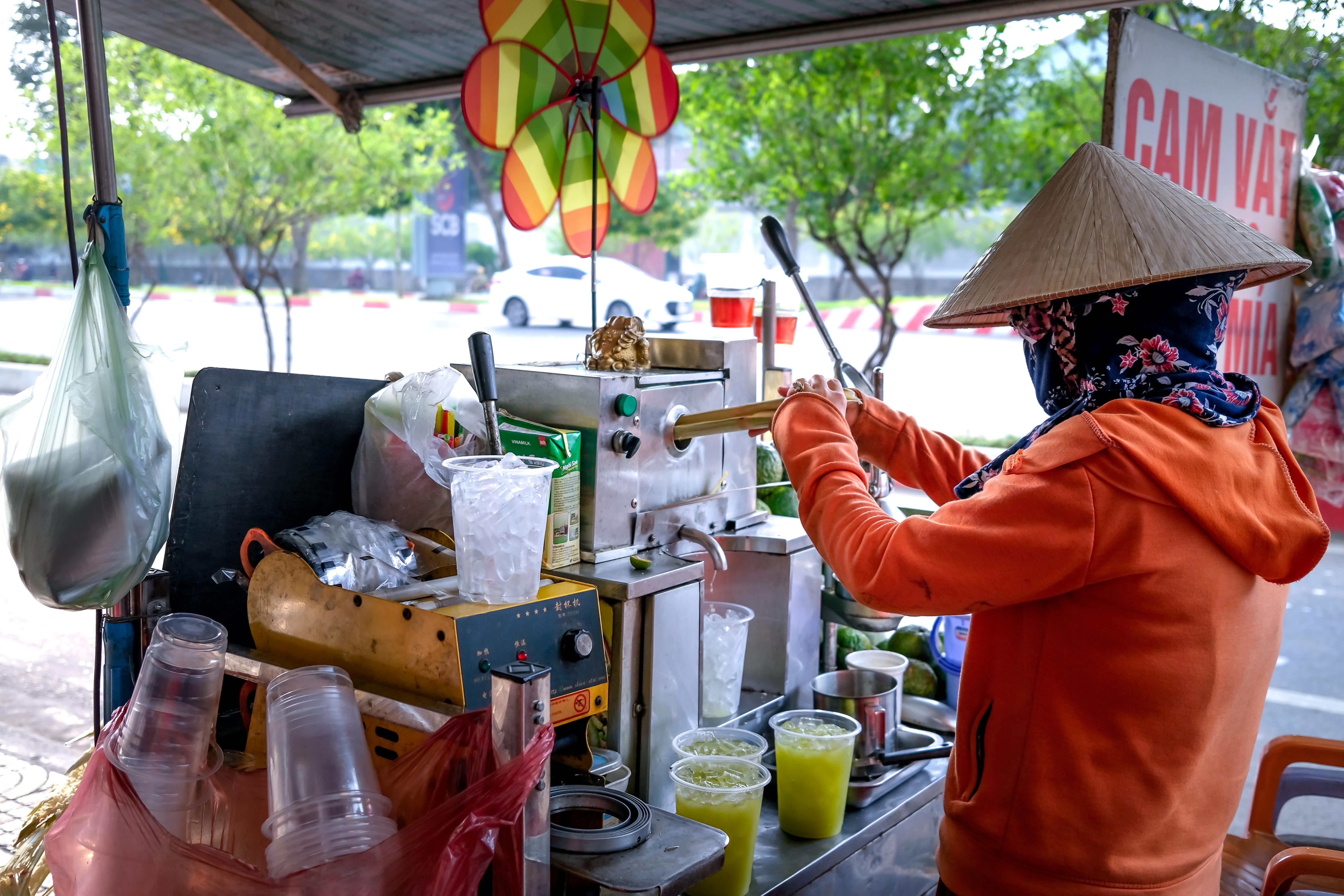
Of all hand injuries encountered at an emergency department, 54% are sustained in the workplace,1 in part contributed by occupational injuries among food and beverage operators that caused a loss of 16,197 man-hours in 2021 alone.2 Commonplace in Singapore and in parts of South and Southeast Asia is the sugarcane juicer, a machine typically operated by sole proprietorship drink stalls within food centres and more importantly, a dangerous cause of workplace accidents. We highlight the severity of sugarcane juicer-related hand injuries that have resulted in permanent disabilities in 3 representative patients. We also review occupational health risks of such technology to understand the contributing factors involved and how they can be prevented.
Three patients, 2 in their 50s and a teenager, were managed for mutilating hand injuries from operating the sugarcane juicer. The teenage girl (patient A) and one of the older women (patient B) injured their dominant right hand while cleaning the machine without switching it off. They sustained extensive degloving injuries and avulsion amputations of all fingers except for the ring and little fingers in patient A’s case, and the little finger in patient B’s case. Patient C used the juicer without its safety guard so that more sugarcane stems could be fed inside, and sustained a left mangled hand. She suffered comminuted fractures in her index, middle, ring and little fingers; a thumb avulsion amputation and a proximal degloving skin injury. For all 3 patients, initial management involved debridement and amputation of the unsalvageable digits. Eventual resurfacing of their wounds required complex flap reconstruction—an extended lateral arm flap, bi-lobed pedicled groin flap and posterior interosseous artery flap. Patient A had a total of 10 surgeries to regain a basic hand consisting of a toe-to-thumb transfer and 2 digits. Patient B underwent a total of 13 surgeries to restore an opposable thumb and 2 digits involving staged creation of the webspace with a flap, and thumb lengthening. Patient C also underwent digit lengthening and first webspace reconstruction. Nine surgeries were performed to obtain an opposable thumb and a mitten hand appearance.
The resultant percentage of disability in these mutilating hand injuries ranged from 30% for complete thumb loss to 70% when all 5 digits are involved (cases 2 and 3) according to A Guidelines to the Assessment of Traumatic Injuries and Occupational Diseases for Work Injury Compensation published by the Singapore Ministry of Manpower. None of our patients returned to pre-injury level of work activity.
Sugarcane roller injuries have a high morbidity due to the following unique yet destructive characteristics. First, unlike a typical roller press, serrations on sugarcane rollers exert a firm grip and generate high compressive and forward tractional forces that crush, deglove and avulse a wide area of skin, neurovascular bundles, tendon and bones.3,4 Second, sugarcane machine rollers are positioned with a gap that allows the level of injury to extend proximally to the metacarpals, resulting in a “metacarpal hand” deformity.3,5 Third, radial digits, especially the thumb, are usually involved as demonstrated in our case series. This is likely related to the action of feeding sugarcane stems and retrieving its debris. Fourth, Pseudomonas aeruginosa and Fusarium sacchari wound infections are common due to contact with pesticides and agricultural produce.4,6
To reduce these injuries, we identified key contributing intrinsic and extrinsic factors, including defective equipment, inadequate protective gear and work-related factors, such as duration of repetitive work, poor concentration, carelessness and multitasking.7 Bad luck and God’s will were also frequently cited in a survey, suggesting lack of self-empowerment.8 This may be unsurprising as these operators are often self-employed and received only basic education, making it difficult for them to overcome occupational hazards alone.8,9 Furthermore, there is no minimum age required to operate the machine even though young workers are more likely to sustain occupational hand injuries due to inexperience.4,10
Therefore, a multipronged approach involving all stakeholders should be adopted. First, a regulatory committee should be established to ensure food vendors undergo and pass mandatory safety training before being allowed to operate the sugarcane juicer. This training should teach a uniform and correct operating procedure that allows users to safely set up, operate and shutdown the machine. Food handlers should also be educated and empowered to understand their personal responsibility in preventing workplace injuries, for example, by taking breaks at intervals and performing regular machine maintenance. Refresher courses should be readily offered. Second, the same task force should implement mandatory directives, such as being of a minimum age to operate the machine, wearing personal protective equipment and placing warning signs and labels, to ensure that working conditions meet safety standards. Third, the governing body could also introduce safety guidelines to which the design of the sugarcane juicer must comply. For example, all rollers should be assembled in a horizontal orientation that allows sugarcane stems to be fed into the machine by gravity, instead of manual force. Fail-safe mechanisms, such as an automatic power-down if a jam is detected or the need to turn it off before cleaning and maintenance, must be fitted. The machine should also be designed with a safety covering over the rollers and a box-shaped fixture at the top to prevent the entire hand from entering the rollers. A device intercalated in the electric circuit to prevent reversal of rotation should be installed as well. Fourth, regular workplace inspections and risk assessments could be carried out by the regulatory committee to identify and address any machinery defects or unsafe workplace practices. These visits could also serve as avenues for food vendors to raise and address any safety concerns. Fifth, a registry of hand injuries sustained from the sugarcane juicer may be helpful to assess the effectiveness of the recommendations implemented by monitoring the incidence of injuries. The same registry can also be responsible for keeping track of near-miss accidents, which food operators can report through an open communication channel. This registry can even be expanded to include other common kitchen machinery such as food grinders, another common source of mutilating hand injuries not addressed in this article.
In conclusion, sugarcane juicer roller injuries lead to severe permanent disabilities due to intrinsic and extrinsic factors, such as machinery design, handler’s inexperience and lack of an authority to oversee mandatory training and safety standards of machinery. To prevent costly loss of income and productivity to these individuals and society, these shortcomings should be addressed immediately.
Disclosure
The authors have no relevant financial or non-financial interests to disclose.
REFERENCES
- Hey HWD, Seet CM. Hand injuries seen at an emergency department in Singapore. Eur J Emerg Med 2010;17:343-45.
- Ministry of Manpower, Singapore. Workplace Safety and Health Report 2022. https://www.mom.gov.sg/-/media/mom/documents/safety-health/reports-stats/wsh-national-statistics/wsh-national-stats-2022.pdf. Accessed 3 June 2023.
- Mahajan A, Khajuria RK. Mutilated Hand due to Sugarcane Machine–Challenge to an Orthopaedician (Case series of three patients). J Orthop Case Rep 2016;6:50.
- Ahmad SR. Sugarcane extraction machine injuries of the hand. In: BMC Proceedings. Springer 2015:1-2.
- Rajput R, Daver B. Sugarcane Crushing Machine Injuries – Mechanism of Injury, Classification and Management. Indian J Plast Surg 1999;32:50-53.
- Bansal Y, Chander J, Kaistha N, et al. Fusarium sacchari, a cause of mycotic keratitis among sugarcane farmers–a series of four cases from North India. Mycoses 2016;59:705-09.
- Wong SH, Choy KK. A Review of Back Injury Cases Notified to the Ministry of Manpower from 2011 to 2012. Ann Acad Med Singap 2015;44:244-51.
- David S, Goel K. Knowledge, attitude, and practice of sugarcane crushers towards hand injury prevention strategies in India. Injury Prevention 2001;7:329-30.
- Ng ZX, Teo LT, Go KT, et al. Major workplace related accidents in Singapore: A major trauma centre’s experience. Ann Acad Med Singap 2010;39:920-7.
- Hertz RP, Emmett EA. Risk factors for occupational hand injury. J Occup Med 1986;28:36-41.
