

ABSTRACT
Introduction: Conservative kidney management (CKM) is a recognised treatment option for selected patients with chronic kidney disease stage 5 (CKD G5), but prognostic indicators for mortality and optimal timing for palliative care transition remain uncertain.
Method: This is a single-centre, prospective cohort study of CKD G5 patients who opted for CKM, conducted between April 2021 and September 2024, with longitudinal monitoring of Edmonton Symptom Assessment System Revised: Renal; Palliative Performance Scale (PPS); Resources Utilisation Group–Activities of Daily Living (RUG-ADL) scale; Clinical Frailty Score; Karnofsky Performance Score; and clinical and laboratory data. Primary outcomes included identifying baseline mortality predictors and validating the PPS for survival estimation. Cox proportional hazards models were used to identify independent predictors of mortality.
Results: Among 109 patients (mean age 79.8±7.3 years, 64.2% female), 62 (56.9%) died during follow-up. Multivariate analysis identified baseline estimated glomerular filtration rate (eGFR) (hazard ratio [HR] 1.32, 95% confidence interval [CI] 1.08–1.68, P<0.01) and serum albumin (HR 1.24, 95% CI 1.08–1.43, P<0.01) as predictors of 1-year mortality. Median survival varied by eGFR: 3.0 months (95% CI 0–6.2) for eGFR ≤5 mL/min/1.73 m2, 13.0 months (95% CI 9.1–16.9) for eGFR 6–10 mL/min/1.73 m2, and 20.0 months (95% CI 16.5–23.5) for eGFR >10 mL/min/1.73 m2 (P<0.01). Subsequent PPS correlated strongly with survival, with median survival of 1.8 months for PPS <50, 5.3 months for PPS 50–60, and 7.9 months for PPS 70–80 (P=0.03).
Conclusion: Baseline eGFR and serum albumin predict 1-year mortality in CKM patients. PPS offers a practical tool for identifying patients requiring palliative care transition, supporting personalised care pathways and timely integration of palliative care.
CLINICAL IMPACT
What is New
- This study demonstrates that baseline eGFR, serum albumin and the Palliative Performance Scale (PPS) are significant predictors of 1-year mortality for patients with conservative kidney management (CKM)—an important option for patients with Chronic Kidney Disease Group 5 who may not benefit from dialysis. These findings emphasise the importance of personalised care pathway and timely integration of palliative care to improve patient outcome.
Clinical Implications
- A significant proportion of community dwelling older adults with CKD G5 have low symptoms.
- Risk stratification of CKM patients helps clinician to provide care in keeping with patients' preference and values. Identifying patients with short prognosis including baseline eGFR <5 mL/min/1.73 m2 or persistent PPS <50 allows for a transition to palliative care or hospice seamlessly.

Conservative kidney management (CKM) has evolved from a disease-focused model to person-centred approach for chronic kidney disease stage 5 (CKD G5) patients.1,3 This transformation reflects a growing recognition that dialysis may not provide a survival advantage or improve quality of life—particularly for elderly individuals with multiple comorbidities or frailty.10-12,16
Recent systematic reviews and meta-analyses have demonstrated that elderly patients with a high comorbidity burden experienced comparable survival rates between CKM and dialysis, with median survival ranging from 6 to 23 months, depending on baseline characteristics.6,7
Despite the increasing adoption of CKM programmes worldwide, significant heterogeneity exists in both practice patterns and outcomes,6,9 highlighting the need for better prognostic indicators and standardised approaches to care delivery. Current literature reveals 3 critical knowledge gaps in CKM care. First, there is limited prospective data on survival predictors18-20 specific to CKM populations, which hampers meaningful shared decision-making between clinicians and patients and families.25,26,32 Second, validated tools2,14,21 for identifying transition points to palliative care are lacking, making it difficult to determine the optimal timing for hospice care integration. Third, the utility of palliative performance indicators for survival estimation in CKM populations remains understudied, particularly in Asian healthcare settings.
Our study addresses these gaps through 2 aims: (1) to identify baseline clinical and laboratory factors associated with 1-year mortality in CKM patients, and (2) to validate the utility of subsequent PPS in estimating survival for this population. By achieving these objectives, the authors aim to provide clinicians with practical tools for prognostication and care planning in CKM programmes.
METHOD
A prospective, single-centre cohort study was conducted from April 2021 to September 2024. The primary objective was to compare baseline characteristics associated with 1-year mortality. The secondary objective was to assess the utility of estimating survival duration based on the Palliative Performance Scale (PPS). The study was approved by the SingHealth Centralised Institutional Review Board (2021/2451) where patient consent was waived on account of service development.
Patients were referred to renal conservative care programme integrating outpatient nephrology service and community nursing.28 The programme aimed to empower patients and families in shared decision-making, provide community-based reviews and interventions, identify psychosocial needs and enable timely transition to home hospice care. Additionally, community nurses initiated advance care planning discussions. Direct communication between the community nurses and the nephrologists enabled timely troubleshooting of arising issues. All the patients in the renal conservative care programme were followed up until they died.
Inclusion criteria were age ≥18 years, CKD G5 diagnosis with a decision to pursue CKM, and agreement with a community nursing home visit. This was a time-based enrolment observational study for a new service set-up. A total of 109 patients who met the inclusion criteria were recruited in this analysis. Patients were excluded from the analyses if they declined home visits, transferred care to another institution, initiated dialysis, were under existing home hospice care, were nursing home residents, had life expectancy of less than 1 month at enrolment, or were lost to follow-up.
Data collection
Baseline demographic, clinical and laboratory data were collected during the initial visit to renal conservative care clinic. The Edmonton Symptom Assessment System Revised: Renal (ESAS-r: Renal),29,30 Resource Utilisation Group–Activities of Daily Living (RUG-ADL) scale31 and PPS V232,34,25 were obtained at the initial visit and during monthly home visits. Additional baseline factors recorded included the Charlson Comorbidity Index (CCI),33 Clinical Frailty Score (CFS)39 and Karnofsky Performance Score (KPS).18
Community nurses conducted monthly home visits, while renal conservative care clinic visits were conducted every 3 to 4 months. Patients were followed up until 30 September 2024 or the date of death, whichever occurred first.
Statistical analysis
Continuous variables were presented as mean ± standard deviation for parametric data or median with interquartile range for non-parametric data. Categorical variables were expressed as numbers and percentages.
Univariate analysis was conducted using the independent sample t-test for normally distributed data and the Mann-Whitney U test for non-parametric data. The chi-square test was used for categorical variables. Logistic regression and Cox regression were performed for multivariate analysis.
Kaplan-Meier survival analysis was conducted to estimate the survival duration by categorising the baseline eGFR into ≤5, 6–10 and >10 mL/min/1.73 m2. The PPS scores were stratified into <50, 50–60 and 70–80 based on their distribution on a histogram to determine their median survival duration from the last recorded score. The independent samples Kruskal-Wallis test was used to compare median survival.
Data analysis was performed using SPSS Statistics software version 27 (IBM Corp, Armonk, NY, US).
RESULTS
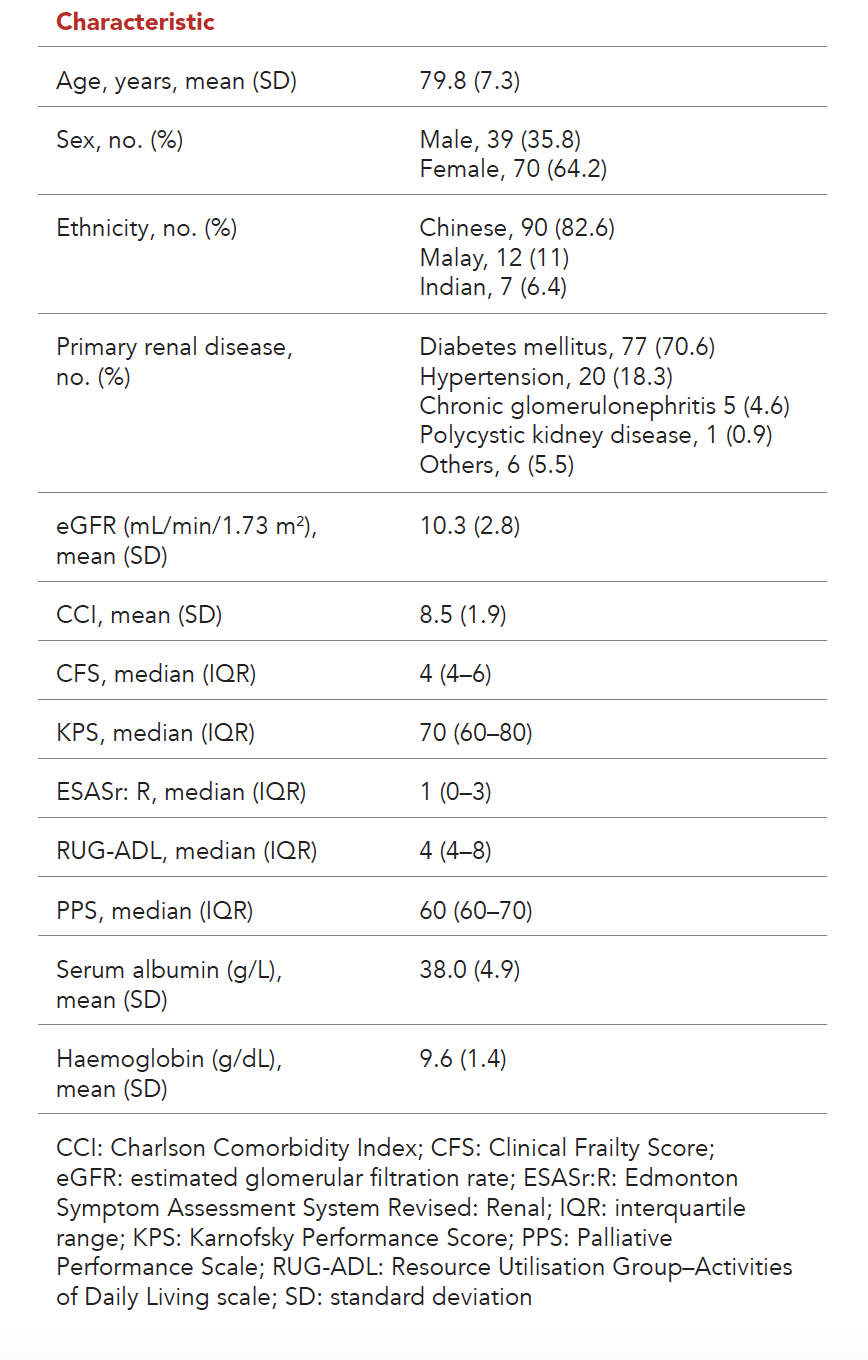
Among the 109 enrolled patients, 70 (64.2%) were female, and 90 (82.6%) were Chinese. The mean age was 79.8 ± 7.3 years. The baseline estimated glomerular filtration rate (eGFR [CKD EPI]) was 10.3 ± 2.8 mL/min/1.73 m2. The primary causes of CKD G5 were diabetes mellitus (70.6%), hypertension (18.3%) and chronic glomerulonephritis (4.6%) (Table1). Thirty patients transitioned to home hospice during the follow-up.
Patients exhibited a significant comorbidity burden, with a mean CCI of 8.5 ± 1.9. Major comorbidities included diabetes mellitus (77.1%), ischaemic heart disease (33.0%), stroke (28.4%), dementia (23.9%), peripheral vascular disease (15.6%) and malignancy (15.6%). Initial functional assessment indicated mild frailty, with a median CFS of 4 (interquartile range [IQR] 4–6), a KPS of 70 (IQR 60–80), a median total RUG-ADL score of 4 (IQR 4–8) and a PPS of 60 (IQR 60–70), with approximately 80% of patients maintaining independence in daily activities. Mean baseline laboratory values included haemoglobin levels of 9.6 ± 1.4 g/dL and serum albumin levels of 38.0 ± 4.9 g/L.
Initial symptom assessment revealed a relatively low burden, with a median total ESAS-r: Renal score of 1 (IQR 0–3). The most prevalent symptoms were fatigue (20.2%), pain (19.3%) and insomnia (17.4%).
Table 1. Baseline characteristics.
Factors associated with mortality at 1 year
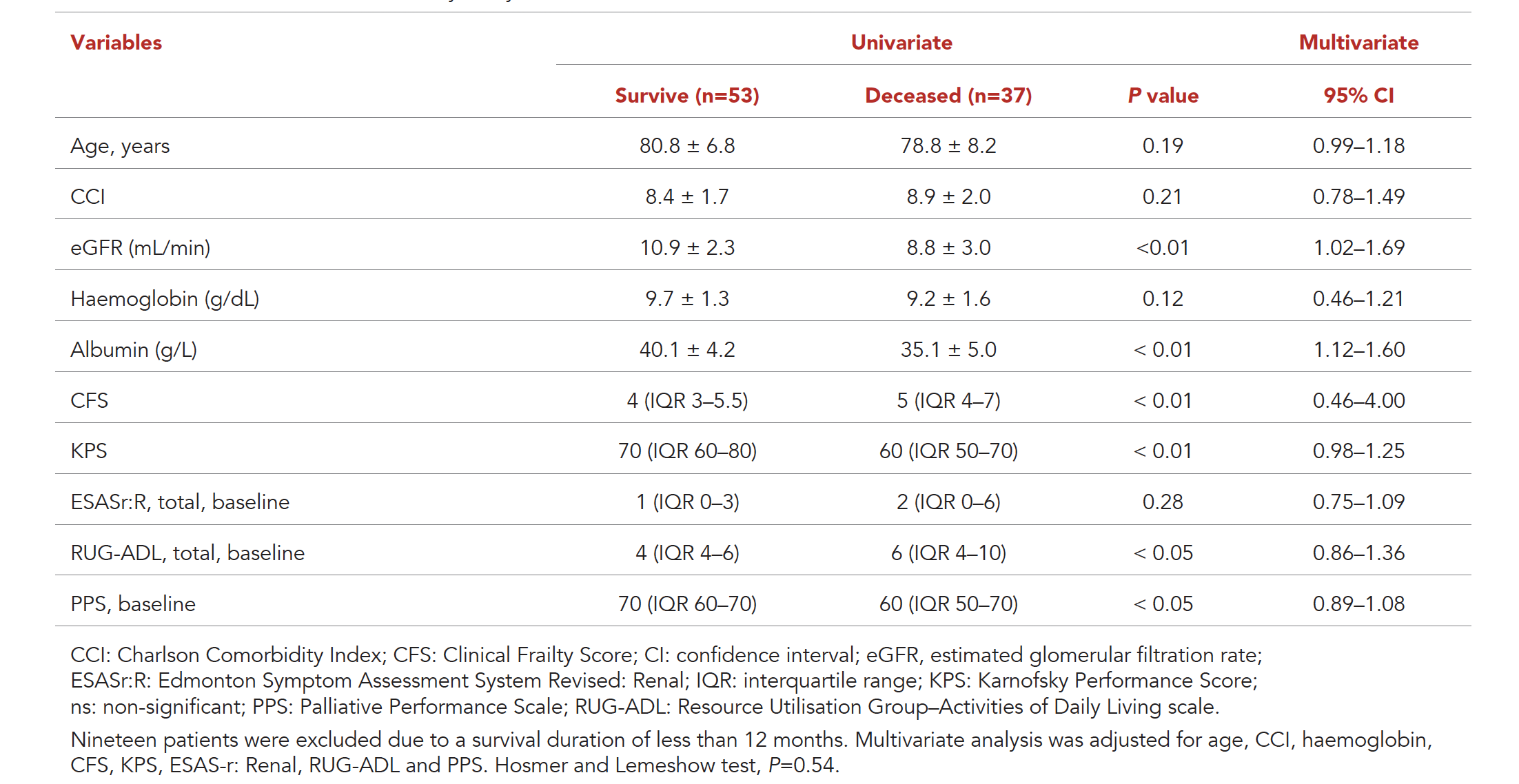
Among the 109 enrolled patients, 37 died within 1 year of entering the programme. Surviving patients with follow-up periods of less than 1 year were censored in the analysis.
Multivariate logistic regression analysis identified lower baseline eGFR and serum albumin levels as significant independent predictors of mortality, after adjusting for CFS, KPS, RUG-ADL and PPS (Table 2). Each 1 mL/min/1.72 m2 decrease in baseline eGFR was associated with a 32% increase in 1-year mortality (HR 1.32, 95% CI 1.08-1.68, P<0.01). Similarly, each 1 g/L decrease in serum albumin was associated with a 24% increase in mortality risk (HR 1.24, 95% CI 1.08-1.43, P<0.01) (Table 2).
Table 2. Factors associated with mortality at 1 year.
Survival analysis by baseline eGFR
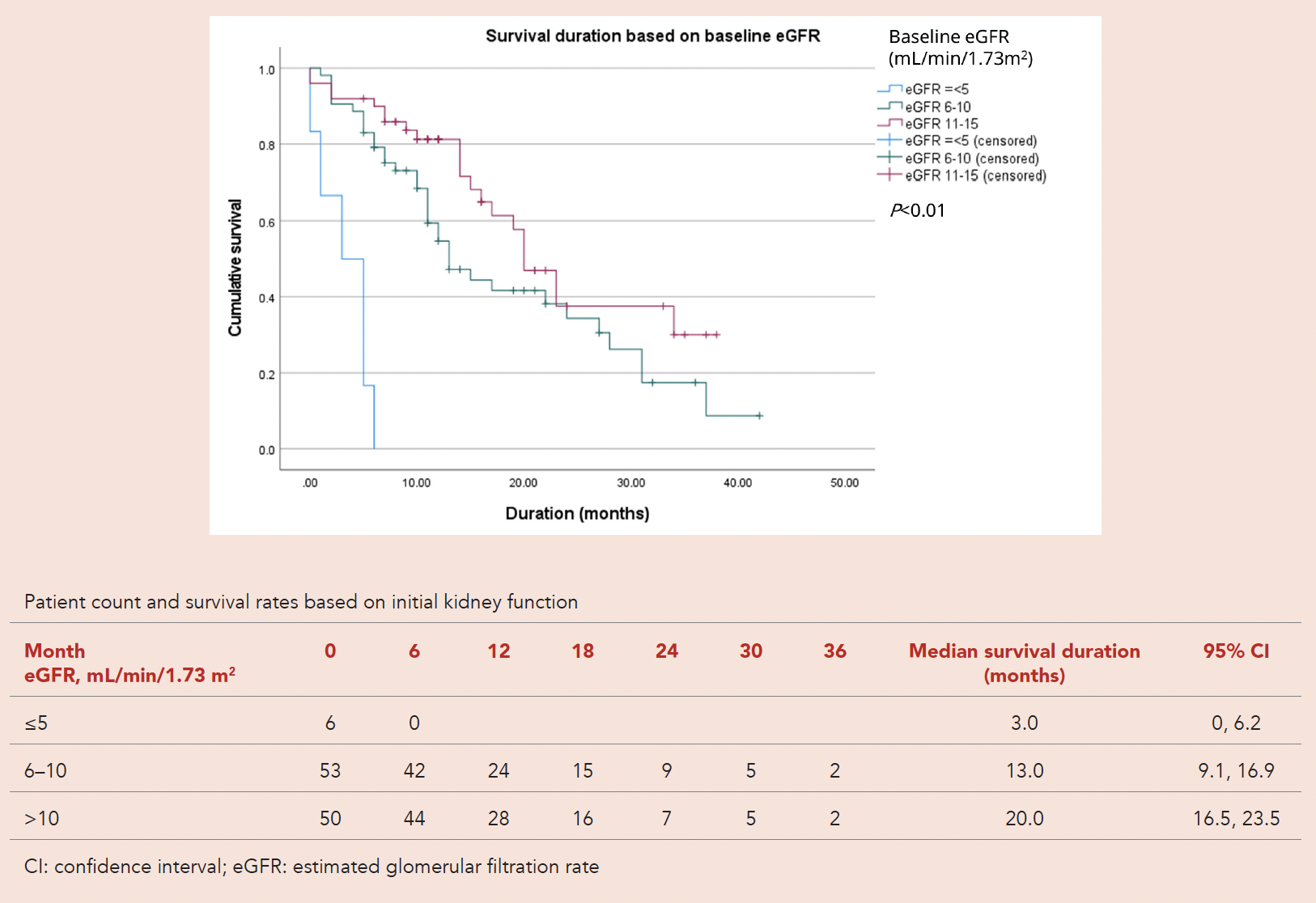
At the study’s conclusion, 62 patients (56.9%) had died. The median follow-up period was 10.5 months (IQR 5–17) for deceased patients and 12 months (IQR 9–22) for surviving patients in the whole cohort. Baseline kidney function had a significant impact on survival, mainly driven by eGFR <5 mL/min/1.73 m2 (P<0.01). The median survival for eGFR ≤5, 6–10 and >10 mL/min/1.73 m2 was 3.0, 13.0 and 20.5 months, respectively (Fig. 1).
Fig. 1. Baseline eGFR and survival.
PPS and survival duration
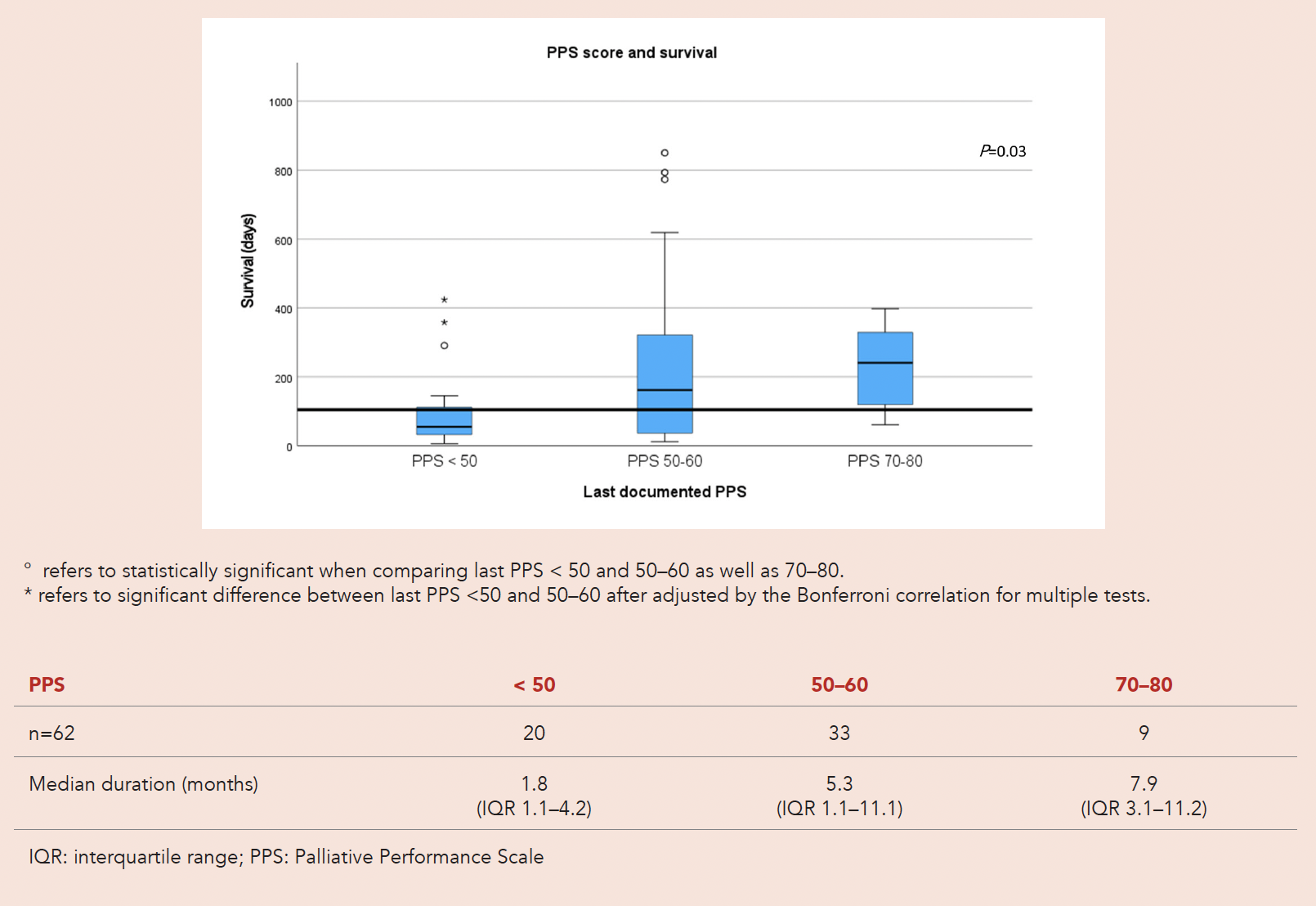
Among the 62 deceased patients, final PPS scores were strongly correlated with survival duration (P=0.03). The median survival durations were 1.8 months for PPS <50, 5.3 months for PPS 50–60, and 7.9 months for PPS 70–80 (Fig. 2). These findings suggest that end-of-life care, including palliative or hospice services, should be considered when PPS drops below 50.
Fig. 2. PPS score and median survival.
DISCUSSION
Our prospective cohort study provides important insights into prognostication and care delivery for CKM patients through an integrated outpatient nephrology and community nursing model. Three key findings emerged that advance current understanding of CKM care: the prognostic value of baseline parameters, the utility of functional assessment tools, and the identification of transition points for palliative care integration.
The demographic profile of our cohort (mean age 79 years, CCI 8.5) aligns with typical CKM populations but highlights notable distinctions in comorbidity patterns. Compared to the Singapore Renal Registry 2022 dialysis population,13 our cohort exhibited lower rates of ischaemic heart disease (33% vs 46.1%), similar rates of peripheral arterial disease (15%), but a higher prevalence of cancer (15.2% vs 8.2%). Despite significant comorbidities, most patients maintained functional independence with relatively low symptom burden, contrasting with findings from CKDopps,14 Australian Kidney Supportive Care4 and EQUAL cohort studies.2 These disparities might reflect differences in kidney function decline rates, symptom perception and psychosocial factors across populations.32 The CCI score could be over-estimated in our cohort because those aged ≥80 received 4 points, and 2 points for moderate-to-severe CKD. Despite this, these older adults have relatively low symptom burden, and more than half were independent in activities of daily living. On the other hand, patients with significant symptoms who needed palliative care would have been referred to hospice services earlier.
Prognostic models for CKD have variable performance and limited applicability for CKM patients.19,20 Factors such as hypoalbuminemia,37 anaemia,38 symptom burden,2 KPS ≤70,18 frailty15 and higher CCI33 have been shown to be associated with mortality. Identifying baseline eGFR and serum albumin as significant predictors of 1-year mortality provides clinically valuable prognostic information. Our findings demonstrate a clear relationship between baseline kidney function and survival: median survival was 20.5 months for eGFR >10 mL/min/1.73 m2, 13.0 months for eGFR 6–10 mL/min/1.73 m2 and 3.0 months for eGFR ≤5 mL/min/1.73 m2. These results align with reporting mean survival of 13–14 months for CKD G5 patients with eGFR <15 mL/min/1.73 m2 in existing literature.4,12 Other studies6,7,8,10 have cited a median survival ranging between 1 and 6 months for patients with eGFR <10 mL/min/1.73 m2. The strong association between hypoalbuminaemia and mortality (32% increased risk per 1 g/L decrease) provides an additional practical prognostic marker.
Among those patients with eGFR >5 mL/min/1.73 m2, the median survival was 1 year or more. Periodically monitoring this group of patients in the community is important to determine the transition to palliative care. A 2011 study reported a steep functional decline in the last few weeks of life.17 The PPS, a clinical tool used in hospice, in-patient and oncology settings,34,35 demonstrated a similar trend of declining performance status that was associated with poorer survival in our cohort. Based on the current study and the existing literature, patients with eGFR ≤5 mL/min/1.73 m2, hypoalbuminaemia and a PPS score of less than 60 are likely to have survival of less than 6 months. However, CKD G5 patients in general with their high level of symptoms are likely to benefit from palliative or anticipatory care, even without a short prognosis.23
Our findings provide several important insights into the natural history and prognostic factors in CKM patients. These key findings emerged as the prognostic value of baseline parameters, utility of functional assessment and pattern of functional decline. These findings support a 3-phase approach to CKM with the utilisation of baseline eGFR, while monitoring for any irreversible decline in functional status using PPS as follows:
The stable phase (baseline eGFR >10 mL/min, PPS >70): Focuses on shared decision-making (between the clinician, patient and family to develop a goal-concordant care plan), serious illness conversation and advance care planning discussion. The management of chronic kidney disease and comorbidities, monitoring the progress using ESASr-Renal and PPS.
The transition phase (baseline eGFR <5–10, PPS 50–60): Includes symptoms surveillance and management, with supportive care. When escalation of care needs is observed without reversible factors, care should be transitioned to hospice.
The final phase (baseline eGFR <5 mL/min or persistent drop in PPS <50): Involves the integration of end-of-life services (e.g. home/inpatient hospice), anticipatory care, family support and bereavement preparation.
This personalised approach helps patients and families align their care goals with the disease trajectory upon entering the CKM programme (Supplementary Fig. S1).
The role of community nurses in this model is crucial, facilitating shared decision-making, resolving decision conflicts and identifying patients experiencing deterioration. This approach has resulted in reduced hospital utilisation during the last 6 months of life compared to local national database studies.39 About 19% of the decedents were managed in the community without hospitalisation during their last 6 months of life. Incorporating these prognostic markers into a personalised care plan could further improve the quality of CKM care.
The strengths of this study include a 3-year follow up period, an interdisciplinary approach and the implementation of a pragmatic model of care. However, limitations include a relatively small sample size, a homogeneous study population, incomplete data after transfer out from the programme, potential selection bias and the lack of a comparator arm. Additionally, the study did not assess psychosocial factors, quality of life or intercurrent illnesses that might affect survival. Future research should explore symptoms progression, the integration of quality-of-life measures and validation of predictive tools for CKM patients.
CONCLUSION
This study identifies baseline eGFR, serum albumin and the PPS score as robust predictors of survival in CKM patients, enabling a more structured approach to care delivery. The proposed 3-phase model, supported by community nursing, provides a framework for personalising care pathways and optimising resource allocation. These findings advance our understanding of CKM prognostication and support timely integration of end-of-life care services, particularly for patients with eGFR ≤5 mL/min/1.73 m2 or PPS <50.
Supplementary material
Fig. S1. Personalised care plan.
Acknowledgements
This project was supported by the Tote Board Community Health Fund, titled “Conservative (Non-Dialysis) Management of Patients with End-Stage Renal Disease”, and was managed by the Buddhist Compassion Relief Tzu Chi Foundation (Singapore) in the community in collaboration with Sengkang General Hospital. The authors would like to thank the participants and family members for their willingness to participate in this pilot project; Dr Grace Yang from the Division of Supportive & Palliative Care at Singapore General Hospital for the helpful feedback; and the Research Office of Sengkang General Hospital for assisting with the application of the IRB.
REFERENCES
- Davison SN, Pommer W, Brown MA, et al. Conservative kidney management and kidney supportive care: core components of integrated care for people with kidney failure. Kidney Int 2024;105:35-45.
- Janmaat CJ, van Diepen M, Meuleman Y, et al. Kidney function and symptom development over time in elderly patients with advanced chronic kidney disease: results of the EQUAL cohort study. Nephrol Dial Transplant 2021 26;36:862-70.
- Lupu D, Moss AH. The Role of Kidney Supportive Care and Active Medical Management Without Dialysis in Supporting Well-Being in Kidney Care. Semin Nephrol 2021;41:580-91.
- Chou A, Li C, Farshid S, et al. Survival, symptoms and hospitalization of older patients with advanced chronic kidney disease managed without dialysis. Nephrol Dial Transplant 2023;38:405-13.
- DePasquale N, Green JA, Ephraim PL, et al. Decisional Conflict About Kidney Failure Treatment Modalities Among Adults with Advanced CKD. Kidney Med 2022;4:100521.
- Chou A, Li KC, Brown MA. Survival of Older Patients with Advanced CKD Managed Without Dialysis: A Narrative Review. Kidney Med 2022;4:100447.
- Wong SPY, Rubenzik T, Zelnick L, et al. Long-term Outcomes Among Patients with Advanced Kidney Disease Who Forgo Maintenance Dialysis: A Systematic Review. JAMA Netw Open. 2022;5:e222255.
- Morton RL, Webster AC, McGeechan K, et al. Conservative Management and End-of-Life Care in an Australian Cohort with ESRD. Clin J Am Soc Nephrol 2016;11:2195-203.
- Sakthivel P, Mostafa A, Aiyegbusi OL. Factors that influence the selection of conservative management for end-stage renal disease – a systematic review. Clin Kidney J 2023;17:sfad269.
- Verberne WR, Geers AB, Jellema WT, et al. Comparative Survival among Older Adults with Advanced Kidney Disease Managed Conservatively Versus with Dialysis. Clin J Am Soc Nephrol 2016;11:633-40.
- Chandna SM, Da Silva-Gane M, Marshall C, et al. Survival of elderly patients with stage 5 CKD: comparison of conservative management and renal replacement therapy. Nephrol Dial Transplant 2011;26:1608-14
- Brown MA, Collett GK, Josland EA, et al. CKD in elderly patients managed without dialysis: survival, symptoms, and quality of life. Clin J Am Soc Nephrol 2015;10:260-8.
- National Registry of Diseases Office, Singapore. Annual Report 2022. https://www.nrdo.gov.sg/publications/kidney-failure. Accessed 28 August 2025.
- Speyer E, Tu C, Zee J, et al. Symptom burden and its impact on quality of life in patients with moderate to severe CKD: the international chronic kidney disease outcomes and practice patterns study (CKDopps). Am J Kidney Dis 2024;84:696-707.e1.
- Kallenberg MH, Kleinveld HA, Dekker FW, et al. Functional and Cognitive Impairment, Frailty, and Adverse Health Outcomes in Older Patients Reaching ESRD-A Systematic Review. Clin J Am Soc Nephrol 2016;11:1624-39.
- So S, Li K, Hoffman AT, et al. Quality of Life in Patients with Chronic Kidney Disease Managed with or without Dialysis: An Observational Study. Kidney360 2022;3:1890-8.
- Murtagh FEM, Addington-Hall JM, Higginson IJ. End-stage renal disease: A new trajectory of functional decline in the last years of life. J Am Geriatr Soc 2011;59:304-8.
- Schmidt RJ, Landry DL, Cohen L, et al. Derivation and validation of a prognostic model to predict mortality in patients with advanced chronic kidney disease. Nephrol Dial Transplant 2019;34:1517-25.
- Milders J, Ramspek CL, Janse RJ, et al. Prognostic Models in Nephrology: Where Do We Stand and Where Do We Go from Here? Mapping Out the Evidence in a Scoping Review. J Am Soc Nephrol 2024;35:367-80.
- van Rijn MHC, van de Luijtgaarden M, van Zuilen AD, et al. Prognostic models for chronic kidney disease: a systematic review and external validation. Nephrol Dial Transplant 2021;36:1837-50.
- Chandna SM, Carpenter L, Da Silva-Gane M, et al. Rate of decline of kidney function, modality choice, and survival in elderly patients with advanced kidney disease. Nephron 2016;134:64-72.
- Malhotra C, Shafiq M, Batcagan-Abueg APM. What is the evidence for efficacy of advance care planning in improving patient outcomes? A systematic review of randomised controlled trials. BMJ Open 2022;12:e060201.
- Kane PM, Vinen K, Murtagh FE. Palliative care for advanced renal disease: a summary of the evidence and future direction. Palliat Med 2013;27:817-21.
- Beckwith HKS, Adwaney A, Appelbe M, et al. Perceptions of Illness Severity, Treatment Goals, and Life Expectancy: The ePISTLE Study. Kidney Int Rep 2021;6:1558-66.
- Mulcahy Symmons S, Ryan K, Aoun SM, et al Decision-making in palliative care: patient and family caregiver concordance and discordance-systematic review and narrative synthesis. BMJ Support Palliat Care 2023;13:374-85.
- Thorsteinsdottir B, Espinoza Suarez NR, Curtis S, et al. Older Patients with Advanced Chronic Kidney Disease and Their Perspectives on Prognostic Information: A Qualitative Study. J Gen Intern Med 2022;37:1031-7.
- Ramspek CL, Verberne WR, van Buren M, et al. (2021). Predicting mortality risk on dialysis and conservative care: development and internal validation of a prediction tool for older patients with advanced chronic kidney disease. Clin Kidney J 2020;14:189-96.
- Teh SP, Tay HB, Lee IWZ, et al. Interdisciplinary approach of conservative kidney management with a community nurse-led programme. Ann Acad Med Singap 2024;53:703-6.
- Kidney Supportive Care Research Group. Edmonton Symptom Assessment System Revised: Renal (ESAS-r: Renal), University of Alberta, Edmonton, Canada. https://www.ckmcare.com/Resources/Details/62. Accessed 2 February 2025.
- Davison SN, Jhangri GS, Johnson JA. Longitudinal validation of a modified Edmonton symptom assessment system (ESAS) in haemodialysis patients. Nephrol Dial Transplant 2006;21:3189-95.
- Fries BE, Schneider DP, Foley WJ, et al. Refining a case-mix measure for nursing homes: Resource Utilization Groups (RUG-III). Med Care 1994;32:668-85.
- Milders J, Ramspek CL, Meuleman Y, et al. (2024). Dealing with an uncertain future: a survey study on what patients with chronic kidney disease actually want to know. Clin Kidney J 2024;17:sfae225.
- Hemmelgarn BR, Manns BJ, Quan H, et al. Adapting the Charlson Comorbidity Index for use in patients with ESRD. Am J Kidney Dis 2003;42:125-32.
- Baik D, Russell D, Jordan L, et al. Using the Palliative Performance Scale to Estimate Survival for Patients at the End of Life: A Systematic Review of the Literature. J Palliat Med 2018;21:1651-61.
- Bischoff KE, Patel K, Boscardin WJ, et al. Prognoses Associated with Palliative Performance Scale Scores in Modern Palliative Care Practice. JAMA Netw Open 2024;7: e2420472.
- Löwe B, Toussaint A, Rosmalen JGM, et al. Persistent physical symptoms: definition, genesis, and management. Lancet 2024;403:2649-62.
- Prichard SS. Comorbidities and their impact on outcome in patients with end-stage renal disease. Kidney International 2000;57:S100-4.
- Minutolo R, Provenzano M, Chiodini P, et al. Collaborative Study Group on the Conservative Treatment of CKD of the Italian Society of Nephrology. New-onset anemia and associated risk of ESKD and death in non-dialysis CKD patients: a multicohort observational study. Clin Kidney J 2022;15:1120-8.
- Tan WS, Bajpai R, Low CK, et al. Individual, clinical and system factors associated with the place of death: A linked national database study. PLoS One 2019;14:e0215566.
- Pinto S, Lopes S, de Sousa AB, et al. Patient and Family Preferences About Place of End-of-Life Care and Death: An Umbrella Review. J Pain Symptom Manage 2024;67:e439-52.
This study was approved by the SingHealth Centralised Institutional Review Board (2021/2451). Patient consent was waived as this project was part of a service development.
This project was supported by a Tote Board Community Health Fund. All the authors declare they have no affiliations or financial involvement with any commercial organisation with a direct financial interest in the subject or materials discussed in the manuscript.
Dr Swee Ping Teh, Department of Renal Medicine, Sengkang General Hospital, 110, Sengkang East Way, Singapore 544886. Email: [email protected]
